Alex Cruz, Chairman and CEO at British Airways: Preparing For A Different Future
Yesterday, British Airways flew just a handful of aircraft out of Heathrow. On a normal day we would fly more than 300. What we are facing as an airline, like so many other businesses up and down the country, is that there is no ‘normal’ any longer.
The global aviation body, IATA, has said that the industry has never seen a downturn this deep before, and that full year industry passenger revenues could plummet 55% compared to 2019, while traffic falls 48%. Many airlines have grounded all of their planes. Sadly, we will see some airlines go out of business with the resulting job losses.
Our very limited flying schedule means that revenues are not coming into our business. We are taking every possible action to conserve cash, which will help us to weather the storm in the short-term. We are working closely with partners and suppliers to discuss repayment terms; we are re-negotiating contracts where possible; and we are considering all the options for our current and future aircraft fleet. All of these actions alone are not enough.
In the last few weeks, the outlook for the aviation industry has worsened further and we must take action now. We are a strong, well-managed business that has faced into, and overcome, many crises in our hundred-year history. We must overcome this crisis ourselves, too.
There is no Government bailout standing by for BA and we cannot expect the taxpayer to offset salaries indefinitely. Any money we borrow now will only be short-term and will not address the longer-term challenges we will face.
We do not know when countries will reopen their borders or when the lockdowns will lift, and so we have to reimagine and reshape our airline and create a new future for our people, our customers and the destinations we serve. We have informed the Government and the Trade Unions of our proposals to consult over a number of changes, including possible reductions in headcount. We will begin a period of consultation, during which we will work with the Trade Unions to protect as many jobs as possible. Your views matter and we will listen to all practical proposals.
The scale of this challenge requires substantial change so we are in a competitive and resilient position, not just to address the immediate Covid-19 pandemic, but also to withstand any longer-term reductions in customer demand, economic shocks or other events that could affect us. However challenging this is, the longer we delay difficult decisions, the fewer options will be open to us.
I want to pay tribute to the thousands of British Airways colleagues who are playing a vital role in the global response to the Covid-19 crisis. Whether you are supporting our repatriation flights or the transport of essential cargo; or one of the hundreds of colleagues volunteering with organisations such as the NHS, you have my sincere respect and thanks.
This has been a difficult message to write and one I never thought I would need to send. I know how tight-knit the BA family is, and how concerned you will be, not just for yourself but for your colleagues, too. We must act decisively now to ensure that British Airways has a strong future and continues connecting Britain with the world, and the world with Britain.
Thank you.
Alex
Richard Branson: An Open Letter To Virgin Employees
To all the Virgin family,
For 50 years I have been humbled by the incredible pride our people take in working for Virgin. It is the people across all our businesses, and the hundreds of thousands of people who have worked with us over the years, that make this company so special. They tell their families, their friends, and even complete strangers in the pub why Virgin is such a special business. Over the last month much has been said about me and our brand. I know how much you all care about your work, your companies, and most of all each other, so I thought it was important for you all to know the actual facts.
Over the five decades I have been in business, this is the most challenging time we have ever faced. It is hard to find the words to convey what a devastating impact this pandemic continues to have on so many communities, businesses and people around the world. From a business perspective, the damage to many is unprecedented and the length of the disruption remains worryingly unknown.
Together with our Virgin company teams, I am working day and night to look after our people and protect as many jobs as possible. We are operating in many of the hardest hit sectors, including aviation, leisure, hotels and cruises, and we have more than 70,000 people in 35 countries working in Virgin companies. We’re doing all we can to keep those businesses afloat and I am so thankful to all of you who have continued to work so hard in these difficult times. We have already committed a quarter of a billion dollars to help our businesses and protect jobs, and will continue to invest all we can.
I’ve seen lots of comments about my net worth – but that is calculated on the value of Virgin businesses around the world before this crisis, not sitting as cash in a bank account ready to withdraw. Over the years significant profits have never been taken out of the Virgin Group, instead they have been reinvested in building businesses that create value and opportunities. The challenge right now is that there is no money coming in and lots going out.
My passion has always been creating businesses that improve people’s lives and over the years we have created hundreds of thousands of jobs. Today, the cash we have in the Virgin Group and my personal wealth is being invested across many companies around the world to protect as many jobs as possible, with a big part of that going to Virgin Atlantic.
Much has been said about Virgin Atlantic employees taking a wage reduction for eight weeks, spread across six and a half months. This was a virtually unanimous decision made by Virgin Atlantic employees and their unions who collectively chose to do this to save as many jobs as possible – it was not forced upon them by management. I am so proud of the Virgin Atlantic teams who continue to deliver critical medical cargo flights to the UK, and the many Virgin Atlantic people who are currently volunteering with the NHS. Their spirit is so heart-warming and inspiring, and I couldn’t be prouder of our amazing people (it deserves saying twice!) I am also deeply moved by the thousands of messages of support from our incredible people at Virgin Atlantic and around the Virgin family. They mean so much to me – thank you all.
Boeing to Temporarily Suspend Philadelphia Area Operations in Response to Escalating COVID-19 Pandemic
RIDLEY TOWNSHIP, Pa. — Boeing [NYSE: BA] is temporarily suspending production operations at its facilities in Ridley Township, Pennsylvania, in light of the company’s continuous assessment of the spread of COVID-19 in the region. This action is intended to ensure the well-being of employees, their families and local communities, and will include an orderly shutdown consistent with requirements of U.S. and global defense customers.
Boeing will suspend operations beginning at the end of day on Friday, April 3. The site includes manufacturing and production facilities for military rotorcraft, including the H-47 Chinook, V-22 Osprey and MH-139A Grey Wolf. Defense and commercial services work and engineering design activities are also performed at the site.
The suspension of operations will last two weeks, with return to work on April 20. During the suspension, Boeing will continue to monitor government guidance and actions on COVID-19 and associated impacts on company operations. The company will conduct additional deep cleaning activities at buildings across the site and establish rigorous criteria for return to work.
“Suspending operations at our vital military rotorcraft facilities is a serious step, but a necessary one for the health and safety of our employees and their communities,” said Steve Parker, Vertical Lift vice president and general manager, and Philadelphia site senior executive. “We’re working closely with government and public health officials in the tri-state region. We’re also in contact with our customers, suppliers and other stakeholders affected by this temporary suspension as we assist in the national effort to combat the spread of COVID-19.”
Philadelphia area employees who can work from home will continue to do so. Those who cannot work remotely will receive paid leave for the 10 working days – double the normal company policy.
When the suspension is lifted, Boeing Philadelphia will restart production in an orderly manner with a focus on safety, quality and meeting customer commitments. This is a key step to enabling the recovery of the defense and aerospace sectors.
US Air Force Selects Boeing to Sustain C2 Software Platform for Air Mobility Command
SAN DIEGO — Boeing [NYSE: BA], through its subsidiary Tapestry Solutions, announced it has secured a five-year U.S. Air Force recompete contract to sustain and modernize the Global Decision Support System, or GDSS – the principal command and control (C2) software platform that supports global Air Mobility Command (AMC) missions.
GDSS helps mobility aircrews successfully plan and execute core missions, ranging from aerial refueling to strategic airlift, while providing a common operational picture for AMC and mission partners on a fully integrated platform. This enables Mobility Air Forces to rapidly move personnel and equipment – anywhere in the world within hours – and sustain troop support or relief operations as long as needed.
“We are honored to continue as AMC’s trusted partner on their cornerstone C2 program. We look forward to providing GDSS with additional capability to enable AMC to execute their critical mission more effectively and efficiently,” said Debbie Churchill, vice president, Mission Products and Services, Tapestry Solutions.
Tapestry Solutions, part of Boeing Global Services, has played a key role in the development, sustainment and enhancement of GDSS since 1992. Under the sustainment contract, GDSS will migrate to a cloud-hosted, DevOps environment while delivering uninterrupted services. In addition, next-generation software applications will be integrated with GDSS, capitalizing on the benefits of agile development and service-oriented architecture.
Boeing is the world’s largest aerospace company and leading provider of commercial airplanes, defense, space and security systems, and global services. A top U.S. exporter, the company supports commercial and government customers in more than 150 countries. Boeing employs more than 160,000 people worldwide and leverages the talents of a global supplier base. Building on a legacy of aerospace leadership, Boeing continues to lead in technology and innovation, deliver for its customers and invest in its people and future growth.
New Boeing 777X Completes Successful First Flight
SEATTLE, – The new Boeing (NYSE: BA) 777X jetliner took to the skies today, entering the next phase of its rigorous test program. Based on the popular 777 and with proven technologies from the 787 Dreamliner, the 777X took off in front of thousands at Paine Field in Everett, Washington, at 10:09 a.m. local time for a three hour, 51 minute flight over Washington state before landing at Seattle’s Boeing Field.
“The 777X flew beautifully, and today’s testing was very productive,” said Capt. Van Chaney, 777/777X chief pilot for Boeing Test & Evaluation. “Thank you to all the teams who made today possible. I can’t wait to go fly your airplane again.”
Capt. Chaney and Boeing Chief Pilot Craig Bomben worked through a detailed test plan to exercise the airplane’s systems and structures while the test team in Seattle monitored the data in real time.
“Our Boeing team has taken the most successful twin-aisle jet of all time and made it even more efficient, more capable and more comfortable for all,” said Stan Deal, president and CEO of Boeing Commercial Airplanes. “Today’s safe first flight of the 777X is a tribute to the years of hard work and dedication from our teammates, our suppliers and our community partners in Washington state and across the globe.”
The first of four dedicated 777-9 flight test airplanes, WH001 will now undergo checks before resuming testing in the coming days. The test fleet, which began ground testing in Everett last year, will endure a comprehensive series of tests and conditions on the ground and in the air over the coming months to demonstrate the safety and reliability of the design.
The newest member of Boeing’s market-leading widebody family, the 777X will deliver 10 percent lower fuel use and emissions and 10 percent lower operating costs than the competition through advanced aerodynamics, the latest generation carbon-fiber composite wing and the most advanced commercial engine ever built, GE Aviation’s GE9X.
The new 777X also combines the best of the passenger-preferred 777 and 787 Dreamliner cabins with new innovations to deliver the flight experience of the future. Passengers will enjoy a wide, spacious cabin, large overhead bins that close easily for convenient access to their belongings, larger windows for a view from every seat, better cabin altitude and humidity, less noise and a smoother ride.
Boeing expects to deliver the first 777X in 2021. The program has won 340 orders and commitments from leading carriers around the world, including ANA, British Airways, Cathay Pacific Airways, Emirates, Etihad Airways, Lufthansa, Qatar Airways and Singapore Airlines. Since its launch in 2013, the 777X family has outsold the competition nearly 2 to 1.
About the Boeing 777X Family
The 777X includes the 777-8 and the 777-9, the newest members of Boeing’s market-leading widebody family.
Seat Count: 777-8: 384 passengers
(typical 2-class) 777-9: 426 passengers
Engine: GE9X, supplied by GE Aviation
Range: 777-8: 8,730 nautical miles (16,170 km)
777-9: 7,285 nautical miles (13,500 km)
Wingspan: Extended: 235 ft, 5 in. (71.8 m)
On ground: 212 ft, 8 in (64.8 m)
Length: 777-8: 229 ft (69.8 m)
777-9: 251 ft, 9 in (76.7 m)
Multistakeholder Mobilization to Reinforce Cyber Resilience in Global Aviation
Geneva, Switzerland, 22 January 2020 – The Fourth Industrial Revolution is transforming the way airlines and airports do business. The advancement of technologies such as artificial intelligence and internet of things is increasing operational efficiency, but the digital nature of these technologies makes them intrinsically vulnerable to cyberattacks.
Cyberattacks on critical infrastructure have become the new normal across sectors such as transportation. Globally, their potential cost could be up to $90 trillion in net economic impact by 2030, if cybersecurity efforts do not keep pace with growing interconnectedness, according to the Atlantic Council and the Zurich Insurance Group, among others.
In Advancing Cyber Resilience in Aviation: An Industry Analysis, the World Economic Forum initiative on Building Cyber Resilience in the Aviation Industry aims to define and address some of the salient systemic challenges confronting this industry by:
Increasing awareness and understanding of cyber risks related to the adoption of emerging technologies, and the impact on critical systems
Fostering collaboration across the aviation industry to define a common understanding and approach to risk management that is holistic, risk-based and aligned across the various entities of the aviation industry ecosystem
Helping aviation stakeholders to make informed – hence better – decisions related to cyber risks
Developing an industry-wide approach to cyber resilience with a multistakeholder community in alignment and collaboration with the ICAO Secretariat Study Group on Cybersecurity (SSGC), industry associations and national authorities
Creating market incentives to prioritize capital investment for cybersecurity and resilience
To advance and help build cyber resilience in the aviation industry, the Forum has mobilized a community of experts and key stakeholders from international organizations (International Civil Aviation Organization, Eurocontrol), government entities (European Union Aviation Safety Agency, UK Civil Aviation Authority, Israel National Cyber Directorate), private-sector organizations (aviation, ICT and insurance sectors) and trade associations (International Air Transport Association, Airport Council International and the Industrial Internet Consortium) to identify challenges and initiatives spearheaded by government and industry entities to enable the development of an aligned global approach.
“The Forum offers a unique platform to bridge and strengthen industry and government collaboration globally to define a joint approach to informing key stakeholders, addressing the most salient challenges and creating a more secure and cyber-resilient ecosystem,” said Georges De Moura, Head of Industry Solutions, Centre for Cybersecurity at the World Economic Forum.
“Abundant broadly-accepted government and industry standards for cybersecurity fall short of what is required to ensure effective defence against cyberattacks in aviation: a common understanding of systemic risks and synchronized consistent quantitative methods for cyber-risk management,” said Karime Kuri Tiscareno, Project Lead, IoT, Robotics and Smart Cities, at the World Economic Forum.
“Our ongoing strategic partnership with the World Economic Forum ensures that we can support the aviation sector to mitigate any potential harm and foster a stronger cyber resilience culture across the sector. The launch of this report is the first phase in developing a common approach with the aviation industry to develop effective cyber risk management, and to impart this knowledge across other sectors,” said Adam Garrard, Global Head of Corporate Risk and Broking, Willis Towers Watson.
A number of requirements, standards and approaches are currently being implemented to assess, manage and mitigate cyber risk, but action and practical solutions must be accelerated to ensure a prosperous, digitalized and cyber-resilient aviation industry.
About the World Economic Forum 2020
This year’s meeting brings together nearly 3,000 global leaders from politics, government, civil society, academia, the arts and culture as well as the media. Convening under the theme, Stakeholders for a Cohesive and Sustainable World, participants will focus on defining new models for building sustainable and inclusive societies in a plurilateral world.
Airbus BelugaXL Enters Service, Adding XL Capacity To The Fleet
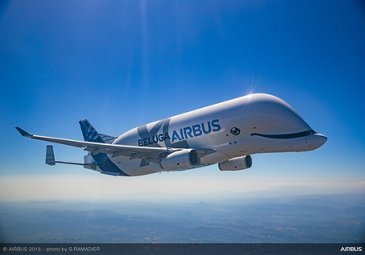
The BelugaXL has entered into service, providing Airbus with 30% extra transport capacity in order to support the on-going production ramp-up of commercial aircraft programmes.
The aircraft, which is an integral part of Airbus’ industrial system, made its first operational flight on 9 January. This is the first of six BelugaXL to begin work alongside the BelugaST predecessors, with the additional aircraft being introduced between 2020 and 2023.
Launched just over five years ago, in November 2014, the entry into service milestone marks yet another successful achievement for the internal aircraft programme that was awarded Type Certification by the European Aviation Safety Agency (EASA) in November 2019, following an intensive flight test campaign that saw the BelugaXL complete more than 200 flight tests, clocking over 700 flight hours.
At 63 metres long and 8 metres wide, the BelugaXL has the largest cargo bay cross-section of all existing cargo aircraft worldwide. The BelugaXL can carry two A350 XWB wings compared to the BelugaST, which can only carry one. With a maximum payload of 51 tonnes, the BelugaXL has a range of 4,000 km. (2200nm).
The BelugaXL is based on an A330-200 Freighter, enabling the re-use of existing components and equipment, and is powered by Rolls-Royce Trent 700 engines. The lowered cockpit, the cargo bay structure and the rear-end and tail were newly developed jointly with partners, giving the aircraft its distinctive look.
The BelugaXL is the latest addition to Airbus’ transportation portfolio. While air transport remains the primary method for transporting large aircraft components, Airbus also uses road, rail and sea transport to move parts between its production sites. Like the BelugaST, the aircraft will operate from 11 destinations in Europe, continuing to strengthen industrial capabilities and enabling Airbus to deliver on its commitments.
Featuring one of the most voluminous cargo holds of any civil or military aircraft flying today, the Airbus Beluga offers a unique way to transport oversized air cargo. Also known as A300-600ST Super Transporter, the company’s five existing Belugas play a key role in keeping its production and assembly network operating at full capacity, with the fleet’s overall pace of operations – managed by the Airbus Transport International (ATI) subsidiary – growing to support production ramp-ups.
In 2020, Airbus began phasing in its fleet of six new-generation BelugaXL versions – which will operate in parallel with the five in-service A300-600STs before replacing them completely.
Boeing Suspends 737 MAX Production Starting In January
CHICAGO – Safely returning the 737 MAX to service is our top priority. We know that the process of approving the 737 MAX’s return to service, and of determining appropriate training requirements, must be extraordinarily thorough and robust, to ensure that our regulators, customers, and the flying public have confidence in the 737 MAX updates. As we have previously said, the FAA and global regulatory authorities determine the timeline for certification and return to service. We remain fully committed to supporting this process. It is our duty to ensure that every requirement is fulfilled, and every question from our regulators answered.
Throughout the grounding of the 737 MAX, Boeing has continued to build new airplanes and there are now approximately 400 airplanes in storage. We have previously stated that we would continually evaluate our production plans should the MAX grounding continue longer than we expected. As a result of this ongoing evaluation, we have decided to prioritize the delivery of stored aircraft and temporarily suspend production on the 737 program beginning next month.
We believe this decision is least disruptive to maintaining long-term production system and supply chain health. This decision is driven by a number of factors, including the extension of certification into 2020, the uncertainty about the timing and conditions of return to service and global training approvals, and the importance of ensuring that we can prioritize the delivery of stored aircraft. We will continue to assess our progress towards return to service milestones and make determinations about resuming production and deliveries accordingly.
During this time, it is our plan that affected employees will continue 737-related work, or be temporarily assigned to other teams in Puget Sound. As we have throughout the 737 MAX grounding, we will keep our customers, employees, and supply chain top of mind as we continue to assess appropriate actions. This will include efforts to sustain the gains in production system and supply chain quality and health made over the last many months.
We will provide financial information regarding the production suspension in connection with our 4Q19 earnings release in late January.
United Airlines Launches Online Campaign for Hurricane Dorian Relief Efforts
CHICAGO — Today, United Airlines reaffirms its commitment to lifting up communities in need, launching a Crowdrise fundraising campaign for those affected by Hurricane Dorian. Donations will support the airline’s relief partners that provide assistance in the United States and internationally: American Red Cross, Airlink, Americares and Global Giving.
United is working directly with these partner organizations, as well as engaging with community leaders to assess disaster impact and provide aid to rebuild affected communities. United will match the first $100,000 raised and provide up to a total of 5 million bonus miles to give to individuals who make donations of $50 or more.
“United has a long tradition of stepping forward to assist in supporting individuals and communities impacted by hurricanes, such as Harvey, Irma and Maria,” said Executive Vice President and Chief Administrative Officer Brett Hart. “After natural disasters, our generous customers, employees and MileagePlus members step forward to ask how they can again support those in need, and we are proud and humbled to facilitate this critical work.”
United also works with relief partner Airlink to connect with non-governmental organizations (NGOs) that respond quickly and efficiently in the wake of major disasters. This past week, United flew more than 25 relief workers, including a team of search and rescue experts from Empact Northwest, to the Bahamas to aid in the most pressing needs identified by the local government.
“We can’t thank United enough for allowing us to jump out of the gate right away to aid people devastated by this storm,” said Airlink CEO Steven J. Smith. “Search and rescue, medical care, temporary shelter, and access to potable water are among the most immediate and pressing needs identified in the region. United’s assistance is critical in ensuring the right type of help quickly reaches those recovering.”
United will continue to work directly with its partner organizations and engage with community leadership to properly address disaster impact and provide assistance to rebuild affected communities. The online campaign platform is currently scheduled to be available for donations through Sept. 30. As the level of impact on affected communities develops, United continues to evaluate how it can best provide assistance to those in need.
Every customer. Every flight. Every day.
In 2019, United is focusing more than ever on its commitment to its customers, looking at every aspect of its business to ensure that the carrier keeps customers’ best interests at the heart of its service. In addition to today’s announcement, United recently announced that luxury skincare line Sunday Riley will make products exclusively for United customers to experience in amenity kits, released a re-imagined version of the most downloaded app in the airline industry, introduced ConnectionSaver, a new tool dedicated to improving the experience for customers connecting from one United flight to the next and made DIRECTV free for every passenger on 211 aircraft, offering more than 100 channels on seat back monitors on more than 30,000 seats.
About United
United’s shared purpose is “Connecting People. Uniting the World.” We are more focused than ever on our commitment to customers through a series of innovations and improvements designed to help build a great experience: Every customer. Every flight. Every day. Together, United Airlines and United Express operate approximately 4,900 flights a day to 356 airports across five continents. In 2018, United and United Express operated more than 1.7 million flights carrying more than 158 million customers. United is proud to have the world’s most comprehensive route network, including U.S. mainland hubs in Chicago, Denver, Houston, Los Angeles, New York/Newark, San Francisco and Washington, D.C. United operates 783 mainline aircraft and the airline’s United Express carriers operate 561 regional aircraft. United is a founding member of Star Alliance, which provides service to 193 countries via 28 member airlines. For more information, visit united.com, follow @United on Twitter and Instagram or connect on Facebook. The common stock of United’s parent, United Airlines Holdings, Inc., is traded on the Nasdaq under the symbol “UAL”.
Northrop Grumman’s air dominance technologies bring new capabilities to U.S. warfighters
LINTHICUM, Md. – Northrop Grumman Corporation (NYSE: NOC), together with military partners at Northern Edge 2019, successfully displayed advanced capabilities in air-to-air, air-to-surface and maritime tactical scenarios that address key warfighting gaps in advanced strike; intelligence, surveillance, reconnaissance (ISR); and electronic warfare.
Northrop Grumman Demonstrates Advanced Capabilities at Northern Edge 2019
Northrop Grumman’s reconfigurable flight test aircraft significantly reduces the technology development process, bringing advanced capabilities to warfighters faster, more affordably and reliably.
“Northrop Grumman is developing agile and affordable technologies that address the advanced strike, ISR and multi-domain command and control needs for our customers,” said Tom Jones, vice president and general manager, airborne C4ISR systems, Northrop Grumman. “Using reconfigurable flight-test aircraft outfitted with advanced sensors and cognitive artificial intelligence capability at events such as Northern Edge speeds up the development process significantly.”
Northern Edge is the U.S. Indo-Pacific Command’s biennial joint training exercise, held May 13-24 at the Joint Pacific Alaska Range Complex and the Gulf of Alaska. It involves all U.S. military services and agency partners, as well as virtual participants from stateside and overseas bases. The exercise is designed to enhance air warfare and interoperability among the services in a highly contested environment.
Celebrating 10 years of participation at Northern Edge this year, Northrop Grumman has consistently demonstrated leading technology capabilities at the joint military-industry exercise. Innovative solutions tested at earlier Northern Edge exercises include auto target recognition and combat identification; advanced electronic protection and attack; cognitive mission computing; maritime search and track; long-range surface-to-air missile detection; and infrared search and track.
Northrop Grumman also demonstrated Battlefield Airborne Communications Node (BACN) gateways and multi-level secure live, virtual and constructive training. Many of these capabilities are now fielded on U.S. platforms, providing a significant warfighting advantage to Air Force, Navy and Marine aircrews.
Northrop Grumman is a leading global security company providing innovative systems, products and solutions in autonomous systems, cyber, C4ISR, space, strike, and logistics and modernization to customers worldwide. Please visit news.northropgrumman.com and follow us on Twitter, @NGCNews, for more information.
Boeing Pledges $100 million Support to Families, Communities Affected by Lion Air Flight 610 and Ethiopian Airlines Flight 302 Accidents
CHICAGO, July 3, 2019 – Ahead of Independence Day in the U.S., Boeing [NYSE: BA] announced $100 million in funds to address family and community needs of those affected by the tragic accidents of Lion Air Flight 610 and Ethiopian Airlines Flight 302. These funds will support education, hardship and living expenses for impacted families, community programs, and economic development in impacted communities. Boeing will partner with local governments and non-profit organizations to address these needs. This initial investment will be made over multiple years.
“We at Boeing are sorry for the tragic loss of lives in both of these accidents and these lives lost will continue to weigh heavily on our hearts and on our minds for years to come. The families and loved ones of those on board have our deepest sympathies, and we hope this initial outreach can help bring them comfort,” said Dennis Muilenburg, Boeing chairman, president and CEO.
“We know every person who steps aboard one of our airplanes places their trust in us. We are focused on re-earning that trust and confidence from our customers and the flying public in the months ahead.”
Boeing will release additional information in the near future.
Consistent with Boeing’s regular process for employee charitable donations, company employees will also have the opportunity to make donations in support of the families and communities impacted by the accidents. Boeing will match these employee donations through December 31, 2019.
U.S. Army Awards Lockheed Martin $561.8 Million Contract For ATACMS® Missiles
DALLAS — Lockheed Martin (NYSE: LMT) received a $561.8 million production contract for Army Tactical Missile System (ATACMS) missiles for the U.S. Army and Foreign Military Sales (FMS) customers.
The two-year effort contract calls for new ATACMS rounds, as well as upgrading several previous-variant ATACMS as part of the Service Life Extension Program (SLEP III).
“The new-build ATACMS rounds under this contract will include sensor technology that provides the recently qualified Height-of-Burst capability,” said Gaylia Campbell, vice president of Precision Fires & Combat Maneuver Systems at Lockheed Martin Missiles and Fire Control. “This new feature will allow Soldiers to address area targets at depth on the battlefield.”
Both the SLEP and new ATACMS rounds will be produced at Lockheed Martin’s Precision Fires Production Center of Excellence in Camden, Arkansas. To meet the increased demand for ATACMS, Lockheed Martin is expanding its Camden manufacturing facilities to include the capability to produce ATACMS and other upcoming missiles.
For more than 40 years, Lockheed Martin Missiles and Fire Control has been the leading designer and manufacturer of long-range, surface-to-surface precision strike solutions, providing highly reliable, combat-proven systems like MLRS, HIMARS, ATACMS and Guided MLRS to domestic and international customers.
About Lockheed Martin
Headquartered in Bethesda, Maryland, Lockheed Martin is a global security and aerospace company that employs approximately 105,000 people worldwide and is principally engaged in the research, design, development, manufacture, integration and sustainment of advanced technology systems, products and services.
NASA Opens International Space Station to New Commercial Opportunities, Private Astronauts
NASA is opening the International Space Station for commercial business so U.S. industry innovation and ingenuity can accelerate a thriving commercial economy in low-Earth orbit.
This move comes as NASA focuses full speed ahead on its goal of landing the first woman and next man on the Moon by 2024, where American companies also will play an essential role in establishing a sustainable presence.
NASA officials, including the agency’s Chief Financial Officer Jeff DeWit, will discuss details of the five-part near-term plan in a news conference at 10 a.m. EDT today. The news conference will air live on NASA Television and the agency’s website.
NASA will continue research and testing in low-Earth orbit to inform its lunar exploration plans, while also working with the private sector to test technologies, train astronauts and strengthen the burgeoning space economy. Providing expanded opportunities at the International Space Station to manufacture, market and promote commercial products and services will help catalyze and expand space exploration markets for many businesses.
The agency’s ultimate goal in low-Earth orbit is to partner with industry to achieve a strong ecosystem in which NASA is one of many customers purchasing services and capabilities at lower cost.
NASA’s plan addresses both the supply-side and demand-side for a new economy, enabling use of government resources for commercial activities, creating the opportunity for private astronaut missions to the space station, enabling commercial destinations in low-Earth orbit, identifying and pursuing activities that foster new and emerging markets, and quantifying NASA’s long-term demand for activities in low-Earth orbit.
Commercial Activities Aboard the Space Station
More than 50 companies already are conducting commercial research and development on the space station via the International Space Station U.S. National Laboratory, and their results are yielding great promise. In addition, NASA has worked with 11 different companies to install 14 commercial facilities on the station that support research and development projects for NASA and the ISS National Lab.
This effort is intended to broaden the scope of commercial activity on the space station beyond the ISS National Lab mandate, which is limited to research and development. A new NASA directive will enable commercial manufacturing and production and allow both NASA and private astronauts to conduct new commercial activities aboard the orbiting laboratory. The directive also sets prices for industry use of U.S. government resources on the space station for commercial and marketing activities.
Pricing released Friday is specific to commercial and marketing activities enabled by the new directive, reflects a representative cost to NASA, and is designed to encourage the emergence of new markets. As NASA learns how these new markets respond, the agency will reassess the pricing and amount of available resources approximately every six months and make adjustments as necessary.
To qualify, commercial and marketing activities must either:
require the unique microgravity environment to enable manufacturing, production or development of a commercial application;
have a connection to NASA’s mission; or
support the development of a sustainable low-Earth orbit economy.
NASA’s directive enabling commercial and marketing activities aboard the space station addresses manufacturing, production, transportation, and marketing of commercial resources and goods, including products intended for commercial sale on Earth. NASA astronauts will be able to conduct coordinated, scheduled and reimbursable commercial and marketing activities consistent with government ethics requirements aboard the station.
To ensure a competitive market, NASA initially is making available five percent of the agency’s annual allocation of crew resources and cargo capability, including 90 hours of crew time and 175 kg of cargo launch capability, but will limit the amount provided to any one company.
Private Astronaut Missions
NASA also is enabling private astronaut missions of up to 30 days on the International Space Station to perform duties that fall into the approved commercial and marketing activities outlined in the directive released Friday, with the first mission as early as 2020. A new NASA Research Announcement focus area issued today outlines the path for those future private astronaut missions.
If supported by the market, the agency can accommodate up to two short-duration private astronaut missions per year to the International Space Station. These missions will be privately funded, dedicated commercial spaceflights. Private astronaut missions will use a U.S. spacecraft developed under NASA’s Commercial Crew Program.
The commercial entity developing the mission will determine crew composition for each mission and ensure private astronauts meet NASA’s medical standards and the training and certification procedures for International Space Station crew members. Market studies identified private astronaut missions to low-Earth orbit as a key element to demonstrate demand and reduce risk for future commercial destinations in low-Earth orbit.
Commercial Destinations in Low-Earth Orbit
In the long-term, NASA’s goal is to become one of many customers purchasing services from independent, commercial and free-flying habitable destinations in low-Earth orbit. A robust low-Earth orbit economy will need multiple commercial destinations, and NASA is partnering with industry to pursue dual paths to that objective that either go through the space station or directly to a free-flying destination.
As a first step, NASA is making one space station port and utilities available for industry to attach a commercial module to support commercial activities, and today is releasing a synopsis as Appendix I in NASA’s Next Space Technologies for Exploration Partnerships (NextSTEP) 2 Broad Agency Announcement (BAA). NASA expects to release the solicitation June 14, with awards made by the end of the fiscal year. The forward port of the station’s Harmony module will be available to industry for a finite period of time.
NASA will follow up with a synopsis for NextSTEP 2 Appendix K in July to partner with industry in the development of future free-flying commercial stations in low-Earth orbit.
Stimulate Sustainable Demand
NASA continues to seek and pursue opportunities to stimulate sustainable commercial demand in low-Earth orbit and, to that end, has added two new focus areas to the NASA Research Announcement soliciting proposals for commercial concepts. these focus areas include in-space manufacturing, regenerative medicine, bioengineering, and other fields that may lead to a scalable, financially self-sustaining demand for low-Earth orbit capabilities.
In addition, NASA is seeking targeted studies to better understand real and perceived barriers of potential new market entrants and to address broad ideas which could help stimulate demand. Successful proposals will define the path to broadly foster market growth, provide data-driven rationale to support the defined path, and lead to recommendations on which NASA, industry or other organizations could act. More details are available in the synopsis for NextSTEP 2 BAA Appendix J. NASA expects to release the solicitation for Appendix J on June 14 with awards made by the end of the fiscal year.
NASA also is working to increase the research and development community’s understanding of the potential value of microgravity research and the path to conducting research in low-Earth orbit by coordinating across the microgravity community to lower barriers to entry and refinement of research via drop towers, parabolic, and suborbital flights.
Quantify NASA’s Long-term Demand
NASA is providing a forecast of its minimum long-term, low-Earth orbit requirements, representing the type and amount of services that NASA intends to purchase when those services become commercially available. The goal is to reduce uncertainty for commercial destination providers about NASA as a customer, and to help them make decisions about which NASA requirements they are interested in fulfilling.
NASA also is providing details and estimated quantities for NASA crew accommodation, human research, biological and physical science research, technology demonstrations, and hosted science instruments. In addition, NASA intends to continue purchasing services for a national laboratory capability in low-Earth orbit. For example, NASA’s strategy research in the areas of space biology, physical sciences, and fundamental physics is driven by recommendations from the National Academy of Sciences (NAS). Fundamental research and applied exploration research are not mutually exclusive, and advances in one area often enable advancements in the other. NASA’s Space Life and Physical Sciences Research Applications division has identified the highest research priorities for long-term use of low-Earth orbit: in life sciences, the priorities are studies of plants, model organisms, and of the microbiome of the built environment; and in physical sciences, the priorities are studies into combustion and phase change-associated energy transfer.
To improve the agency’s five-part plan and its effectiveness, NASA is seeking feedback from industry and others through a request for information, with responses due by July 3.
For more than 18 years, humans have lived and worked aboard the International Space Station, conducting thousands of experiments in areas such as human research, biology, and physical science, as well as advanced technology development. Many of these experiments, conducted via the ISS National Lab, have been research and development with commercial objectives. New opportunities are needed to move beyond research and development, and the station will play an essential role in enabling those opportunities for new commercial markets needed to build a sustainable ecosystem in low-Earth orbit.
Learn more about opportunities for commercial activities aboard the International Space Station:
https://www.nasa.gov/leo-economy/low-earth-orbit-economy
Boeing Receives Second U.S. Navy Contract for F/A-18 Service Life Modification
ST. LOUIS — Boeing [NYSE: BA] has received a one-year contract, which also includes a one-year option for 2020, to continue modernizing the U.S. Navy’s F/A-18 fleet under the Service Life Modification (SLM) program. The $164 million contract for FY19 funds the standup of a second SLM line in San Antonio, Texas, complementary to the line established last year in St. Louis.
“The Service Life Modification program is making great strides as we’ve already inducted seven Super Hornets into the program, and will deliver the first jet back to the Navy later this year,” said Dave Sallenbach, program director. “This program is crucial in helping the Navy with its readiness challenges, and will continue to grow each year with the number of jets we induct.”
The San Antonio SLM line is scheduled to receive its first Super Hornet in June, and a total of 23 Super Hornets over the course of this contract. The U.S. Navy fleet consists of more than 550 Super Hornets.
The SLM program extends the life of existing Super Hornets from 6,000 to 10,000 flight hours.
In the early 2020s, Boeing is scheduled to begin installing initial updates to the aircraft that will convert existing Block II Super Hornets to a new Block III configuration.
The Block III conversion will include enhanced network capability, longer range with conformal fuel tanks, an advanced cockpit system, signature improvements and an enhanced communication system. The updates are expected to keep the F/A-18 in active service for decades to come.
For more information on Defense, Space & Security, visit www.boeing.com. Follow us on Twitter: @BoeingDefense and @BoeingSpace.
Take It Beyond The Limit: Lockheed Martin Completes Critical Testing Milestone For NASA JPL’s Mars 2020 Rover Heat Shield
DENVER — Protecting against the extremes of space travel is critical to the success of any mission. Lockheed Martin (NYSE: LMT) has successfully completed the flight hardware structure of the heat shield, validating the physical integrity with a final static test after exposing it to flight-like thermal conditions. The heat shield is half of the large and sophisticated two-part aeroshell that Lockheed Martin is designing and building to encapsulate NASA Jet Propulsion Laboratory’s Mars 2020 rover from the punishing heat and friction of entry through the Martian atmosphere.
The Mars 2020 mission will be one of the most challenging entry, descent and landings ever attempted on the Red Planet. The heat shield aerodynamics serve as a “brake” to slow the spacecraft from about 12,000 mph (19,300 kph) so the structure needs to be flawless. As the tenth aeroshell system that Lockheed Martin has produced for NASA, this is one of the largest at 15 feet (4.5 meters) in diameter.
Lockheed Martin Mars Heat shield
Lockheed Martin Mars Heat shield
Lockheed Martin Heatshield Test
Lockheed Martin Heatshield Test
Lockheed Martin Mars Aeroshell
Lockheed Martin Mars Aeroshell
“Our experience building aeroshells for NASA Mars missions does not mean that it is ‘easy’,” said Neil Tice, Lockheed Martin Mars 2020 Aeroshell program manager. “Tests like this structural test are absolutely essential to ensuring mission success in the long-run.”
The static test was conducted on April 25 and was designed to mimic the load that the heat shield will experience during the most extreme part of its journey; the entry phase. To do that, engineers used vacuum pumps to simulate the pressure of approximately 140,000 pounds on the structure. The structure was tested to 120% of the expected flight load to push it to the limit.
For this particular test, the team also integrated a new form of instrumentation. Historically, this test utilizes conventional strain gauges and extensometers to monitor structural response at distinct points during loading. Partnering with NASA Langley Research Center, the team also applied a new tool called Photogrammetry or Digital Image Correlation. This allowed the team to monitor full-field strains and displacements over the entire visible area of the structure in real time. To use this technique, a vinyl wrap, similar to a decal, that has different visual cues (dark random speckles over a white background) was applied to the heat shield. During the test, a set of digital cameras optically monitor any changes in the pattern and generate a three-dimensional map of displacements and surface strains as the applied load increases.
“While we have used this full-field photogrammetry technique on test articles in the past, this is the first successful implementation on official flight hardware,” said Dr. Sotiris Kellas, NASA Langley aerospace engineer and lead for the technical demonstration. “This technology will allow us to safeguard hardware during testing but more importantly provide data for test analysis correlation and improvement of our design and analysis tools.”
Following this test, the Lockheed Martin team will apply Phenolic Impregnated Carbon Ablator (PICA) thermal protection system tiles to the structure. Once complete and through all environmental testing, the full heat shield will be mated to the backshell in early fall.
The Mars 2020 Project at NASA JPL manages rover development for the Science Mission Directorate at NASA Headquarters in Washington. The NASA Engineering and Safety Center at NASA Langley Research Center provided the photogrammetry support for this test.
About Lockheed Martin
Headquartered in Bethesda, Maryland, Lockheed Martin is a global security and aerospace company that employs approximately 105,000 people worldwide and is principally engaged in the research, design, development, manufacture, integration and sustainment of advanced technology systems, products and services.
Entertainment for All! United Airlines’ New Accessible Inflight Entertainment System Wins Crystal Cabin Award
CHICAGO — At this year’s annual Aircraft Interiors Expo in Hamburg, Germany, United Airlines was awarded the Crystal Cabin Award for Inflight Entertainment and Connectivity for its new onboard entertainment interface, which recently debuted on the airline’s 787-10 Dreamliner fleet. The highly coveted award, which is the standard by which airlines, manufacturers, suppliers and design and engineering firms are judged, recognized the efforts of United and its partners at Panasonic Avionics to provide customers with what is the most accessible airline entertainment system in the world.
“Accessible and relevant inflight entertainment plays a major role in customers enjoying their flying experience and we wanted to create a system that all United customers could enjoy, including customers who have varying vision, hearing or mobility requirements,” said Toby Enqvist, senior vice president of customers at United. “Together with Panasonic, we spent three years building a system that is truly inclusive, and we look forward to adding it to more aircraft soon.”
This new system offers the world’s most extensive suite of accessibility features on seatback entertainment, which accommodates any level of vision, as well as provides support for customers with hearing and mobility issues. These features include:
Text-to-speech with reading granularity options
Customizable voice volume, speed and pitch
Explore by touch features including screen magnification, customizable text size, high contrast text options, color correction options and color inversion options
Custom messaging tailored for customers with hearing disabilities
Additional navigation options for mobility impaired passengers who are unable to swipe or use handset features
The system also provides the following enhancements that improve the overall experience for all customers:
Split screen capabilities that allow customers to watch a movie and view the flight map simultaneously
A relax mode that lets customers customize a selection of soothing videos and relaxing audio playlists
Movie and television recommendations based on remaining flight time, previously watched content and movies and shows that have been added to a customer’s favorites list
United also won the Onboard Hospitality Award for Best Use of Onboard Technology for the seatback entertainment system. The carrier expects to add this award-winning entertainment system to other aircraft beginning later this year. For more information on the Crystal Cabin awards, visit http://www.crystal-cabin-award.com/cca-news-realeases/article/honoring-8-top-innovations-for-air-travel.html.
Every customer. Every flight. Every day.
In 2019, United is focusing more than ever on its commitment to its customers, looking at every aspect of its business to ensure that the carrier keeps customers’ best interests at the heart of its service. In addition to today’s announcement, United recently announced that luxury skincare line Sunday Riley will make products exclusively for United customers to experience in amenity kits, released a re-imagined version of the most downloaded app in the airline industry and made DIRECTV free for every passenger on 211 aircraft, offering more than 100 channels on seat back monitors on more than 30,000 seats.
About United
United’s shared purpose is “Connecting People. Uniting the World.” We are more focused than ever on our commitment to customers through a series of innovations and improvements designed to help build a great experience: Every customer. Every flight. Every day. Together, United Airlines and United Express operate approximately 4,800 flights a day to 353 airports across five continents. In 2018, United and United Express operated more than 1.7 million flights carrying more than 158 million customers. United is proud to have the world’s most comprehensive route network, including U.S. mainland hubs in Chicago, Denver, Houston, Los Angeles, New York/Newark, San Francisco and Washington, D.C. United operates 770 mainline aircraft and the airline’s United Express carriers operate 559 regional aircraft. United is a founding member of Star Alliance, which provides service to 193 countries via 28 member airlines. For more information, visit united.com, follow @United on Twitter and Instagram or connect on Facebook. The common stock of United’s parent, United Continental Holdings, Inc., is traded on the Nasdaq under the symbol “UAL”.
China and Airbus expand their Partnership in Civil Aviation
Airbus and China Aviation Supplies Holding Company (CAS) signed a General Terms Agreement (GTA) covering the purchase by Chinese airlines of a total of 300 Airbus aircraft. The GTA was signed in Paris, France by Guillaume Faury, President of Airbus Commercial Aircraft and future Airbus CEO; and Jia Baojun, Chairman of CAS; in the presence of visiting Chinese President Xi Jinping and French President Emmanuel Macron.
The GTA comprises of 290 A320 Family aircraft and 10 A350 XWB Family aircraft, reflecting the strong demand in all market segments including domestic, low cost, regional and international long haul from Chinese carriers.
“We are honoured to support the growth of China’s civil aviation with our leading aircraft families – single-aisle and widebodies,” said Guillaume Faury, President of Airbus Commercial Aircraft and future Airbus CEO. “Our expanding footprint in China demonstrate our lasting confidence in the Chinese market and our long-term commitment to China and our partners.”
According to Airbus’ latest China Market Forecast 2018 to 2037, China will need some 7,400 new passenger and freighters aircraft in the next 20 years. It represents more than 19 percent of the world total demand for over 37,400 new aircraft.
By the end of January 2019, the in-service Airbus fleet with Chinese operators totaled some 1,730 aircraft, of which 1,455 are A320 Family, and 17 are A350 XWB Family planes.
With more than 14,600 A320 Family aircraft ordered and over 8,600 delivered, the A320 is the world’s most successful single-aisle aircraft Family. Of these, the A320neo Family is the world’s best-selling single aisle aircraft with over 6,500 orders from over 100 customers since its launch in 2010. It has pioneered and incorporated the latest technologies, including its new generation engines and the industry’s reference cabin design, delivering 20 percent fuel cost savings alone. The A320neo also offers significant environmental benefits with nearly a 50 percent reduction in noise footprint compared to previous generation aircraft.
The A350 XWB is the world’s most modern and eco-efficient aircraft family shaping the future of air travel. It is the long-range leader in the large wide-body market (300 to 400+ seats). The A350 XWB offers by design unrivalled operational flexibility and efficiency for all market segments up to ultra-long haul (9,700 nm). It features the latest aerodynamic design, carbon fibre fuselage and wings, plus new fuel-efficient Rolls-Royce engines. Together, these latest technologies translate into unrivalled levels of operational efficiency, with a 25% reduction in fuel burn and emissions.
Letter from Boeing CEO Dennis Muilenburg to Airlines, Passengers and the Aviation Community
We know lives depend on the work we do, and our teams embrace that responsibility with a deep sense of commitment every day. Our purpose at Boeing is to bring family, friends and loved ones together with our commercial airplanes—safely. The tragic losses of Ethiopian Airlines Flight 302 and Lion Air Flight 610 affect us all, uniting people and nations in shared grief for all those in mourning. Our hearts are heavy, and we continue to extend our deepest sympathies to the loved ones of the passengers and crew on board.
Safety is at the core of who we are at Boeing, and ensuring safe and reliable travel on our airplanes is an enduring value and our absolute commitment to everyone. This overarching focus on safety spans and binds together our entire global aerospace industry and communities. We’re united with our airline customers, international regulators and government authorities in our efforts to support the most recent investigation, understand the facts of what happened and help prevent future tragedies. Based on facts from the Lion Air Flight 610 accident and emerging data as it becomes available from the Ethiopian Airlines Flight 302 accident, we’re taking actions to fully ensure the safety of the 737 MAX. We also understand and regret the challenges for our customers and the flying public caused by the fleet’s grounding.
Work is progressing thoroughly and rapidly to learn more about the Ethiopian Airlines accident and understand the information from the airplane’s cockpit voice and flight data recorders. Our team is on-site with investigators to support the investigation and provide technical expertise. The Ethiopia Accident Investigation Bureau will determine when and how it’s appropriate to release additional details.
Boeing has been in the business of aviation safety for more than 100 years, and we’ll continue providing the best products, training and support to our global airline customers and pilots. This is an ongoing and relentless commitment to make safe airplanes even safer. Soon we’ll release a software update and related pilot training for the 737 MAX that will address concerns discovered in the aftermath of the Lion Air Flight 610 accident. We’ve been working in full cooperation with the U.S. Federal Aviation Administration, the Department of Transportation and the National Transportation Safety Board on all issues relating to both the Lion Air and the Ethiopian Airlines accidents since the Lion Air accident occurred in October last year.
Our entire team is devoted to the quality and safety of the aircraft we design, produce and support. I’ve dedicated my entire career to Boeing, working shoulder to shoulder with our amazing people and customers for more than three decades, and I personally share their deep sense of commitment. Recently, I spent time with our team members at our 737 production facility in Renton, Wash., and once again saw firsthand the pride our people feel in their work and the pain we’re all experiencing in light of these tragedies. The importance of our work demands the utmost integrity and excellence—that’s what I see in our team, and we’ll never rest in pursuit of it.
Our mission is to connect people and nations, protect freedom, explore our world and the vastness of space, and inspire the next generation of aerospace dreamers and doers—and we’ll fulfill that mission only by upholding and living our values. That’s what safety means to us. Together, we’ll keep working to earn and keep the trust people have placed in Boeing.
Dennis Muilenburg
Chairman, President and CEO
The Boeing Company
SOURCE Boeing
Lufthansa Group to Buy 20 Boeing 787 Dreamliner Jets
FRANKFURT – Boeing [NYSE: BA] and Lufthansa Group today completed an order for 20 787-9 Dreamliner airplanes. With the deal, valued at up to $5.8 billion per list prices, the largest airline group in Europe becomes the latest customer for the fastest-selling widebody airplane of all time.
Lufthansa Group has been strategically expanding and modernizing its world-class fleet in recent years. By introducing the super-efficient and long-range 787 family, the airline group will be able to fly farther and reduce fuel costs and emissions by more than 20 percent compared to previous-generation jets.
“We are very pleased that the ultra-modern Boeing 787-9 is now also expanding our long-haul fleet,” said Dr. Detlef Kayser, Member of the Executive Board Lufthansa Group, Airlines Resources & Operational Standards. “With the 20 aircraft of this type now ordered, we will reduce our operating costs, reduce complexity in our long haul fleet, improve our environmental performance and provide our passengers with the most modern cabins in their respective category with reference class travel comfort.”
The airline group comprises network airlines such as Lufthansa and SWISS that offer passengers premium service and extensive flight options, and “point-to-point” carriers such as Eurowings that offer competitive flights for price-sensitive customers.
“Lufthansa Group is one of the most respected and innovative companies in the airline industry. We are extremely honored that they have again chosen to build their future with Boeing’s widebody jet family and we greatly look forward to delivering the 787 Dreamliner and the new 777X to Lufthansa in the coming years,” said Kevin McAllister, president & CEO of Boeing Commercial Airplanes.
Built with lightweight composite materials and powered by advanced engines and a suite of new technologies, the 787 family has helped airlines save 33 billion pounds of fuel and open more than 210 new non-stop routes around the world.
“The 787’s incredible fuel efficiency and range provide tremendous flexibility for Lufthansa Group since its airlines will be able to profitably operate the airplane on a wide range of route networks and business models,” said McAllister.
Lufthansa Group’s passengers will also be able to enjoy the Dreamliner’s larger windows, lower cabin altitude, smooth-ride technology, and other amenities.
More about the 787-9 and the Dreamliner family
At 63 meters (206 feet), the 787-9 can fly 290 passengers, in a typical two-class configuration, up to 7,635 nautical miles (14,140 kilometers). Since its launch, the 787 has won more than 1,400 orders from now 76 customers. Boeing has delivered nearly 800 Dreamliner airplanes to customers around the world.
Boeing Signs Deal for Up to 42 777X Airplanes with International Airlines Group
LONDON — Boeing [NYSE: BA] and International Airlines Group, the parent company of British Airways, announced the airline has committed to purchasing up to 42 777X airplanes, including 18 orders and 24 options. The airline joins a group of leading carriers that have selected the new 777-9, which will debut next month as the largest and most efficient twin-engine passenger jet in the world.
The commitment, valued at up to $18.6 billion at list prices, will be reflected on Boeing’s Orders and Deliveries website once it is finalized.
“The new 777-9 is the world’s most fuel efficient longhaul aircraft and will bring many benefits to British Airways’ fleet. It’s the ideal replacement for the 747 and its size and range will be an excellent fit for the airline’s existing network,” said Willie Walsh, IAG chief executive. “This aircraft will provide further cost efficiencies and environmental benefits with fuel cost per seat improvements of 30 per cent compared to the 747. It also provides an enhanced passenger experience.”
British Airways has been modernizing its fleet – one of the largest in the airline industry – to more efficiently serve its extensive global route network. In recent years, the airline has introduced the super-efficient 787 Dreamliner family to replace its medium-sized widebody jets. The new 777-9 will replace British Airways’ larger widebody airplanes, mainly the four-engine 747 jumbo jet.
In ordering the 777-9, British Airways extends a long-running relationship with the popular 777 family. The airline is one of the largest 777 operators with a fleet of nearly 60 of the long-range jet. The airline last year committed to four more 777-300ER (Extended Range) jets via operating lease.
The 777-9 is larger and has a slightly wider cabin than current 777s, which provides the ability to comfortably sit 400-425 passengers in a standard two-class cabin. Powered by 787 Dreamliner technologies, an all-new composite wing, and other enhancements, the 777-9 offers airlines 12 percent lower fuel consumption than competing airplanes. The 777-9 can also fly farther than its predecessors with a standard range of 7,600 nautical miles (14,075 kilometers).
The 777X will also debut a redesigned cabin that incorporates popular 787 features and new technologies. Recently unveiled online, the 777X interior offers larger windows, a wider cabin, new lighting, while providing passengers with a smoother ride, better cabin altitude, humidity, and sound quality.
“British Airways is one of the most iconic international carriers, now in its 100th year of connecting the world with its impressive route network. We are honored that British Airways has selected the 777X as part of its fleet for its next century. Together with the 787 Dreamliner, we are excited for the 777X to help British Airways build on its incredible legacy,” said Kevin McAllister, president & CEO of Boeing Commercial Airplanes. “The 777-9, in particular, simply has no competitor in its class when it comes to efficiency and performance. It is the right-sized airplane for British Airways to efficiently serve long-range routes with heavy passenger demand.”
The selection by IAG and British Airways puts the 777X at 358 orders and commitments from eight customers. Production of the 777X began in 2017, with first flight planned for this year and first delivery expected in 2020.