


U.S. Department of Transportation Approves $324.6 Million Title XI Loan Guarantee
WASHINGTON – U.S. Transportation Secretary Anthony Foxx today announced the approval of a $324.6 million Title XI loan guarantee to TOTE Shipholdings, Inc., to finance the construction of two container ships that will utilize liquefied natural gas (LNG) as propulsion fuel. The Title XI Loan Guarantee program promotes the growth and modernization of U.S. shipyards and the U.S. merchant marine by ensuring the U.S. vessels are manufactured in U.S shipyards by U.S. workers.
“This is proof-positive that when we work to build America’s green energy economy, we can directly support the creation of meaningful jobs, supporting the President’s goal to strengthen America’s middle class,” said U.S. Transportation Secretary Anthony Foxx. “This one action significantly decreases emissions, supports jobs from one coast to the other, bolsters the Nation’s manufacturing base, and continues growing our economy.”
The vessels will be constructed at National Steel and Shipbuilding Company (NASSCO) in San Diego, California. Construction of the vessels will generate 600 jobs at NASCCO, support companies throughout the nation that supply the materials and equipment, and once in service, the two new vessels will provide for 60 new U.S. merchant mariner jobs.
As dual fuel vessels, primarily operating with LNG, but with light diesel as needed, the vessels will be the most environmentally friendly containerships in the world, with engines that reduce the discharge of particulates to well below the levels mandated by the U.S. Environmental Protection Agency.
“The shipbuilding industry contributes more than $36 billion to our national economy,” said MARAD Administrator Paul ‘Chip’ Jaenichen. “The Obama Administration remains committed to our shipping industry, which does more than just create jobs and new opportunities, but also strengthens local economies.”
Expected to be delivered in 2015 and 2016, TOTE will operate the vessels in Jones Act trade between the Port of Jacksonville and Puerto Rico, transporting containers, automobiles and other cargoes. The ships will provide greater efficiencies and increase the available volume of refrigeration equipment used for shipping, which is critical to ensuring pharmaceuticals, produce, and other products vital to the residents of Puerto Rico are delivered in the best possible condition.
The Title XI program guarantees the repayment of loans, obtained in the private sector by ship owners, for the construction reconstruction, or reconditioning of vessels in U.S. shipyards. MARAD currently guarantees approximately $1.7 billion in U.S. shipyard projects.
Boeing, Liquid Robotics Sign Multi-Year Agreement to Develop Solutions for Maritime Surveillance
ST. LOUIS and SUNNYVALE, Calif. – Sept. 23, 2014 – Boeing [NYSE:BA] and Liquid Robotics, the market leader in unmanned ocean vehicles, today signed a global, multi-year teaming agreement for collaboration on product development, maritime services and operational deployments.
The initial focus of the collaboration will be to develop total integrated solutions for anti-submarine warfare, maritime domain awareness and other maritime defense applications.
“It’s a great opportunity to partner with Liquid Robotics to provide new and existing customers a unique portfolio of defense solutions and capabilities,” said Chris Chadwick, president and CEO of Boeing Defense, Space & Security. “This relationship allows the Boeing-Liquid Robotics team to solve maritime security and surveillance challenges in entirely new and highly effective ways and provides unprecedented capability and value to customers worldwide.”
The agreement combines Boeing Defense, Space & Security’s vast experience developing and fielding multi-layered intelligence, surveillance and reconnaissance solutions with Liquid Robotics’ award-winning autonomous ocean technology.
“We look forward to teaming with Boeing to expand domestic and international opportunities that combine Boeing’s expertise in aircraft systems and integrated defense solutions with Liquid Robotics’ expertise in persistent unmanned ocean vehicles,” said Gary Gysin, President and CEO of Liquid Robotics. “Together, Boeing and Liquid Robotics will provide customers an integrated, seafloor-to-space capability for long duration maritime defense.”
A unit of The Boeing Company, Boeing Defense, Space & Security, is one the of world’s largest defense, space and security businesses specializing in innovative and capabilities-driven customer solutions, and the world’s largest and most versatile manufacturer of military aircraft. Headquartered in St. Louis, Boeing Defense, Space & Security is a $33 billion business with 56,000 employees worldwide. Follow us on Twitter: @BoeingDefense.
Liquid Robotics is an ocean drone manufacturer with a goal of instrumenting the ocean with fleets of networked, naturally powered robots carrying sensor payloads. Our Wave Glider® ocean drones are transforming ocean observation, making data collection and monitoring easier, safer, and more cost-effective. Visit www.liquidr.com.
GE Capital Leads $235 Million Credit Facility for Nation’s Largest Boat Dealer, MarineMax
CHICAGO — GE Capital, Commercial Distribution Finance (CDF) announced today it has significantly expanded its inventory financing program with MarineMax (NYSE: HZO), the nation’s largest boat dealer, and extended its duration through 2017. The $235 million facility will allow the company to expand its stocking plans from leading manufacturers in the industry including Sea Ray, Boston Whaler and Azimut Yachts.
“GE Capital really understands our business, and the opportunities and challenges our industry is facing”, said Michael H. McLamb, executive vice president and CFO of MarineMax. “This increased credit capacity positions us well to capitalize on the continuing recovery of our industry. We also appreciate how seamless the credit-approval process was, allowing us to focus on growing our business.”
“We’ve been working with MarineMax since they were founded in 1998, and are proud of how we’ve been able to support their strategic growth plans, “said Bruce Van Wagoner, president of CDF’s marine group. “We have a shared passion for the marine industry and we are thrilled to see them realize their next phase of growth.”
About MarineMax
Headquartered in Clearwater, Florida, MarineMax is the nation’s largest recreational boat and yacht retailer offering premium brands such as Sea Ray, Boston Whaler, Meridian, Cabo, Hatteras, Azimut Yachts, Grady-White, Harris FloteBote, Crest, Scout, Sailfish, Scarab Jet Boats, Aquila, Ocean Alexander, Nautique and Malibu. MarineMax sells new and used recreational boats and related marine products and services, and provides yacht brokerage and charter services. MarineMax currently has 55 retail locations in Alabama, Arizona, California, Connecticut, Florida, Georgia, Maryland, Massachusetts, Minnesota, Missouri, New Jersey, New York, North Carolina, Ohio, Oklahoma, Rhode Island, Tennessee, and Texas and operates MarineMax Vacations in Tortola, British Virgin Islands. MarineMax is a New York Stock Exchange-listed company. For more information, please visit www.marinemax.com.
About GE Capital, Commercial Distribution Finance
GE Capital, Commercial Distribution Finance provided $34 billion in financing for more than 30,000 dealers and more than 3,000 distributors and manufacturers in the U.S. and Canada in 2013. Programs include inventory and accounts receivable financing, asset-based lending, private label financing, collateral management and related financial products. For more information, visit http://www.gecdf.com/ or follow company news via Twitter (http://twitter.com/GEInventoryFin).
GE Capital offers businesses around the globe an array of financial products and services. For more information, visit www.gecapital.com or follow company news via Twitter (http://twitter.com/GECapital).
GE (NYSE: GE) works on things that matter. The best people and the best technologies taking on the toughest challenges. Finding solutions in energy, health and home, transportation and finance. Building, powering, moving and curing the world. Not just imagining. Doing. GE works. For more information, visit the company’s website at www.ge.com.
KKR and Borealis Maritime Grow Shipping Fleet Through Acquisition of Nine Ships from Commerzbank
LONDON — KKR and Borealis Maritime today announced the acquisition of a portfolio of nine feeder container vessels in a sale process coordinated by Commerzbank. The vessels were previously owned by a number of German KG funds and were originally financed by Commerzbank. Financial details of the transaction were not disclosed.
In 2013, KKR and Borealis Maritime formed a joint venture named Embarcadero Maritime to invest in distressed shipping assets. Since its formation and including the most recent acquisition, Embarcadero Maritime has acquired 27 vessels in 9 separate transactions and its current fleet includes a mix of chemical tankers, feeder container vessels and small LPG vessels. To date, KKR and Borealis have deployed over $100 million into vessel acquisitions and continue to pursue additional transactions opportunistically.
Christoph Toepfer, CEO of Borealis Maritime, stated: “Our partnership with KKR has been well timed to deploy capital during what we believe will prove to be a low cycle in the shipping industry. We have been able to grow our fleet significantly and together with KKR are offering lenders feasible solutions to prior lending engagements.”
Many sectors of the shipping industry continue to suffer from overcapacity and low vessel earnings, including the container segment. Absent a short-lived recovery in 2010, charter rates for feeder container vessels are in their sixth year of barely covering operating costs, with limited ability to pay interest or amortize debt. Coupled with large declines in prices for second-hand container vessels over this period, many original asset owners are under significant pressure today.
“We are pleased to acquire these nine vessels with Borealis,” said Brian Dillard, a member of KKR’s Special Situations team. Dillard continued, “We are actively looking for attractive investments in shipping, particularly where we can provide a solution for lenders looking to reduce their exposure
KKR is funding the acquisition through certain of its managed funds and accounts and its special situations fund, which, among other things, offers long-term capital to support the long-dated nature of shipping assets.
ABOUT KKR
KKR is a leading global investment firm that manages investments across multiple asset classes including private equity, energy, infrastructure, real estate, credit and hedge funds. KKR aims to generate attractive investment returns by following a patient and disciplined investment approach, employing world-class people, and driving growth and value creation at the asset level. KKR invests its own capital alongside its partners’ capital and brings opportunities to others through its capital markets business. References to KKR’s investments may include the activities of its sponsored funds. For additional information about KKR & Co. L.P. (NYSE:KKR), please visit KKR’s website at www.kkr.com.
ABOUT BOREALIS
Borealis Maritime is a privately owned and independent London maritime shipping company founded in 2010. It provides a comprehensive range of integrated services associated with the management of maritime assets, both for private and institutional investors. The company was founded and is led by Christoph Toepfer and Frederik Rye-Florentz. Its fleet under management currently stands at 36 vessels, all acquired over the past four years.
U.S. And Japan Bilateral Meeting On The Evolving International Maritime Landscape
Chairman Mario Cordero participated in a U.S. – Japan Bilateral Maritime Meeting, hosted by the U.S. Department of Transportation, Maritime Administration in Washington, DC. Maritime Administrator Chip Jaenichen, who headed the U.S. Delegation, welcomed maritime delegates from the United States and Japan who conferred throughout the day to consider the evolving international maritime landscape. The officials discussed such topics as the Panama Canal expansion, environmental issues, Liquefied Natural Gas (LNG)-fueled vessels, port development, anti-piracy measures, and education efforts aimed at increasing visibility of the maritime industry. Participants agreed coordination on these maritime issues is valuable for promoting mutual interests in international ocean transportation and commerce.
Chairman Cordero exchanged views with Mr. Toshiya Morishige, Director General of Japan’s Ministry of Land, Infrastructure, Transport, and Tourism Maritime Bureau, head of the Japan Delegation, regarding the antitrust immunity system for ocean carrier agreements in the United States and Japan. The Chairman summarized key provisions of the Shipping Act of 1984 (Shipping Act), which authorizes the Commission to monitor agreements between ocean common carriers for potential anti-competitive behavior. Under the Shipping Act, discussion agreements and vessel-sharing agreements between ocean common carriers must be filed with the Commission. Of these agreements, 101 include at least one Japanese-owned carrier, and approximately 50 agreements include Japan in their geographic trade area.
Japan is the United States’ fourth largest trading partner, and commercial maritime activity contributes to a significant portion of trade between the two countries. In 2013, the two-way trade in goods between the U.S. and Japan was valued at $203.8 billion, of which $78.4 billion was carried on liner vessels. In total, carriers transported almost 1.5 million containers to and from the U.S. and Japan last year. As a major importer of automobile parts, engines, and electronic equipment, the average value per container imported to the U.S. from Japan is over $99,000.
Chairman Cordero reiterated the United States’ intention to ensure a level playing field and the Commission’s mission to foster a fair, efficient, and reliable maritime transportation system. The Chairman expressed an interest in hosting a future Global Regulatory Summit on carrier alliance agreement-related issues and appreciates the continued dialogue on maritime-related matters. The Commission previously held a similar Regulatory Summit with the European Union and China. Japan agreed it would welcome the opportunity to participate in a forum to discuss antitrust-related matters.
The Federal Maritime Commission is the federal agency responsible for regulating the nation’s international ocean transportation for the benefit of exporters, importers, and the American consumer. The FMC’s mission is to foster a fair, efficient, and reliable international ocean transportation system while protecting the public from unfair and deceptive practices.
U.S. Boating Industry Continues to Surge; Expecting Full-Year Sales to Grow 8%, Says GE Capital
CHICAGO — After a slow start resulting from a harsh winter and cold spring, the recreational marine industry is experiencing accelerated growth, says GE Capital, Commercial Distribution Finance (CDF). Retail and wholesale sales are up versus a year ago in the U.S., and the industry is on track to reach the 8% growth in retail dollar sales originally forecast in February by CDF at the Miami Boat Show.
“We finance more than 2,000 dealers in our marine business, and we see them moving a lot of product at the retail level,” said Bruce Van Wagoner, president of CDF’s marine group. “We have no reason to think the industry won’t hit or even exceed 8% growth this year.”
Through June, retail boat sales are already up 4.8% excluding personal watercraft (PWC), and up 9.5% including PWC, according to early reporting data from Statistical Surveys, Inc. (SSI). For this same time period, wholesale financing volume at CDF is up 13%, dealer inventory turnover is over 2X, and aging rates, reflecting inventory over one-year-old, are down 2%,
“These strong inventory turns and low level of aged inventory are the best we’ve seen in 20 years,” said Ed Bragg, vice president of manufacturer relations for CDF’s marine group. “This data underscores the broader health of the market place and also shows the disciplined, prudent business practices which provide a good foundation for further growth.”
“The marine industry can obviously benefit even further if the economy accelerates, but it also has to be prepared for every economic scenario,” Van Wagoner noted. “Both manufacturers and dealers have done an excellent job of riding out the ebbs and flows of the economy in recent years, and today the industry is again vibrant.”
CDF, which has been in the marine industry for more than fifty years of business and economic cycles, offers customer-centric new and pre-owned floorplan programs that enable marine dealers to stock a broad selection of products. Inventory financing, also known as floorplan financing, is an important element of a successful manufacturer-dealer business model. CDF has long-term relationships with marine customers, including over 500 dealers who have been customers for at least 20 years.
About GE Capital, Commercial Distribution Finance
GE Capital, Commercial Distribution Finance provided $34 billion in financing for more than 30,000 dealers and more than 3,000 distributors and manufacturers in the U.S. and Canada in 2013. Programs include inventory and accounts receivable financing, asset-based lending, private label financing, collateral management and related financial products. For more information, visit http://www.gecdf.com/ or follow company news via Twitter (http://twitter.com/GEInventoryFin).
GE Capital offers consumers and businesses around the globe an array of financial products and services. For more information, visit www.gecapital.com or follow company news via Twitter (http://twitter.com/GECapital).
GE (NYSE: GE) works on things that matter. The best people and the best technologies taking on the toughest challenges. Finding solutions in energy, health and home, transportation and finance. Building, powering, moving and curing the world. Not just imagining. Doing. GE works. For more information, visit the company’s website at www.ge.com.
Lockheed Martin Introduces Maritime Test Bed to Demonstrate Advanced Analytical Capabilities for U.S. Navy
SAN DIEGO, Aug. 19, 2014 – Using a newly developed advanced maritime test bed, Lockheed Martin [NYSE: LMT] recently demonstrated how continually evolving technologies such as data fusion and predictive analytics can be used to share intelligence quickly and securely – even in limited bandwidth naval settings.
This new software test platform, designed to mimic different naval environments at sea and ashore, allowed Lockheed Martin to validate sophisticated intelligence, communications and sensor systems before they are introduced in an operational setting.
“The Navy is confronted with unique challenges that require superior, faster intelligence sharing,” said Dr. Rob Smith, vice president of C4ISR for Lockheed Martin’s Information Systems and Global Solutions. “The maritime test bed provides a cost effective, risk reduction platform that can be used for realistic testing to demonstrate what is possible – with the end goal of providing real-time, decision-quality intelligence for the Navy.”
In its recent demonstration, Lockheed Martin used its test bed to illustrate how the Navy could fuse simulated Aegis radar data with other integrated intelligence, surveillance and reconnaissance (ISR) sensor data to provide a comprehensive picture of the battlespace. Throughout the scenario, the test bed collected, analyzed and processed the data, then distributed to simulated platforms at sea and on shore. This collaborative atmosphere allowed users to operate more efficiently, since all units had access to integrated ISR-related activities, which in turn improved situational awareness and battle management planning.
The maritime test bed was developed with open standards software infrastructure, which allows it to leverage multiple information sources and databases for testing.
For testing highly sensitive technologies, the maritime test bed can be linked to the Secret Defense Research and Engineering Network (SDREN) as well as the Defense Research and Engineering Network (DREN). Lockheed Martin will use the test bed with all customers who wish to test C4ISR capabilities to foster a more seamless transition into real-world operations.
Headquartered in Bethesda, Maryland, Lockheed Martin is a global security and aerospace company that employs approximately 113,000 people worldwide and is principally engaged in the research, design, development, manufacture, integration and sustainment of advanced technology systems, products and services. The Corporation’s net sales for 2013 were $45.4 billion.
This is courtesy of www.lockheedmartin.com
SeaWorld’s New Killer Whale Environment And $10 Million In New Funding For Research and Conservation Projects
SAN DIEGO – SeaWorld Entertainment, Inc. announced today that it plans to build new, first-of-its-kind killer whale environments and that it will fund new programs to protect ocean health and killer whales in the wild. The new projects will build on SeaWorld’s legacy of providing state-of-the- art, innovative homes for its animals, and will offer park guests unique and inspiring killer whale encounters for generations to come. As part of its vision for the future, the company also pledged $10 million in matching funds for killer whale research and is embarking on a multi-million dollar partnership focused on ocean health, the leading concern for all killer whales and marine mammals.
“For 50 years, SeaWorld has transformed how the world views marine life. The unprecedented access to marine mammals that our parks provide has increased our knowledge of the ocean and inspired generations,” said Jim Atchison, Chief Executive Officer and President of SeaWorld Entertainment, Inc. “Our new killer whale homes and research initiatives have just as bold a vision: to advance global understanding of these animals, to educate, and to inspire conservation efforts to protect killer whales in the wild.”
Transformational New Environments
The first of the new environments will be built at SeaWorld San Diego where the killer whale environment is planned to have a total water volume of 10 million gallons, nearly double that of the existing facility. With a planned maximum depth of 50 feet, surface area of nearly 1.5 acres and spanning more than 350 feet in length, the new environment will also have views exceeding 40 feet in height, providing guests with the world’s largest underwater viewing experience of killer whales.
Named the Blue World Project because of its size and scope, the new environment will allow for increased engagement with SeaWorld experts through new enriching experiences and other interactive programs. The environment will enhance the educational experience for guests, foster deeper knowledge of killer whales and their ocean environment and inspire them to celebrate and conserve the natural world.
“Through up-close and personal encounters, the new environment will transform how visitors experience killer whales,” said Atchison. “Our guests will be able to walk alongside the whales as if they were at the shore, watch them interact at the depths found in the ocean, or a birds-eye view from above.”
Expanding on SeaWorld’s legacy of leading-edge animal environment design, the enlarged environment will provide killer whales with even more dynamic opportunities. It will support the whales’ broad range of behaviors and provide choices that can challenge the whales both physically and mentally. Among other things, it is planned to include a “fast water current” that allows whales to swim against moving water, thus functionally increasing speed and diversity. Innovative features focused on husbandry and animal care will offer SeaWorld’s animal health professionals and independent scientists unique access to the whales that can lead to a better understanding and care of the animals both in the parks and in the wild.
The San Diego environment is expected to open to the public in 2018 with new killer whale homes to follow at SeaWorld Orlando and SeaWorld San Antonio.
Killer Whale Research
As part of the Blue World Project, SeaWorld has committed $10 million in matching funds focused on threats to killer whales in the wild, especially those identified by the National Oceanic and Atmospheric Administration related to the endangered Southern Resident Killer Whale. That includes new projects already funded this year: one that will help to understand the hearing ranges of killer whales and the other that will provide insight into nutritional status and reproduction of the Southern Resident Killer Whale. The matching funds will be in addition to killer whale research conducted by SeaWorld’s scientists, which includes nearly 50 studies to date.
Recognizing that ocean health is a leading concern for killer whales and all marine mammals in the wild, the company also announced it will be embarking on a major multi-million dollar partnership focused on protecting the ocean. More details of the partnership will be announced in the coming weeks.
Advisory Panel
SeaWorld will also engage an Independent Advisory Panel to bring new perspectives and ideas to the project. The panel will focus on the creation of an environment that maximizes the health and wellbeing of the animals. Given the particular expertise of current panelists and those expected to join, the panel will further advise on integrated research projects that can be conducted within the new environment and foster partnerships within the science and academic communities working in the wild.
Current Advisory Panel members include:
Dr. Paul Boyle, Senior Vice President for Conservation and Education, Association of Zoos & Aquariums
Dr. Heidi Harley, Professor of Psychology, New College of Florida
Dr. Dorian Houser, Director of Conservation and Biological Research, National Marine Mammal Foundation
Dr. Linda Lowenstein, Professor Emeritus Pathology, Microbiology and Immunology, University of California Davis School of Veterinary Medicine
Dr. Shawn Noren, Associate Research Scientist, Institute of Marine Science, University of California Santa Cruz
Mr. Tom Otten, Chief Executive Officer, Reef Experience
Dr. James F. Peddie, DVM, Distinguished Faculty Chair, Exotic Animal Training and Management Program, Moorpark College
Dr. Paul Ponganis, Research Physiologist, Scripps Institution of Oceanography
Dr. Kwane Stewart, Chief Veterinary Officer and National Director, Film and Television Unit, American Humane Association
Dr. Pam Yochem, Senior Research Scientist and Executive Vice President, Research, Hubbs SeaWorld Research Institute
“I have high expectations for SeaWorld in light of today’s announcement that major investments will improve the experience and outcomes for whales both in their parks and in the wild,” said California Assembly Speaker Toni G. Atkins. “SeaWorld’s decision to engage with an independent scientific advisory panel is a reassuring sign for the ongoing health and welfare of these amazing creatures. Given the San Diego region’s leadership in the life sciences, I expect orcas and other whale species to directly benefit from the research and advances that come from the academic and scientific partnerships SeaWorld is building to address whale habitat and ocean health.”
“Like so many others in science and industry, we are constantly learning more about how we can evolve our knowledge and continue to learn more about these amazing animals and stewardship of those in the wild,” Atchison said. “We look forward to working with these experts to build on these learnings and achieve our vision of increased knowledge of killer whales and global efforts to protect those in the wild.”
For more information on the Blue World Project, please visit www.seaworld.com/blueworld
About SeaWorld Entertainment, Inc.
SeaWorld Entertainment, Inc. (NYSE: SEAS) is a leading theme park and entertainment company delivering personal, interactive and educational experiences that blend imagination with nature and enable its customers to celebrate, connect with and care for the natural world we share. The Company owns or licenses a portfolio of globally recognized brands including SeaWorld, Shamu and Busch Gardens. Over its more than 50-year history, the Company has built a diversified portfolio of 11 destination and regional theme parks that are grouped in key markets across the United States, many of which showcase its one-of-a-kind collection of approximately 86,000 marine and terrestrial animals. The Company’s theme parks feature a diverse array of rides, shows and other attractions with broad demographic appeal which deliver memorable experiences and a strong value proposition for its guests. In addition to its theme parks, the Company has recently begun to leverage its brands into media, entertainment and consumer products.
Copies of this and other news releases as well as additional information about SeaWorld Entertainment, Inc. can be obtained online at www.seaworldentertainment.com. Shareholders and prospective investors can also register to automatically receive the Company’s press releases, SEC filings and other notices by e-mail by registering at that website.
Low Sulphur Fuel – New Binding Regulations for Shipping Lines
Sustainability and environmental protection have always had a high priority at Hapag-Lloyd. We would therefore like to keep you informed on recent developments on low sulphur fuel (LSF) regulations.
As from January 2015, all shipping lines will be affected by stricter low sulphur fuel laws on trades crossing North Europe/Baltic, US and Canada. The sulphur content in fuel has to be reduced from max. 1% to max. 0.1%. California applies this rule already today.
Hapag-Lloyd supports these changes and will of course fully comply with the new rules. We are confident that you as our customer also support these new rules.
The new low sulphur fuel regulations will result in extensive increases in bunker costs. Low sulphur fuel prices are expected to be between 50% and 100% above current bunker fuel costs – also driven by a much higher demand from 2015 onwards. Consequently Hapag-Lloyd will need to revise the current Low Sulphur Fuel Surcharges for all quotations with a validity into 2015.
For further information and detailed Low Sulphur Fuel Surcharges per trade please contact your local Hapag-Lloyd office.
More information can also be obtained from our low sulphur brochure.
http://www.hapag-lloyd.com/
Spectra Brand Licensing Program to Help Fishermen Ensure Fishing Line Contains Genuine Spectra Fiber
MORRIS TOWNSHIP, N.J., – Honeywell (NYSE: HON) announced today a new brand licensing program to help fishermen ensure they are purchasing fishing line containing genuine Spectra® fiber.
Under the program, fishing line brands can recognize Spectra fiber as a valuable differentiator and the best and most trusted material for their products, and license the Spectra trademark. In turn, they will guarantee that 100 percent of the high-molecular-weight polyethylene (HMPE) fiber used in their braided fishing line is genuine Spectra fiber, and undergo periodic quality control tests by Honeywell to ensure the use of genuine Spectra fiber. A “Spectra by Honeywell” logo at the top left-hand corner of a fishing line package will indicate inclusion in the program.
“The strength of the Spectra brand has inspired more and more imitators over the years, resulting in products leveraging variations of the Spectra name and claiming to contain Spectra fiber when they may not,” said Mark Saholsky, global business manager for Honeywell’s Advanced Fibers and Composites business. “We value our trademark and will act accordingly to protect our brand. Going forward, anglers can be certain that products showcasing our licensed trademark and logo are certified by Honeywell to contain 100 percent Spectra fiber and have passed stringent quality testing.”
Spectra fiber, which is pound-for-pound 15 times stronger than steel but light enough to float, enables the development of stronger, more durable and more sensitive braided fishing lines so fishermen can cast more easily and hold onto prize catches. Fishing line containing Spectra is four times stronger than nylon fishing line of a similar diameter, and is highly resistant to chemicals and damaging ultraviolet light. All Spectra products exhibit outstanding abrasion resistance, which enables a longer life for Spectra-based braids.
Benefits for participants in the Spectra Brand Partner Program include authorized use of the Spectra logo, inclusion on the all-new, consumer-facing spectrafishing.com, trade marketing support, trademark enforcement and access to new fiber technology. Anglers can easily find products containing Spectra fiber when they see the Spectra logo, which can be viewed at www.spectrafishing.com.
Spectra fiber is made from ultra-high-molecular-weight polyethylene using a patented gel-spinning process. Industrial applications for Spectra fiber include security netting, rope, cordage, and fishing line, as well as curtains designed to protect windows and doors during hurricanes. The fiber is also commonly used in bullet-resistant armor.
Honeywell maintains an active Spectra fiber and ballistic materials research program focused on continuous improvement and development of high-performance materials.
For more information about Spectra fiber for fishing line, visit www.spectrafishing.com. For information on the Spectra licensing program, visit www.honeywell-spectra.com.
Honeywell Performance Materials and Technologies (PMT) is a global leader in developing advanced materials, process technologies and automation solutions. PMT’s Advanced Materials businesses manufacture a wide variety of high-performance products, including environmentally friendlier refrigerants and materials used to manufacture end products such as bullet-resistant armor, nylon, computer chips and pharmaceutical packaging. Process technologies developed by PMT’s UOP business (www.uop.com) form the foundation for most of the world’s refiners, efficiently producing gasoline, diesel, jet fuel, petrochemicals and renewable fuels. PMT’s Process Solutions business (www.honeywellprocess.com) is a pioneer in automation control, instrumentation and services for the oil and gas, refining, pulp and paper, industrial power generation, chemicals and petrochemicals, biofuels, life sciences, and metals, minerals and mining industries.
Honeywell (www.honeywell.com) is a Fortune 100 diversified technology and manufacturing leader, serving customers worldwide with aerospace products and services; control technologies for buildings, homes and industry; turbochargers; and performance materials. Based in Morris Township, N.J., Honeywell’s shares are traded on the New York, London, and Chicago Stock Exchanges. For more news and information on Honeywell, please visit www.honeywellnow.com.
Treasury Sanctions DPRK Shipping Companies Involved in Illicit Arms Transfers
WASHINGTON – The U.S. Department of the Treasury imposed sanctions today on Chongchongang Shipping Company and Ocean Maritime Management Company, two North Korean companies that attempted to import a concealed shipment of arms and related materiel from Cuba to the DPRK aboard the DPRK-flagged cargo vessel Chong Chon Gang in July 2013. Chongchongang Shipping Company, which is owned by the government of the DPRK, is the owner/operator of the vessel Chong Chon Gang. Ocean Maritime Management Company played a key role in managing the Chong Chon Gang by providing its captain and crew with instructions to conceal the weapons and provide false documentation to the Panamanian authorities. Treasury also identified as blocked property 18 vessels in which these companies have an interest, including the Chong Chon Gang. These designations and identifications were made pursuant to Executive Order (E.O.) 13551, which blocks the property of persons who, among other things, have attempted to import arms or related materiel into the DPRK.
“North Korea uses companies like Chongchongang Shipping and Ocean Maritime Management to engage in arms trading in violation of U.S and international sanctions,” said Under Secretary for Terrorism and Financial Intelligence David S. Cohen. “The Chong Chon Gang episode, in which the DPRK tried to hide an arms shipment under tons of sugar, is a perfect example of North Korea’s deceptive activity, and precisely the sort of conduct that we are committed to disrupting.”
Chongchongang Shipping Company and Ocean Maritime Management Company used deliberate and evasive methods to conceal the illicit cargo of arms and related materiel aboard the Chong Chon Gang. The shipment included various components of surface-to-air missile systems and launchers, MiG-21 jet fighters parts and engines, shell casings, rocket propelled projectiles, and other ammunition. The cargo was falsely declared to be sugar and spare plastic sacks and was camouflaged and hidden under 200,000 bags of sugar. The crew was given contingency instructions to prepare a false declaration for entering the Panama Canal. This activity points to a clear and conscious attempt to circumvent U.S. and UN sanctions.
The illicit cargo aboard the Chong Chon Gang represents the most substantial consignment of DPRK-related arms and related materiel interdicted since United Nations Security Council Resolution (UNSCR) 1718 was adopted in 2006. The United Nations Panel of Experts, established pursuant to resolution 1874 (2009), declared in its March 2014 report that the shipment itself violated UNSCRs prohibiting the transfer of all arms and related materiel to the DPRK. Furthermore, the incident illustrates the Panel’s finding that the DPRK has developed advanced methods to evade sanctions. These UNSCRs prohibit the transfer of all arms and related materiel (with the exception of small arms and light weapons, upon prior notification to the UN Security Council DPRK Sanctions Committee) to the DPRK. They also prohibit the provision of technical training, advice, services or assistance related to the provision, manufacture, maintenance or use of such arms or materiel by the DPRK, its nationals or from its territory.
Treasury’s action against Ocean Maritime Management Company has been taken in support of the United Nations Security Council’s imposition of targeted sanctions against that entity on July 28, 2014 for contributing to a violation of the arms embargo against the DPRK established under UNSCR 1718 (2006), as modified by UNSCR 1874 (2009), and to the evasion of prohibitions established under those resolutions. The United Nations Security Council has also issued guidelines in the form of an Implementation Assistance Notice to encourage States to be vigilant with respect to the DPRK’s attempts to evade sanctions by concealing illicit shipments, to inspect suspect cargo, and to alert their public and private sectors of the risks of facilitating violations of UNCRs.
As a result of today’s actions under E.O. 13551, any property or interests in property of the designated entities that are within U.S. jurisdiction must be frozen. Additionally, transactions by U.S. persons or within the United States involving the designated entities or identified vessels are generally prohibited.
www.treasury.gov
Federal Maritime Commission Establishes Automated SERVCON Filing Using Web Services
The FMC has developed a time and cost saving Web Services filing option that allows vessel-operating common carriers (VOCCs) and non-vessel-operating common carriers (NVOCCs) to incorporate the filing of service contracts and amendments or NVOCC Service Arrangements (NSAs) into their contract management systems (CMS). This filing option automates the SERVCON filing process. By “pushing” the unique data already entered in the filer’s CMS directly to the SERVCON system, it eliminates the time and expense involved in manually logging into SERVCON to file contracts or NSAs. It also reduces typographical errors and other keying errors when compared to manual filing.
Benefits of implementing the Web Services filing option:
Improved Filing Accuracy
Faster Filing
Decreased Costs
Improved Filing Accuracy
Typographical errors can result in delayed implementation of service contracts and NSAs, as well as additional administrative costs to correct these errors. Keying errors can also trigger a Bureau of Enforcement review of a service contract or NSA that may result in additional costs to resolve. By using the data already entered into a carrier’s CMS, the Web Services filing option eliminates the potential for keying errors generated by manual entry of the contract data into SERVCON.
Faster Filing
Incorporating the Web Services filing option into a carrier’s or third-party filer’s existing CMS will automate the SERVCON filing process. This will eliminate resources used to manually log into and enter data into the SERCON system when filing contracts or NSAs, thereby speeding up the process of filing contracts and NSAS with the FMC.
Decreased Cost
Eliminating the need for duplicative manual data entry will reduce the time needed to file service contracts and NSAs. This will result in reduced labor costs for VOCCs and NVOCCs filing through SERVCON.
The FMC invites all VOCCs, NVOCCs, and third-party contract and NSA filers to consider using this cost effective Web Services filing option. VOCCs and NVOCCs interested in learning how to use this less burdensome, less expensive, and more accurate SERVCON filing option may review a description of the technical guidelines for testing and implementation, and may contact Andrew Gaidurgis, Office of Information Technology, 202-523-5798 for more information.
New Lab Facilities with Shanghai Maritime University, Boosting Tomorrow’s Shipping Industry in China
SHANGHAI—  GE’s Power Conversion business (NYSE: GE) today celebrated the inauguration and roll out of its agreement with Shanghai Maritime University (SMU) to invest in improving the capabilities of the shipping engineering community in China by building laboratory facilities and cooperating on research and innovation projects. The agreement between GE and SMU, which was first announced in April 2013, provides SMU students with opportunities for internships and training, which could lead to future employment, and further establishes GE’s position as a leader in marine electrical propulsion technology, supporting China’s shift to a high-value, high-technology marine sector.
“Shanghai Maritime University is committed to nurturing talent and is strongly determined to become a major talent pool and think tank for China’s shipping industry. Our goal is to become a world-class maritime university by the year 2020. To realize this goal, we need help from world-famous multinationals like GE. I firmly believe that Shanghai Maritime University and GE will realize a win-win partnership by joining hands to make use of their unique advantages and will cooperate on innovative and practical solutions,” said Mr. Huang Youfang, president of Shanghai Maritime University.
GE and SMU are working on finalizing the design of the new marine laboratory facility, which is the first of its kind in China. The core concept of the laboratory includes a back-to-back design, featuring both GE’s medium-voltage (MV7000) and low-voltage (MV3000) systems in one lab design. This will include the transformer, drive, motor and other accessories. The training program will focus on GE’s core technologies and solutions that integrate complete power and propulsion systems, vessel control and automation systems. Installation of the new marine laboratory is planned to begin in early 2015, with commissioning planned before 2016.
“Environmental demands in China are changing ship design and propulsion technology, and GE’s innovative solutions support the shift to high-value vessels that operate efficiently while reducing emissions and meeting these stringent environmental regulations,” said Joe Mastrangelo, CEO of GE’s Power Conversion business. “Apart from that, we will invest in China’s next generation of marine propulsion engineers by providing education and training for top-level operation, inspection and maintenance systems.”
SMU is a multidisciplinary university that encompasses such areas as engineering, management, economics, law, liberal arts and science, with a special emphasis on shipping technology, economics and management. SMU is one of the leading universities in China and is dedicated to marine and related disciplines; today SMU lists 60,000 graduates, contributing to the rapid growth of the Chinese shipping industry.
GE’s Power Conversion business designs and manufactures high-power electrical propulsion solutions based on large, high torque density induction machines specifically designed for marine propulsion and fed by the most up-to-date generation of medium-voltage press-pack IGBT (PPI) converters. GE’s propulsion systems can be found in large cruise ships, LNG carriers, research vessels and drilling rigs and are renowned for their efficiency and reliability.
About GE Power Conversion
GE’s Power Conversion business applies the science and systems of power conversion to help drive the electrification of the world’s energy infrastructure by designing and delivering advanced motor, drive and control technologies that evolve today’s industrial processes for a cleaner, more productive future. Serving specialized sectors such as energy, marine, oil and gas, renewables and industry, through customized solutions and advanced technologies, GE Power Conversion partners with customers to maximize efficiency. To learn more, please visit: www.gepowerconversion.com.
About GE
GE (NYSE: GE) works on things that matter. The best people and the best technologies taking on the toughest challenges. Finding solutions in energy, health and home, transportation and finance. Building, powering, moving and curing the world. Not just imagining. Doing. GE works. For more information, visit the company’s website at www.ge.com.
Hapag-Lloyd and CSAV Agree to Merge and Create the Fourth Largest Container Shipping Company
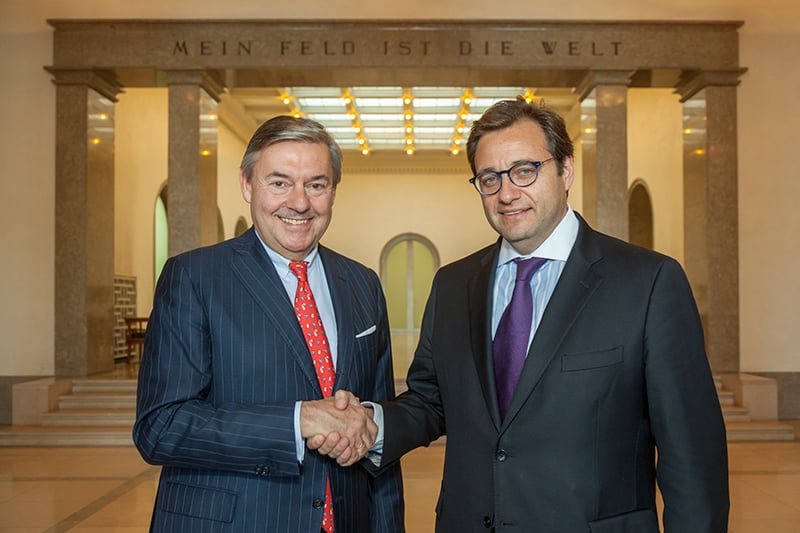 Hapag-Lloyd AG and Compañía Sud Americana de Vapores (CSAV) today signed a binding contract on merging CSAV’s entire container business with Hapag-Lloyd, subject to the necessary approvals. Following the integration, the new Hapag-Lloyd will rank among the four largest liner shipping companies in the world, with some 200 vessels with total transport capacity of around one million TEU, an annual transport volume of 7.5 million TEU and a combined turnover of 9 billion Euro. The company’s head office will remain in Hamburg. In addition, Hapag-Lloyd will have a strong regional office in Chile for its Latin America business.
In return for contributing its container business, CSAV will become a new Hapag-Lloyd core shareholder besides HGV (City of Hamburg) and Kühne Maritime. CSAV will initially hold a 30% stake in the combined entity. The partners have agreed on a capital increase of EUR 370 million once the transaction has been concluded, to which CSAV will contribute EUR 259 million. This will then increase CSAV’s share of Hapag-Lloyd to 34%. A second capital increase of EUR 370 million will be linked to Hapag-Lloyd’s planned stock exchange listing.
“I am delighted that we have succeeded in concluding this partnership through which our two companies are playing an active part in consolidating the liner shipping industry. This day is an important milestone in the history of Hapag-Lloyd,” said Michael Behrendt, Chairman of the Executive Board of Hapag-Lloyd, upon signing the agreement. “The transaction increases the value of the Company and therefore also the value of our shareholders’ shares.”
“By joining forces, we are creating a stronger, larger and more global company with significant economies of scale and a considerably improved competitive position,” said Oscar Hasbún, CEO of CSAV. The combination of CSAV’s container shipping business with Hapag-Lloyd will result in annual synergies of at least USD 300 million. Service networks and fleets of both companies complement one another ideally. “The combination with CSAV, Latin America’s leading container shipping line, considerably strengthens Hapag-Lloyd in this growth market and adds a strong position in the North-South traffic to the company’s global network and to its established strength in East-West traffics”, said Oscar Hasbún.
Order books are also complementary: While, at the end of April, Hapag-Lloyd will put into service the last of ten 13,200 TEU vessels ordered for the Far East trade, CSAV still has seven vessels, each of 9,300 TEU, scheduled for delivery in 2014 and 2015. These container ships are specially designed for the South American trade. “This means that we will have a young and cost-efficient fleet. The use of optimum tonnage in the trades is one of the key prerequisites for successful operations in the face of international competition,” said Oscar Hasbún.
Both companies also fit in other regards: CSAV, founded in 1872, and Hapag-Lloyd, founded in 1847, share a similar blend of long tradition and entrepreneurial vision for the future.
“By integrating CSAV’s container business, Hapag-Lloyd is able to build on its strengths and is therefore in an excellent position for future growth,” said Michael Behrendt, adding: “This combination will further strengthen our service portfolio and enable us to deliver an even better global service to our clients.”
The relevant corporate bodies of both companies have already approved the merger. The closing of the transaction is subject to the approval of competition authorities. Another condition is that not more than 5% of total CSAV´s minority shareholders exercise their appraisal rights till the 20th April. Until then, dissident CSAV shareholders have the right to withdraw. The company defined that this appraisal right should be exercised by holders of less than 5% of the company’s total shares in order for the merger with Hapag-Lloyd to be completed.
This news is courtesy of www.hapag-lloyd.com
G6 Alliance Port Rotations for Asia-North America West Coast and Trans-Atlantic services
Members of the G6 Alliance today released details on port rotations for the proposed service expansion to the Asia-North America West Coast and Trans-Atlantic trade lanes, announced in early December last year.
Subject to the completion of regulatory review process, the 17 services are scheduled to start in the second quarter of 2014.
“The G6 Alliance monitors market developments closely and is continuously seeking opportunities to improve our service offerings,” member carriers said in a statement. “With the introduction of the Asia-North America West Coast and Trans-Atlantic services, the G6 Alliance will further strengthen its position to meet shippers’ demand for more comprehensive, seamless and efficient services with competitive transit times. Further, each of the G6 Alliance members will be able to offer its customers significantly improved port-pair connections compared to their previous products.”
The G6 Alliance was formed in late 2011 and began operation in March 2012 in the Asia-Europe and Mediterranean trade lanes. The cooperation expanded to the Asia-North America East Coast trade lane in May 2013. With the proposed expansion, the G6 Alliance will provide a network covering all three major East-West trade lanes, operating a total of 29 services. The G6 Alliance members will continue to market these services individually as they do today.
The G6 Alliance members are: APL, Hapag-Lloyd, Hyundai Merchant Marine, Mitsui O.S.K. Lines, Nippon Yusen Kaisha and Orient Overseas Container Line.
The port rotations are as follows:
Asia-North America West Coast (12 services)
SE1 (South East Asia 1)
Singapore – Chiwan/Shekou – Kaohsiung – Los Angeles – (Manzanillo, Mexico* – Lazaro Cardenas*) – Los Angeles – Yokohama – Kaohsiung – Singapore
*only APL and Hapag-Lloyd are participating in these calls
SE2 (South East Asia 2)
Laem Chabang – Cai Mep – Hong Kong – Los Angeles – Oakland – Hong Kong – Laem Chabang
SE3 (South East Asia 3)
Port Klang – Singapore – Laem Chabang – Yantian – Los Angeles – Oakland – Pusan – Shanghai (Waigaoqiao) – Ningbo – Yantian – Singapore
SC1 (South China 1)
Xiamen – Chiwan/Shekou – Yantian – Los Angeles – Oakland – Kaohsiung – Xiamen
SC2 (South China 2)
Dachan Bay – Hong Kong – Yantian – Kaohsiung – Los Angeles – Kaohsiung – Xiamen – Hong Kong – Dachan Bay
CC1 (Central China 1)
Shanghai (Waigaoqiao) – Kwangyang – Pusan – Los Angeles – Oakland – Pusan – Kwangyang – Shanghai
CC2 (Central China 2)
Ningbo – Shanghai (Waigaoqiao) – Los Angeles – Ningbo
CC3 (Central China 3)
Qingdao – Xingang – Pusan – Yokohama – Los Angeles – Oakland – (Dutch Harbor*) – Yokohama – Pusan – (Naha*) – Qingdao
*only APL is participating in these calls
CC4 (Central China 4)
Shanghai (Waigaoqiao) – Ningbo – Los Angeles – Oakland – Shanghai
NP1 (North Pacific 1)
Singapore – Laem Chabang – Dachan Bay – Hong Kong – Yantian – Vancouver – Tacoma – Seattle – Pusan – Kaohsiung – Singapore
NP2 (North Pacific 2)
Hong Kong – Yantian – Kaohsiung – Shanghai* – Pusan – Tacoma – Seattle – Vancouver – Yokohama – Pusan – Kwangyang – Hong Kong
*terminal to be confirmed
NP3 (North Pacific 3)
Qingdao – Ningbo – Shanghai (Yangshan) – Pusan – Vancouver – Tacoma – Vancouver – Tokyo – Nagoya – Kobe – Qingdao
Trans-Atlantic (5 services)
AX1 (Atlantic Express 1)
UK port* – Rotterdam – Hamburg – Le Havre – New York – Norfolk – UK port*
*terminal to be confirmed
AX2 (Atlantic Express 2)
Southampton – Antwerp – Bremerhaven – Le Havre – Veracruz – Altamira – Houston – New Orleans – Charleston – Southampton
AX3 (Atlantic Express 3)
Antwerp – Bremerhaven – Southampton – Charleston – Port Everglades – Houston – Savannah – Norfolk – Antwerp
PA1 (Pacific Atlantic 1)
Shanghai* – Pusan – Kobe – Nagoya – Tokyo – Tacoma – Vancouver – Oakland – Los Angeles – Balboa** – Panama Canal – Manzanillo, Panama – Savannah – Norfolk – New York – Halifax – Southampton – Antwerp – Hamburg – Rotterdam – Halifax – New York – Norfolk – Savannah – Manzanillo, Panama – Panama Canal – Los Angeles – Oakland – Yokohama – Shanghai
*terminal to be confirmed
** to be confirmed
PA2 (Pacific Atlantic 2)
Kaohsiung – Pusan – Kobe – Tokyo – Balboa – Panama Canal – Manzanillo, Panama – Miami – Jacksonville – Savannah – Charleston – New York – Rotterdam – Bremerhaven – UK port* – Le Havre – New York – Norfolk – Charleston – Manzanillo, Panama – Panama Canal – Balboa – Los Angeles – Oakland – Tokyo – Kobe – Kaohsiung
This news is courtesy of www.apl.com
Australian Maritime Agency Develops New Effective Response To Maritime Emergencies
Australian industry, state and federal governments have endorsed a new National Plan for Maritime
Environmental Emergencies.
The plan sets out the cooperative arrangements between governments and industry to respond to
maritime pollution and shipping casualty incidents. The plan, managed by the Australian Maritime Safety
Authority, was reviewed with extensive input from key stakeholders, from industry and government,
drawing on their experience with maritime emergencies both domestically and internationally since the
last plan was put in place in 2001.
AMSA Chief Executive Graham Peachey said the new plan combines pollution response and the
management of maritime casualties for the first time in its 40 year existence.
“Following extensive collaboration with industry, state and territory governments, and emergency
services, the new plan is designed to integrate more effectively within Australia’s disaster management
arrangements,” Mr Peachey said.
“AMSA thanks all involved in the formulation of the new National Plan.”
A risk assessment, which was the cornerstone of the review, resulted in a boost to National Plan
response equipment stockpiles across Australia.
“These stockpiles are strategically located in nine ports around the coastline and can be drawn on in the
event of an oil spill or a stricken vessel causing pollution in our marine environment,” Mr Peachey said.
“AMSA invests in a significant training program so people around Australia have the skills to respond to
any potential marine pollution.”
The risk assessment also resulted in the establishment of emergency towage capabilities in two new
regions, under contract arrangements, Mr Peachey said.
“These vessels can be called on to respond to marine pollution or to tow ships causing marine pollution.
“AMSA’s emergency towage vessel in Cairns also patrols and responds to any marine pollution event in
the Great Barrier Reef, Torres Strait and Coral Sea under the National Plan.”
The National Plan has been endorsed by Federal and State and Territory governments and supersedes
the 2001 National Plan to Combat Pollution of the Sea by Oil and other Hazardous and Noxious
Substances.
This news is courtesy of www.amsa.gov.au
Two Ocean Shipping Companies to Pay $3.4 Million For Price Fixing of Government Cargo Contracts
Sea Star Line LLC and Horizon Lines LLC have agreed to resolve allegations that they violated the False Claims Act by fixing the price of government cargo transportation contracts between the continental United States and Puerto Rico, the Department of Justice announced today. Under the settlement agreements, Sea Star Line has agreed to pay $1.9 million, and Horizon Lines has agreed to pay $1.5 million.
“Today’s civil settlements demonstrate our continuing vigilance to ensure that those doing business with the government do not engage in anticompetitive conduct,” said Assistant Attorney General for the Justice Department’s Civil Division Stuart F. Delery. “Government contractors who seek to profit at the expense of taxpayers will face serious consequences.”
The government alleged that former executives of the defendant ocean shippers used personal email accounts to communicate confidential bidding information, thereby enabling each of the shippers to know the transportation rates that its competitor intended to submit to federal agencies for specific routes. This information allowed the shippers to allocate specific routes between themselves at predetermined rates. Among the contracts affected were U.S. Postal Service contracts to transport mail and Department of Agriculture contracts to ship food. Both Sea Star Line and Horizon Lines previously pleaded guilty, in related criminal proceedings, to anticompetitive conduct in violation of the Sherman Act.
“Postal Service contractors must understand and know that actions that undermine the contracting process, such as conspiring to suppress and eliminate competition, will not be tolerated and will be aggressively investigated,” said Tom Frost, Special Agent in Charge of the Major Fraud Investigations Division (MFID) with the Postal Service Office of Inspector General. “MFID will continue to work with DOJ, both criminally and civilly, to bring those individuals and companies to justice.”
The civil settlements resolve allegations in a lawsuit filed in federal court in Jacksonville, Fla., by former Sea Star Line executive William B. Stallings. The lawsuit was filed under the qui tam, or whistleblower, provisions of the False Claims Act, which permit private individuals to sue on behalf of the government for false claims and to share in any recovery. The Act also allows the government to intervene and take over the action, as it did in this case. Stallings will receive $512,719 of the recovered funds.
The settlements were the result of a coordinated effort by the Civil Division of the Department of Justice and the U.S. Postal Service Office of Inspector General.
This news is courtesy of www.justice.gov
Vessel Operators Pressing for Uniform, National Vessel Discharge Regulation
ARLINGTON, VA – In testimony before the Coast Guard Maritime Transportation Subcommittee of the House Transportation and Infrastructure Committee, Tom Allegretti, President & CEO of The American Waterways Operators, urged Congress to enact a uniform national standard for ballast water and other vessel discharges to end a patchwork of federal and state regulations that is counterproductive to enhanced environmental protection, confusing and costly for vessel owners, and
inefficient for state and federal agencies.
“Congress has an opportunity to enact legislation that improves the efficiency and effectiveness of marine transportation while enhancing the protection of our nation’s waterways,” Mr. Allegretti stated. “The establishment of a uniform federal framework for the regulation of vessel discharges will be good for the maritime industry and the men and women who work in it, good for shippers who rely upon marine transportation, good for the marine environment, and good for the American taxpayer.”
Mr. Allegretti emphasized that industry’s intent was not to avoid high standards, stating that “our industry has established a strong and continuously improving environmental record and we recognize that making responsible environmental practice a top priority is both good policy and good business. The problem is not that vessel discharges are regulated; it is how they are regulated.”
Mr. Allegretti shared the challenging compliance burden vessel operators and mariners face, with two federal agencies, the U.S. Coast Guard and the Environmental Protection Agency, and 25 states all regulating the same vessel discharges in overlapping and sometimes inconsistent ways.A tug-barge unit moving oil from Washington State to the Port of Richmond,California, for example, must comply with Coast Guard ballast water and hull fouling regulations.
Noting that a consensus among the scientific community as well as federal and state regulators regarding the capability of ballast water treatment technology has emerged in recent years and could serve as the foundation for bipartisan Congressional action, Mr. Allegretti urged the Subcommittee to end the current climate of uncertainty by “enacting a single set of uniform national standards, with a requirement for the standards to become increasingly stringent as treatment technology improves over time.”
“The broken regulatory regime for vessel discharges is not a problem of EPA’s making. It is not a problem of the Coast Guard’s making. It is a situation in which well-meaning and hard-working agencies have been effectively set up to fail as they seek to harmonize regulations promulgated pursuant to different statutory authorities,” Mr. Allegretti said. “Congressional leadership is badly needed to fix this unacceptable situation.”
The American Waterways Operators is the national trade association representing the tugboat, towboat and barge industry which operates along the rivers, coasts, Great Lakes and harbors of the United States. Barge transportation serves the nation as the safest, most environmentally friendly and most economical mode of freight transportation.
This Press Release is courtesy of www.americanwaterways.com
CSAV Pays $625,000 Civil Penalty For Shipping Violations
The Federal Maritime Commission announced a compromise agreement reached with Compania Sud Americana de Vapores S.A. (CSAV). CSAV is a vessel-operating common carrier based in Valparaiso, Chile. As a separate line of business, CSAV operates roll on/roll off (RO/RO) vessels in U.S. inbound and outbound trades.
Under the compromise agreement, CSAV agreed to pay a $625,000 civil penalty to resolve allegations that it violated the Shipping Act by acting in concert with other ocean common carriers under unfiled agreements involving shipments of automobiles and other motorized vehicles on RO/RO or specialized car carrier vessels in various U.S. import and export trades. These agreements had not been filed with the Commission or become effective under the Shipping Act in violation of Section 10(a) of the Shipping Act, 46 U.S.C. § 41102(b). The compromise also addressed related activities and violations arising under such carrier agreements. Commission staff alleged that these practices persisted over a period of several years and involved numerous U.S. trade lanes.
In concluding the compromise, CSAV agreed to provide ongoing cooperation with other Commission investigations or enforcement actions with respect to these activities. CSAV did not admit to violations of the Shipping Act.
Federal Maritime Commission Chairman Mario Cordero stated: “The Shipping Act mandates that the Commission take responsible actions to protect the shipping public. Carriers who fail to properly file with the Commission their agreements affecting carrier working relationships in the U.S. trades are made liable for significant civil penalties, no matter the size of the trade or the market share of the carrier involved.”
The Federal Maritime Commission (FMC) is the independent federal agency responsible for regulating the nation’s international ocean transportation for the benefit of exporters, importers, and the American consumer. The FMC’s mission is to foster a fair, efficient, and reliable international ocean transportation system while protecting the public from unfair and deceptive practices.
This Press Release is courtesy of www.fma.gov
U.S. Marine Industry Rides Wave of Optimism in 2014, Says GE Capital
CHICAGO, IL — More than half (54.7 percent) of marine industry participants expect sales to increase five percent to 10 percent this year, according to survey results released today by GE Capital, Commercial Distribution Finance (CDF). That’s up from the 43 percent who expected growth in that range last year.
That sentiment tracks closely with CDF’s forecast of eight percent growth for the U.S. marine industry in 2014.
“Our theme for our annual industry conference this year is ‘Riding a Wave of Optimism’ and that really reflects our outlook,” said Bruce Van Wagoner, president of CDF’s marine group, a leading provider of financing to marine dealers. “We see a stronger industry that’s poised for growth.”
This comes in spite of lingering worries about consumer demand, which is the top concern of 64.6 percent of survey respondents, up from 42 percent in 2013. The second-greatest concern was product affordability at 12.5 percent.
“Although consumer sentiment is still mixed, consumption rose for 16 consecutive quarters,” noted Rob Podorefsky, managing director of GE Capital’s Interest Rate Management Group. “The labor market is slowly improving, which could create some more opportunity, and inflation is subdued right now. Steadier gasoline prices should help the U.S. economy — and the marine industry — too.”
The industry has a positive outlook when it comes to product availability, according to 37.1 percent of survey respondents. It’s excited about new model and product introductions, according to 34.7 percent of respondents, and more “base” or lower-cost models, according to 31.6 percent.
Van Wagoner noted that dealers have fresher, more current models on hand and they’re turning their inventory more often. Pontoon boats are expected to be the most popular product, said 61.2 percent, followed by aluminum boats (14.6 percent) and fiberglass fishing boats (10.7 percent).
GE Capital’s survey was conducted at the Industry Leadership Conference, which was held in conjunction with the National Marine Manufacturers Association (NMMA), at the Miami International Boat Show on Feb. 12. The respondents are a variety of marine industry participants, including manufacturers, dealers and suppliers.
About GE Capital, Commercial Distribution Finance
GE Capital, Commercial Distribution Finance provided $34 billion in financing for more than 30,000 dealers and more than 3,000 distributors and manufacturers in the U.S. and Canada in 2013. Programs include inventory and accounts receivable financing, asset-based lending, private label financing, collateral management and related financial products. Customers have access to exclusive online tools and analytics to manage their accounts and inventory. For more information, visit http://www.gecdf.com/ or follow company news via Twitter.
GE Capital offers consumers and businesses around the globe an array of financial products and services. For more information, visit www.gecapital.com or follow company news via Twitter.
GE (NYSE: GE) works on things that matter. The best people and the best technologies taking on the toughest challenges. Finding solutions in energy, health and home, transportation and finance. Building, powering, moving and curing the world. Not just imagining. Doing. GE works.
This Press Release is courtesy of www.ge.com

