Lufthansa Group benefits from strong demand for air travel and achieves an operating profit of 383 million euros despite significantly higher fuel costs
Group revenue rises by eight percent to 11.1 billion euros in the second quarter
Approximately 750 million euros in additional costs due to increased fuel prices in the second quarter
Adjusted EBIT declines significantly to 383 million euros
Lufthansa Cargo continues positive trend and improves Adjusted EBIT by 42 million euros
Lufthansa Technik achieves an Adjusted EBIT of 157 million euros, in line with the prior-year level
Uncertainties for the full year remain high; intact demand, network optimizations and cost discipline offset higher kerosene costs
Lufthansa Group expects an Adjusted EBIT of between 1.7 and 2.2 billion euros for the full year 2026, considering the current kerosene price volatility
Carsten Spohr, Chairman of the Executive Board and CEO of Deutsche Lufthansa AG, says:
“Today, we reflect on a challenging second quarter that was once again marked by multiple geopolitical crises and uncertainties. Despite our further improvement in load factor and a significant increase in yield, we were unable to fully offset the considerable rise in fuel costs. The continued strong global demand for air travel—primarily in the premium classes—had a particularly positive impact. Our numerous investments in premium products such as Allegris, Swiss Senses, and the FOX service upgrade are beginning to pay off. At the core Lufthansa brand, all three elements of the turnaround program are now taking effect: fleet and product renewal is making visible progress, capacity at the highly efficient Discover Airlines and Lufthansa City Airlines is being continuously expanded, and competitiveness is being enhanced through numerous productivity and efficiency measures. At the same time, the positive trend in the cargo business continues. Lufthansa Cargo significantly increased its operating profit, achieving a margin of over 11 percent in the second quarter. Lufthansa Technik also delivered a solid second quarter and increased its revenue by 11 percent. Especially in a volatile environment, it is apparent that our business model is robust, adaptable, and increasingly resilient.”
Second-quarter 2026 result shaped by high kerosene prices
The Lufthansa Group increased its revenue in the second quarter of 2026 by eight percent year on year to 11.1 billion euros (prior year: 10.3 billion euros). The company recorded an operating profit (Adjusted EBIT) of 383 million euros, a significant decline compared to last year (prior year: 870 million euros). The primary drivers of the earnings decline were fuel costs that were approximately 750 million euros above the prior-year level, as well as financial burdens of at least 150 million euros caused by strikes. Offsetting these were improved yields, which were more than 13 percent above the prior-year level on Asian routes.
The Adjusted EBIT margin contracted to 3.4 percent (prior year: 8.4 percent). Group net income also declined to 123 million euros (prior year: 1.0 billion euros), mainly due to a lower operating result, valuation effects, and one-off tax effects in the prior year. Adjusted free cash flow fell to -365 million euros (prior year: 138 million euros).
Network airlines partially offset costs through strong demand
The Group’s network airlines offered 3 percent less capacity in the second quarter than in the comparable prior-year quarter, with the decline attributable primarily to six strike days in April as well as the group-wide optimization of short-haul operations, including the removal of CityLine’s flight operations from the schedule. The load factor of the group network carriers edged up slightly to 81.6 percent and unit revenues rose sharply by 6.4 percent year on year. Both figures underscore robust demand. This demand strength was driven in particular by the premium segment and by Asian routes.
Due to the sharp rise in kerosene prices resulting from the conflict in the Middle East, fuel costs at the network airlines rose by more than 600 million euros year on year. Unit costs excluding fuel and emissions expenses increased by 3.1 percent year on year mainly as a result of the lower capacity. The key cost drivers were higher personnel expenses and depreciation. Taking last year’s capacity into account, unit costs rose by only about one percent, which demonstrates the consistent cost discipline in the core business.
Overall, the network airlines generated an Adjusted EBIT of 137 million euros, 490 million euros less than in the prior year. This figure also includes an equity result that was 108 million euros lower than in the prior year, attributable mainly to negative currency driven valuation effect of lease liabilities at ITA Airways.
Point-to-point airlines record strong intra-European demand
Eurowings reduced its capacity by six percent compared to the second quarter of the prior year. Unit revenues rose by 9.4 percent, driven primarily by a strong European business. Against the backdrop of the crisis in the Middle East, Eurowings has temporarily suspended flights to the Gulf region — which had previously seen strong growth — and is instead operating additional routes to the Mediterranean region.
Unit costs excluding fuel and emissions expenses rose by 10.9 percent, driven in particular by the reduced capacity as well as higher expenditure on aircraft maintenance and increased charges for fees, catering and personnel in preparation for the introduction of the Boeing 737-8 MAX into the fleet.
The equity result from the SunExpress joint venture was 29 million euros below the prior-year level, due primarily to a challenging demand environment on routes to Turkey.
Overall, Adjusted EBIT in the point-to-point airlines segment fell by 101 million euros in the second quarter of 2026 to -37 million euros. Here too, the primary driver was the sharp rise in fuel prices, which caused a cost increase of 71 million euros year on year.
Lufthansa Technik and Lufthansa Cargo post earnings increases
Demand for Lufthansa Technik’s maintenance, repair and overhaul services remains consistently high. Revenue rose by 11 percent year on year to 2.2 billion euros (prior year: 2.0 billion euros), with revenue from external customers even increasing by 23 percent. Operating profit (Adjusted EBIT) of 157 million euros slightly exceeded the prior-year level (prior year: 149 million euros).
Lufthansa Cargo was able to expand its capacity in the second quarter by two percent year on year. This was attributable in particular to increased cargo space capacities, including the marketing of ITA Airways’ belly capacity.
Against the backdrop of the crisis in the Middle East, demand in the air freight business remained persistently high. Consequently, yields rose considerably by 27 percent year on year. Unit costs were higher than the previous year, though this was due to passed-on kerosene costs. Overall, Lufthansa Cargo generated a markedly improved Adjusted EBIT of 116 million euros (prior year: 73 million euros).
The Lufthansa Group’s balance sheet remains consistently stable
Operating cash flow fell by approximately 600 million euros in the first half to around 2.3 billion euros. The change is primarily driven by a lower operating result as well as lower advance ticket payments as of end of June, owing to shorter booking cycles compared to the prior year. Net investments of 1.0 billion euros (prior year: 1.6 billion euros) were attributable mainly to final payments for eight aircraft deliveries as well as advance payments for future fleet additions. Adjusted free cash flow in the first half of 2026 stood at 1.0 billion euros, roughly in line with the prior-year level.
The Group also maintained a stable balance sheet in the second quarter of 2026. As of 30 June 2026, net financial debt including net pension obligations stood at 8.3 billion euros, in line with the level at year-end 2025. As of end of June 2026, total liquidity available to the company amounted to 10.7 billion euros, likewise matching the figure at year-end 2025.
Till Streichert, Chief Financial Officer of Deutsche Lufthansa AG:
“The second quarter was characterized by exceptionally high fuel costs and heightened geopolitical uncertainty. Nevertheless, thanks to robust demand, rising yields and the strong performance of Lufthansa Cargo, we were able to achieve a positive result. At the same time, our balance sheet remains consistently strong at 10.7 billion euros in liquidity. Even though uncertainties for the second half of the year remain high, we are confident that the consistent execution of our strategy, cost discipline, network optimizations and persistently high demand will offset a significant portion of the cost increases. However, the growing volatility of fuel prices in recent times, as well as the considerably shorter booking cycles in the passenger airline business, are making forecasting increasingly difficult. For this reason, we are now projecting a full-year earnings range of 1.7 to 2.2 billion euros in Adjusted EBIT — the upper end of this range therefore continues to represent a result significantly above the prior year.”
Outlook: Range added due to high kerosene price volatility
The Lufthansa Group now expects an Adjusted EBIT of between 1.7 and 2.2 billion euros for fiscal year 2026. The upper end of the range continues to represent a result significantly above the prior year and thus remains in line with the previous earnings ambition. The range reflects the heightened uncertainty stemming from high kerosene price volatility and shortened booking cycles in the passenger business. Key influencing factors for the further earnings development include the trajectory of fuel costs, unit revenues, the operational stability of flight operations and the air freight business. The Lufthansa Group now expects full-year capacity to be in line with the prior-year level. The forecast for Adjusted free cash flow of approximately 0.9 billion euros remains unchanged.
Further information
Further information on the results of individual business segments will be published in the report for the second quarter of 2026. This will be published simultaneously with this press release on 4 August 2026 at 7:00 a.m. CEST at https://investor-relations.lufthansagroup.com/en/investor-relations.html.
Traffic figures for the second quarter of 2026 will also be published at 7:00 a.m. CEST at https://investor-relations.lufthansagroup.com/en/financial-reports-publications/traffic-figures.html
2045 to Meet Rising Air Travel Demand
– African airlines will need nearly 1,200 new airplanes; 75% will be single-aisle jets
– Aviation services demand will fuel the need for 75,000 new aviation professionals
– Intra‑Africa and Africa–Middle East traffic will lead regional fleet growth and network expansion
NAIROBI, Kenya, – Africa’s young, increasingly urban population, growing middle class and improving infrastructure will drive passenger traffic to grow nearly 6% annually through 2045, one of the fastest rates globally, Boeing [NYSE: BA] said today. The region’s commercial airplane fleet will more than double from 755 to 1,625 over the next 20 years to support this demand, as projected in Boeing’s 2026 Commercial Market Outlook (CMO) for Africa.
Fleet expansion
Of the nearly 1,200 newly delivered airplanes expected by 2045, 870 will be single‑aisle jets to support expanding domestic and regional networks.
Demand for widebody airplanes will more than double, supporting fleet modernization and long‑haul network growth. Boeing also forecasts that the cargo fleet will grow from 60 to 150 freighters as the continent’s logistics, e‑commerce and high‑value export markets develop.
Passenger traffic growth
Intra‑African passenger traffic is expected to grow at a faster pace than the regional average, enabled by better flight connections. Europe remains the largest international passenger market for flights to and from Africa and is forecast to remain so through 2045. This is driven by expanding economic ties, enduring cultural and family connections, and rising tourism investment.
“Africa’s aviation market is entering a period of sustained growth driven by improving connectivity, expanding intraregional travel and deeper economic ties across the continent and with key global markets. Meeting this demand will require a broader commitment to fleet modernization, expanded capacity, digital solutions and workforce development,” said Shahab Matin, Boeing managing director of Commercial Marketing. “The opportunity extends well beyond airplanes. It will require investment in affordable access, and the people who will support a larger fleet.”
Commercial services and workforce needs
The expansion of Africa’s aviation ecosystem will create growing demand for services and skilled personnel through 2045. Boeing’s Commercial Services Market Outlook forecasts a $140 billion market for maintenance, repair, overhaul and modifications (MRO), digital solutions.
Boeing’s Pilot and Technician Outlook forecasts that as airlines grow their fleets and expand route networks, they will need 75,000 new aviation professionals: 22,000 pilots, 25,000 technicians and 28,000 cabin crew.
The Boeing Commercial Market Outlook is an annual forecast published since 1961 that provides 20‑year demand projections for airplanes and services worldwide. For more information, visit: cmo.boeing.com(opens in a new tab).
A leading global aerospace company and top U.S. exporter, Boeing develops, manufactures and services commercial airplanes, defense products and space systems for customers in more than 150 countries. Our U.S. and global workforce and supplier base drive innovation, economic opportunity, sustainability and community impact. Boeing has been a committed partner to African airlines and aviation institutions for over seven decades, supporting safe, reliable and sustainable growth across the continent.
In settlement with DOT, American Airlines reiterates commitment to customers traveling with wheelchairs and mobility devices
FORT WORTH, Texas — American Airlines today formally reached a settlement with the U.S. Department of Transportation (DOT) to continue the airline’s significant actions to improve the travel experience for customers traveling with wheelchairs and mobility devices.
American has a long-standing commitment to serving passengers with disabilities. In 2023, American served more than 8 million passengers who requested assistance, and transported more than 146,000 wheelchairs and other personal mobility devices. American provides these services in accordance with all regulations free of charge and in challenging airport environments around the world where weather, air traffic control, and other complexities can make travel difficult for all passengers. In recognition of the special challenges passengers with disabilities face, in 2024 alone, American invested more than $175 million in services, infrastructure, training and new technology to help ease their journey and transport their specialized equipment.
The impact of these investments is clear. In 2023, when American received more than 8 million requests from customers for wheelchair assistance, less than 0.1 percent (or less than 1 in every 1,000) of these customers submitted a disability-related complaint to American. Further, customer claims for mishandled wheelchairs and scooters have declined by more than 20% over the last two years. Despite American’s best efforts, if a wheelchair or other mobility device is damaged or delayed during a customer’s journey, American pays for or provides repairs, replacements and loaners. The vast majority of cases are resolved directly with the passenger, without a lawsuit or the passenger escalating the matter to the DOT for resolution.
“This year, American invested over $175 million in service, infrastructure and training to improve the travel experience for customers traveling with wheelchairs or other mobility devices,” said Julie Rath, Senior Vice President of Airport Operations, Reservations, and Service Recovery at American. “Today’s agreement reaffirms American’s commitment to taking care of all of our customers.”
American’s investments in improving travel for customers using wheelchairs and mobility devices
As a result of American’s recent investments, the airline has improved its wheelchair and scooter handling rate by more than 20% since 2022.
American’s disability-related complaint rate for wheelchair assistance services is less than 0.1% – which means there is less than one complaint for every 1,000 requests for wheelchair assistance. American is working to get that number to zero.
American became the first U.S. airline to launch an automated tag for mobility devices, which will ensure more accurate and consistent information for team members handling the devices and provide enhanced visibility of the devices throughout the customer travel journey.
American has delivered wheelchair movers to all of its hubs and gateways and invested in wheelchair lifts at more than 20 airports, with five more expected to be in place by the end of the year.
Despite these improvements, there are instances where the service the airline provides is disrupted, untimely, or results in harm to the passenger or their equipment. American takes all these complaints and claims seriously, and it works hard to remediate them. The airline investigates every complaint, providing customers with written responses. American routinely provides compensation to dissatisfied customers — including via trip credits, miles, vouchers and cash — to make the situation right.
You can view a fact sheet on American’s investments in improving travel for people with wheelchairs and mobility devices.
About American Airlines Group
As a leading global airline, American Airlines offers thousands of flights per day to more than 350 destinations in more than 60 countries. The airline is a founding member of the oneworld® alliance, whose members serve more than 900 destinations around the globe. Shares of American Airlines Group Inc. trade on Nasdaq under the ticker symbol AAL. Learn more about what’s happening at American by visiting news.aa.com and connect with American @AmericanAir and at Facebook.com/AmericanAirlines. To Care for People on Life’s Journey®.
GE Aerospace joins AI Safety Consortium
NISKAYUNA, NY – GE Aerospace, one of the aviation industry’s top AI patent holders, has signed on as a member of the National Institute of Standards and Technology’s (NIST) AI Safety Institute Consortium (AISIC). The AISIC was established earlier this year, with the goal of bringing together AI developers in industry, government, academia, and civil society organizations to develop guidelines and policies to promote the safe and responsible use of AI.
Paul Ardis, Technology Manager for AI & Computer Vision Technologies for GE Aerospace’s Research Center, who will lead GE Aerospace’s participation on the Consortium, says AISIC’s mission is perfectly aligned with the company’s rigorous governance practices around AI developments, stating, “In everything GE Aerospace does, it’s always safety first and our approach to new AI developments is no different. We have a robust AI Board in place that already is thinking through and has established guiding principles around how we develop and deploy AI in the safest, most responsible ways.”
Ardis added, “We look forward to sharing the learnings and perspectives of our AI Board with the AISIC, and in turn, we’re eager to learn from through the Consortium how we can continuously improve our management of new AI developments and applications.”
Ardis noted that GE Aerospace applied a lean + digital mindset that always emphasizes safety first to guide AI developments. Over the past decade, GE Aerospace has more than doubled its investment in AI technology, positioning the company as one of the top AI patent holders within the aviation industry. Today, GE Aerospace is using AI to enhance everything from engine monitoring and part inspections to delivering insights for our airline customers to enable predictive maintenance measures and new ways to optimize fuel efficiency and safety.
About GE Aerospace
GE Aerospace (NYSE:GE) is a global aerospace propulsion, services, and systems leader with an installed base of approximately 44,000 commercial and 26,000 military aircraft engines. With a global team of 52,000 employees building on more than a century of innovation and learning, GE Aerospace is committed to inventing the future of flight, lifting people up, and bringing them home safely. Learn more about how GE Aerospace and its partners are defining flight for today, tomorrow and the future at www.geaerospace.com.
Boeing Pioneering Quantum Communications Technology with In-Space Test Satellite
EL SEGUNDO, Calif.,- Boeing [NYSE: BA] today announced the scheduled 2026 launch of a satellite – dubbed Q4S – which is designed to demonstrate quantum entanglement swapping capabilities on orbit. This Boeing-funded, first-of-its-kind space mission brings humanity closer to building a secure, global quantum internet that connects quantum sensors and computers.
Quantum sensors are much more precise than today’s state-of-the-art instruments and quantum computers have the capacity to process large amounts of data, offering potential to revolutionize an array of industries. This experiment is attempting to demonstrate quantum networking in space, helping to better understand how these networks can be built across vast distances and remain highly synchronized.
Boeing is setting the stage for a revolution in how we handle information with secure, quantum-enhanced applications, such as fault-tolerant systems that reduce errors in computing, secure voting mechanisms that protect electoral integrity, and blind quantum computing which allows data to be processed without exposure.
“We’re making a big bet on quantum technology,” said Jay Lowell, chief engineer for Boeing’s Disruptive Computing, Networks & Sensors organization. “Quantum entanglement swapping underpins the communication of the future, expanding quantum networks beyond simple point-to-point communication. We’re launching Q4S to prove it can be done in orbit.”
Entanglement swapping relies on quantum teleportation – a method where the information carried by a particle can be transferred without having to move the particle itself across the distance. Albert Einstein famously referred to this ethereal concept as “spooky action at a distance,” underscoring the complex nature of quantum mechanics.
“By demonstrating entanglement swapping, we can create a scalable network, where quantum information can be transmitted over vast distances, something currently limited by decoherence and loss,” said Lowell.
Quantum networking capabilities in space can unlock new potential, helping researchers gather more data about the Earth and space environments – areas where current instrument sensitivity and resolution limit progress.
“Boeing has always served as a pioneer, pushing the boundaries of what’s possible,” said Todd Citron, Boeing’s Chief Technology Officer. “We’re doing much more than participating in quantum research, we are leading the way to operationalize and scale quantum technologies for global applications.”
The year-long Q4S demonstration involves two entangled-photon pair sources housed within a space vehicle. Boeing’s payload and technology partner, HRL Laboratories, a joint venture between Boeing and GM [NYSE: GM], has made significant advancements in benchtop exercises as the joint team finalizes technical designs of a space-hardened payload that is ready for launch.
As a leading global aerospace company, Boeing develops, manufactures and services commercial airplanes, defense products and space systems for customers in more than 150 countries. As a top U.S. exporter, the company leverages the talents of a global supplier base to advance economic opportunity, sustainability and community impact. Boeing’s diverse team is committed to innovating for the future, leading with sustainability, and cultivating a culture based on the company’s core values of safety, quality and integrity. Join our team and find your purpose at boeing.com/careers.
HRL Laboratories, LLC, Malibu, California, (hrl.com) pioneers the next frontiers of physical and information science. Delivering transformative technologies in automotive, aerospace and defense, HRL advances the critical missions of its customers. As a private company owned jointly by Boeing and GM, HRL is a source of innovations that advance the state of the art in profound and far-reaching ways.
FAA and NATCA Reach Agreement to Address Controller Fatigue by Providing More Rest Between Shifts
Today, the Federal Aviation Administration (FAA) announced an agreement with the National Air Traffic Controllers Association (NATCA) to ensure air traffic controllers receive adequate rest between shifts and can continue to safely do their essential work. This agreement will enable the implementation of long-term, systematic changes following the identified opportunities in the report from a panel of experts.
“The science is clear that controller fatigue is a public safety issue, and it must be addressed. Today, after collaborating with NATCA, we are pleased to announce important progress for the flying public on the issue of fatigue,” said FAA Administrator Mike Whitaker. “This is the beginning of our work, not the end. We will continue to collaborate and take steps to prioritize controllers’ health and well-being on behalf of the public.”
“NATCA is pleased that the FAA recognized the importance of working with NATCA to address the issue of fatigue,” said NATCA President Rich Santa. “NATCA has been voicing concern regarding controller fatigue for years and we are happy to join with the FAA to implement changes that will begin to provide relief to this understaffed workforce.”
“We commend the FAA and NATCA for taking these actions that reflect the Scientific Expert Panel findings and will significantly address air traffic controller fatigue risks including the four priority opportunities identified, and improve the safety of the National Airspace System,” said Dr. Mark Rosekind, Dr. Erin Flynn-Evans, and Dr. Charles Czeisler, the members of the Scientific Expert Panel on Air Traffic Controller Safety, Work Hours, and Health.
As schedules are negotiated for next year, the FAA and NATCA agree that:
Controllers will receive 10 hours off between shifts and 12 hours off before and after a midnight shift.
Controllers will have limitations on the number of consecutive overtime assignments.
There will be procedures in place, including providing the necessary education to the workforce, for more effective use of current recuperative breaks.
The FAA and NATCA, in consultation with scientific experts, will establish a collaborative workgroup and expand the existing FAA’s Fatigue Risk Management System Fatigue Safety Steering Committee to develop recommendations addressing the opportunities identified in the April 2024 expert report.
In addition to addressing controller fatigue, the FAA is committed to growing the controller workforce. The agency is on track to meet its goal of hiring 1,800 controllers this year. The agency has also expanded the training pipeline to increase hiring and training.
American Airlines and Tulsa Tech Partner to Develop Aviation Maintenance Talent Pipeline
TULSA, Okla. — Students in Tulsa Tech’s aviation maintenance technology program now have more than 3,000 new industry mentors thanks to a new partnership announced today with American Airlines. Students now have direct access to the airline’s Tulsa-based aviation maintenance technicians (AMTs) through ongoing engagement opportunities at the carrier’s maintenance base and on campus. Additionally, top-performing students will secure guaranteed interviews for open positions with the carrier.
While the partnership is new, it’s not the first time American and Tulsa Tech have worked together to inspire future AMTs. In 2011, American donated a McDonnell Douglas MD-80 aircraft to the school, and the iconic aircraft continues to be used today to provide hands-on training opportunities. American’s Tulsa-based AMTs have also mentored award-winning Tulsa Tech student teams in the annual Aerospace Maintenance Council Competition.
“American is excited to officially partner with Tulsa Tech to mentor and train future generations of aviation maintenance technicians,” said Greg Emerson, American’s Vice President of Base Maintenance. “American’s Tech Ops – Tulsa maintenance base is the largest commercial aviation maintenance facility in the world and has been the backbone of our base maintenance program since 1946. Having access to top local talent from Tulsa Tech ensures that work will continue for generations to come. We’re eager to provide a pathway from their Tulsa Tech classrooms to our hangars.”
Tulsa Tech, the oldest and largest technology center in Oklahoma’s CareerTech System, is a career and technology center school district dedicated to educating people for success in the workplace. Tulsa Tech helps high school and adult students from across the Tulsa region explore new careers, upgrade their training and skills, and pursue their dreams. Students can work toward their FAA Airframe and Powerplant licenses or choose from other aviation-related coursework at the school. More information can be found at tulsatech.edu.
“We extend our heartfelt gratitude for our strong partnership in workforce development and training with American Airlines,” said Dr. Steve Tiger, Tulsa Tech Superintendent and Chief Executive Officer. “Their unwavering support and collaboration help us train the next generation of skilled workers and highlights the expanding career opportunities available throughout the aviation industry, including right here in Tulsa at American Airlines.”
American also donated several aircraft parts including an auxiliary power unit, four oxygen generators, a digital flight computer and a flow control valve during today’s event at the school’s Riverside campus. These parts will provide students with relevant, hands-on resources to help them in their studies.
American employs nearly 5,000 team members at Tech Ops – Tulsa, including 3,200 licensed AMTs. The facility was recently awarded $22 million from the State of Oklahoma to make enhancements at the base. The funds are in addition to a $31.6 million engine shop capital investment and ongoing $350 million improvement project made by American. As a result of these investments, American is in the process of adding more than 300 new jobs a Tech Ops – Tulsa. Candidates interested in joining American’s team can view open opportunities and apply online at jobs.aa.com.
About American Airlines Group
To Care for People on Life’s Journey®. Shares of American Airlines Group Inc. trade on Nasdaq under the ticker symbol AAL and the company’s stock is included in the S&P 500. Learn more about what’s happening at American by visiting news.aa.com and connect with American @AmericanAir and at Facebook.com/AmericanAirlines.
American Airlines Is Extending Its Commitment To Sustainability To Its Sourcing And Procurement Practices
FORT WORTH, Texas — American Airlines released its 2023 Sustainability Report today, documenting its work to advance the company’s strategy to address climate change and accelerate the broader solutions needed to decarbonize aviation, and sharing progress on other issues important to the company and its stakeholders — including safety, human capital and customer experience.
Key progress in 2023 includes American’s collaboration with Breakthrough Energy and Google Research on groundbreaking contrail avoidance research, which will inform how the industry might address its impact on climate change. The report also includes a discussion of how American is extending its commitment to sustainability to its sourcing and procurement practices.
“Thanks to the hard work of our more than 140,000 team members, American continues to deliver for our customers while making strides toward our sustainability goals,” said American’s CEO Robert Isom. “There is far more work to be done and many areas where we will continue to rely on policymakers and partnerships to make progress. But I’m proud of our record — from advancing the development of lower-carbon technologies, to our work to better develop and recruit a diverse and talented group of leaders with unmatched expertise throughout the company.”
Through ongoing engagement across the company and with a broad range of external stakeholders, American has identified four priority sustainability issues discussed in detail in the report: safety; support for team members; customer satisfaction and operational performance; and climate change and fuel efficiency. American has maintained its commitment to its long-term sustainability goals, while recognizing the challenges and interdependencies in reaching them.
“American’s goal to achieve zero greenhouse gas emissions by 2050 is the right one, but it won’t be easy,” said American’s Chief Sustainability Officer Jill Blickstein. “Our report describes the concrete steps we have taken and sets the stage for the hard work in the years ahead. American is committed to working with our partners inside and beyond the aviation industry to get us and our industry on a path to meet these global challenges.”
In line with American’s commitment to transparency and strong industry standards, the report also substantially aligns with the recommendations of the Task Force on Climate-related Financial Disclosures and the standard for the airline industry developed by the Sustainability Accounting Standards Board.
Read the full Sustainability Report.
About American Airlines Group
To Care for People on Life’s Journey®. Shares of American Airlines Group Inc. trade on Nasdaq under the ticker symbol AAL and the company’s stock is included in the S&P 500. Learn more about what’s happening at American by visiting news.aa.com and connect with American @AmericanAir and at Facebook.com/AmericanAirlines.
Southwest Airlines Announces Appointment of Rakesh Gangwal, Experienced Airline Executive and Entrepreneur, to Board of Directors
July 8, 2024 – The Board of Directors of Southwest Airlines Co. (NYSE: LUV) (“Southwest”) (the “Company”) has appointed Rakesh Gangwal as a member of the Board, effective July 7.
Gangwal has deep and extensive airline industry experience and is the co-founder of India’s largest airline by fleet size and passengers carried, InterGlobe Aviation, known as IndiGo. Before co-founding IndiGo in 2006, Gangwal served as Chairman, President, and Chief Executive Officer of Worldspan Technologies, a provider of technology and information services to the travel and transportation industry. Prior to his time at Worldspan, Gangwal served as President and Chief Executive Officer of US Airways Group, and previously as its Chief Operating Officer. Gangwal previously served in executive roles at Air France and United Airlines.
“I am delighted to welcome Rakesh, who brings to our Board decades of valuable experience as an executive and entrepreneur at some of the world’s leading airlines,” said Gary Kelly, Executive Chairman of the Board. “Having co-founded IndiGo and grown it into India’s largest airline, Rakesh knows the importance of building a business that has both a distinct culture and enduring profitability.”
“I have long admired Southwest Airlines and am honored to join the Board,” said Gangwal. “Together with the rest of the Board, I look forward to supporting the Company’s strategic direction and building on its well-earned reputation as one of the world’s most admired and respected airlines.”
“Rakesh’s expertise in travel technology will be valuable as we continue to make investments that support our operations and strategic initiatives,” added Kelly. “We look forward to working with Rakesh and benefitting from his insights to best serve our Customers, do right by our Employees, and drive long-term Shareholder value.”
In addition to having served on the board of InterGlobe Aviation, Gangwal has also served on several other public company Boards, including US Airways Group, CarMax, Office Depot, OfficeMax, and PetSmart. Gangwal earned a Bachelor of Technology degree from the Indian Institute of Technology and a Master of Business Administration from The Wharton School at University of Pennsylvania.
Gangwal’s appointment continues the Board’s deliberate efforts to evolve its composition to comprise professionals with a diverse range of skills and experience in areas critical to Southwest Airlines’ business, including aviation, travel, finance, technology, consumer services, governmental affairs, human capital, environmental and sustainability, and logistics and operations. As part of its continued refreshment efforts, the Board has appointed a total of eight new independent and highly-qualified Directors, including Gangwal, over the last three years.
About Southwest Airlines Co.
Southwest Airlines Co. operates one of the world’s most admired and awarded airlines, offering its one-of-a-kind value and Hospitality at 121 airports1 across 11 countries. Southwest took flight in 1971 to democratize the sky through friendly, reliable, and low-cost air travel and now carries more air travelers flying nonstop within the United States than any other airline2. Based in Dallas and famous for an Employee-first corporate Culture, Southwest maintains an unprecedented record of no involuntary furloughs or layoffs in its history. By empowering its more than 74,0003People to deliver unparalleled Hospitality, the maverick airline cherishes a passionate loyalty among more than 137 million Customers carried in 2023. That formula for success has brought industry-leading prosperity and 47 consecutive years4 of profitability for Southwest Shareholders (NYSE: LUV). Southwest leverages a unique legacy and mission to serve communities around the world including harnessing the power of its People and Purpose to put communities at the Heart of its success. Learn more by visiting Southwest.com/citizenship. As the airline with Heart, Southwest has set a goal to work toward achieving net zero carbon emissions by 20505. Southwest has also set near-term targets and a three-pillar strategy to achieve its environmental goals. Learn more by visiting Southwest.com/planet.
Effective Aug. 5, 2024, the airline will serve 117 airports.
Based on U.S. Dept. of Transportation quarterly Airline Origin & Destination Survey since Q1 2021
Fulltime-equivalent active Employees
1973-2019 annual profitability
Southwest’s net zero by 2050 goal includes Scope 1, Scope 2, and Scope 3 Category 3 emissions only and excludes any emissions associated with non-fuel products and services, such as inflight service items.
SOURCE Southwest Airlines Co.
American Airlines Welcomes Fiji Airways to the World of AAdvantage
FORT WORTH, Texas — American Airlines announced that Fiji Airways, Fiji’s national airline, will join the award-winning AAdvantage® travel rewards program in the coming year, offering members a host of benefits as well as earning and redemption capabilities when traveling on either airline.rnrnThis collaboration means that AAdvantage® members will enjoy a seamless experience when traveling on Fiji Airways, receiving benefits such as priority check-in, priority boarding, complimentary baggage allowance, preferred seats and enhanced award redemption. rnrn“We are taking our partnership with Fiji Airways one step further by offering our mutual customers the opportunity to unlock more destinations and travel experiences through the AAdvantage® program,” said Anmol Bhargava, American’s Vice President of Partnerships. “We look forward to welcoming Fiji Airways customers into the AAdvantage® program so they can experience all the ways we deliver on our commitment that travel is better as an AAdvantage® member.”rnrnAAdvantage® is the longest running travel loyalty program in the world — the program started in 1981 to reward frequent flyers. Now, AAdvantage® is much more than a frequent flyer program — it’s a travel rewards program that gives members access to unparalleled experiences, with more ways to earn and use miles, and more rewards and status benefits. rnrn“This loyalty partnership marks a significant milestone, bringing together two renowned carriers to offer new benefits to millions of travelers,” said Fiji Airways Managing Director and Chief Executive Officer, Andre Viljoen. “We are excited about the positive impact this collaboration will have on both our airlines and our guests who will benefit from the exclusive perks.”rnrnThe South Pacific airline, which serves 26 destinations in 15 countries and territories, will become a full member of oneworld in 2025.rnrn“With this partnership, Fiji Airways is set to gain access to a vast network of American travelers, potentially increasing visitor arrivals to the enchanting destination of Fiji,” added Viljoen. “The allure of Fiji’s pristine beaches, vibrant culture and warm hospitality is expected to attract a growing number of American tourists, contributing to the nation’s thriving tourism industry.”rnrnFiji Airways customers will be able to join AAdvantage® by visiting aa.com.rnrnAbout American Airlines GrouprnTo Care for People on Life’s Journey®. Shares of American Airlines Group Inc. trade on Nasdaq under the ticker symbol AAL and the company’s stock is included in the S&P 500. Learn more about what’s happening at American by visiting news.aa.com and connect with American @AmericanAir and at Facebook.com/AmericanAirlines.rnrnAbout Fiji Airways: Founded in 1951, Fiji Airways Group comprises of Fiji Airways, Fiji’s National Airline and its subsidiaries: Fiji Link, its domestic and regional carrier, Pacific Call Comm Ltd, and a 38.75% stake in the Sofitel Fiji Resort & Spa on Denarau Island, Nadi. From its hubs at Nadi and Suva International Airports, Fiji Airways and Fiji Link serve 108 destinations in over 15 countries (including code-share). Destinations include Fiji, Australia, New Zealand, the US, Canada, the UK, Hong Kong (SAR China), Singapore, India, Japan, China, Samoa, Tonga, Tuvalu, Kiribati, Vanuatu and Solomon Islands. The Fiji Airways Group brings in 64 percent of all visitors who fly to Fiji, employs over 1000 employees, and earns revenues of over FJD$1 billion. Fiji Airways rebranded from Air Pacific in June 2013. Visit www.fijiairways.com for more information.
Lockheed Martin Selected To Develop Next Generation Weather Satellite Constellation
DENVER — NASA has selected Lockheed Martin [NYSE: LMT] to develop and build the nation’s next generation weather satellite constellation, Geostationary Extended Observations (GeoXO), for the National Oceanic and Atmospheric Administration (NOAA).
The baseline contract is for three spacecraft with options for four additional spacecraft. The total estimated value of the contract including options is $2.27 billion.
The GeoXO mission will continue and expand upon critical observations of weather provided by the Lockheed Martin-built GOES-R Series geostationary satellites to include new observations of our oceans and air pollution. GeoXO’s new capabilities will deliver more accurate weather forecasting and address emerging environmental issues and challenges that threaten our economy and safety. GeoXO and the nation’s weather satellites are vital infrastructure for national resilience.
“Our team is excited and ready to move forward to design and field this critical national capability,” said Kyle Griffin, vice president and general manager of Commercial Civil Space at Lockheed Martin. “Our GeoXO design draws heavily from what we’ve learned with GOES-R spacecraft over the last 15 years, while incorporating new, digital technologies not only onboard the vehicles but in the design and development of this powerful, weather-monitoring platform of the future.”
A Deeper Look into Our Severe Weather, Shifting Climate
GeoXO represents an expansion of our nation’s geostationary weather satellite enterprise, its capabilities and continued U.S. technological leadership. The geostationary constellation will help NOAA provide better, more accurate information on severe weather patterns, marine ecosystems, air quality and our changing climate.
With new instruments onboard, the observatories will have a major impact including: the first geostationary observations of our coastal ecosystems that supports resilient coastal communities, near real-time hyperspectral sounding to map the state of the atmosphere, enhanced lightning observations for severe convection monitoring, and continental U.S.-wide observations of harmful pollutants in the air we breathe.
A Weather Constellation for the Future
The first GeoXO launch is planned for the early 2030s and will maintain and advance NOAA’s critical geostationary observations through the late 2050s.
The GeoXO spacecraft is based on Lockheed Martin’s modernized LM2100™ satellite bus, which provides more performance and flexibility for addressing NOAA’s mission needs over the coming decades. The platform features SmartSat™ technology that enables new software pushes and capabilities as environmental data needs change over time.
Half a Century, 120+ Weather Spacecraft on Orbit
For over 50 years, Lockheed Martin has built and launched more than 120 weather and environmental spacecraft for our government’s civil and military agencies.
The revolutionary GOES-R mission provided the first lightning observations from geostationary orbit, the ability to detect remote wildland fire ignitions, and unprecedented tracking of severe weather that have proven indispensable to the nation and sets a new bar for future expectations from the public, forecasters, and researchers who depend on the geostationary weather mission.
The launch of the fourth and final spacecraft in the series, GOES-U, is scheduled for June 25, 2024 from NASA’s Kennedy Space Center, Florida.
About Lockheed Martin
Lockheed Martin is a global defense technology company driving innovation and advancing scientific discovery. Our all-domain mission solutions and 21st Century Security® vision accelerate the delivery of transformative technologies to ensure those we serve always stay ahead of ready. More information at Lockheedmartin.com.
# # #
SOURCE Lockheed Martin
United Launches Airline Industry’s First Media Network
CHICAGO — United Airlines today announced the launch of Kinective Media by United Airlines – the first media network that uses insights from travel behaviors to connect customers to personalized, real-time advertising, content, experiences and offers from leading brands.
The new technology platform gives marketers the opportunity to scale their reach across a wide range of channels including United’s award-winning mobile app and inflight entertainment screens. And the airline expects its MileagePlus® members will receive additional value through more personalized and real-time offers and experiences that drive even greater loyalty.
Kinective Media is already working with brands such as Norwegian Cruise Line, Macy’s, Chase United Co-Brand Credit Cards, TelevisaUnivision, IHG Hotels & Resorts, as well as agency groups like Dentsu. The focus is on premium brand relationships across key verticals such as retail, luxury goods, financial services, automotive, media brands and travel.
Kinective Media plans a formal commercial launch at the Cannes Lions International Festival of Creativity.
“We’ve built a first-of-its-kind, real-time, adtech-enabled traveler media network where brands have already started connecting to premium audiences at an unmatched scale,” said Richard Nunn, CEO of MileagePlus. “Unlike some commerce media platforms, United gives brands across a wide range of industries the ability to reach engaged customers throughout the entire marketing funnel – from brand consideration to conversion – in a way that’s highly personalized and relevant, and we’re already seeing impressive results. There has been a huge strategic shift within this high growth sector in the past five years where advertisers and brands have come together to determine how best to connect with consumers in a way that’s valuable, effective and personalized.”
Kinective Media aims to enhance the travel experience while growing the trust that travelers place in United. Advertisers cannot access the personally identifiable information of United customers – instead, Kinective Media leverages the insights of U.S. customers aged 18 and over to create aggregated and anonymized audience segments that it offers to Kinective Media advertisers. All U.S. customers have the option to opt-out of Kinective Media targeted advertising at any time.
United’s Mobile App and Inflight Entertainment Screens
Kinective Media partners can scale their content through two of United’s most impactful media channels, among others: its award-winning mobile app and the growing number of inflight entertainment screens across the airline’s fleet, which are among the most addressable media assets in the industry.
The United Mobile App – United has the world’s most downloaded airline mobile app, with 110+ million total downloads across IOS & Android and nearly 100 million sessions per month.
United continually seeks to add new, industry-first features to help travelers save time and make the travel experience even easier including the ability to automatically switch from a middle seat to a window or aisle if it becomes available by choosing a seat preference in the seat map, and live personalized flight notifications with Live Activities for iPhone.
Seatback Entertainment – United has nearly 100,000 seatback screens across its fleet, with plans to grow these numbers as the airline takes delivery of new airplanes and retrofits existing aircraft as part of its United Next plan.
There is the potential for 3.5 hours of attention per traveler, based on average flight time. United’s seatback screen content – which is also available on customer’s personal devices –includes free access to more than 2,800 movies and shows, as well as a new 3D moving map, personalized connecting gate information and digitized food and drink menus. The inflight content is available in more than 20 different languages.
The new United signature interiors include 16-inch HD touch screens in each United Polaris® business class seat, 13-inch screens in every first class seat and 10-inch screens in every United Economy seat.
For more information about Kinective Media by United Airlines, visit http://kinectivemedia.com.
About MileagePlus
MileagePlus is one of the most valuable airline loyalty programs in the world with nearly 40 million active members, and more than 100 program partners. In 2020, United pioneered an industry-first transaction when it secured financing against MileagePlus and today some analysts value the program at more than $22 billion. Over the past several years, United has continually improved MileagePlus including a change so that miles never expire, the introduction of PlusPoints, an industry-leading upgrade benefit for Premier® members and most recently, a feature that lets members ‘pool’ their miles into a shared account to maximize the options for group trips.
About United
At United, Good Leads The Way. With U.S. hubs in Chicago, Denver, Houston, Los Angeles, New York/Newark, San Francisco and Washington, D.C., United operates the most comprehensive global route network among North American carriers and is now the largest airline in the world as measured by available seat miles. For more about how to join the United team, please visit www.united.com/careers and more information about the company is at www.united.com. United Airlines Holdings, Inc., the parent company of United Airlines, Inc., is traded on the Nasdaq under the symbol “UAL”.
SOURCE United Airlines
JetBlue Vacations Announces New Partnership with Viator
DANIA BEACH, Fla. — JetBlue Vacations, the vacation package arm of JetBlue Airways (NASDAQ:JBLU), today announced its new partnership with Viator, the world’s largest travel experiences marketplace. Viator’s collection of more than 300,000 tours, activities, and experiences will be integrated into the JetBlue Vacations platform, allowing travelers to seamlessly add these to their flight and hotel packages.
JetBlue Vacations has always been committed to offering value-packed vacation packages that include flights, hotels, and more. Now, by integrating Viator’s expansive array of global activities, including the addition of popular Walt Disney World(R) Resort and Universal Destinations & Experiences theme park tickets, JetBlue Vacations enhances its promise to travelers, ensuring they can easily book everything they need for an unforgettable trip in one place. Whether it’s tickets to a theme park, a private guided excursion, or skip-the-line tickets to world-famous attractions, customers can now tailor their itineraries with experiences that resonate with their personal travel desires.
“We are pleased to be teaming up with Viator, to provide our customers with an expanded choice of relevant tours, attractions and activities in key destinations around the world,” said Andres Barry, president, JetBlue Travel Products. “This collaboration further underlines our ambition and commitment to create a seamless end-to-end experience across the entire travel journey. We’ll continue to innovate and focus on making it easier for JetBlue customers to experience the very best a destination has to offer, just in time for the upcoming summer travel season.”
Booking with JetBlue Vacations offers travelers not only convenience but also the confidence of knowing they’re getting a great deal on a comprehensive travel package. The addition of Viator’s experiences means that travelers have even more ways to customize their trips to match their unique travel styles, from adventurous outdoor activities and cultural deep dives to family-friendly outings and beyond.
“Experiences are the highlight of any trip, and we’re excited to bring Viator’s vast collection of exceptional tours and activities directly to JetBlue Vacation customers,” said Sarah Dines, Chief Commercial Officer for Viator. “In addition to giving more travelers access to amazing experiences and lifelong memories, this partnership also opens the door for Viator’s tour operators to reach new and expanded audiences during the upcoming busy travel season.”
For more information about JetBlue Vacations and to explore the wide range of activities offered through this partnership, please visit www.jetbluevacations.com.
About JetBlue Travel Products
JetBlue Travel Products is a wholly owned subsidiary of JetBlue Airways Corporation, which consists of the JetBlue Vacations brand (offering flight + hotel and flight + cruise packages) and Paisly, JetBlue’s homegrown travel website that gives travelers access to exclusive savings and points on cars, stays, activities and travel bags. Headquartered in Fort Lauderdale, Florida with a fully dedicated team of more than 300 crewmembers, JetBlue Travel Products builds on the JetBlue brand and brings to market innovative, quality products for customers, while infusing humanity into every step of the travel experience. For more information, visit jetbluevacations.com or paisly.com.
About JetBlue
JetBlue is New York’s Hometown Airline®, and a leading carrier in Boston, Fort Lauderdale-Hollywood, Los Angeles, Orlando and San Juan. JetBlue, known for its low fares and great service, carries customers to more than 100 destinations throughout the United States, Latin America, the Caribbean, Canada and Europe. For more information and the best fares, visit jetblue.com.
About Viator
Viator, a Tripadvisor company, makes it easy to find and book unforgettable tours, activities, and excursions around the world. With more than 300,000 experiences to choose from there’s always something new to discover, both near and far from home.
Your time off is precious so we focus tirelessly on quality, offering everything from simple tours to extreme adventures (and all the niche, interesting stuff in between). With ultimate flexibility, award-winning customer support, and millions of traveler reviews, you can truly do more with Viator.
Viator. One app, 300,000+ travel experiences you’ll remember. For more information, visit www.viator.com.
JetBlue Corporate Communications
Tel: +1.718.709.3089
corpcomm@jetblue.com
Source: JetBlue
Lockheed Martin Celebrates Opening Of 122,000-Square Foot, $18M Engineering Facility In North Alabama
HUNTSVILLE, Ala. May 30, 2024 – Lockheed Martin (NYSE:LMT), U.S. Department of Defense, state and local officials celebrated the opening of the company’s new $18 million engineering facility, labs and demonstration center in Huntsville. The 122,000-square foot facility has space for 500 employees who will advance national security capabilities and drive innovation in North Alabama.
“The crucial work being done here by our customers, our company, and our industry partners has made Alabama a key 21st-century, high-tech defense and deterrence provider that’s ramping up to ensure our troops will stay ahead of accelerating threats across every domain – land, sea, air, space, and cyber,” said Stephanie C. Hill, Lockheed Martin Rotary and Mission Systems president.
“I am proud to celebrate the opening of Lockheed Martin’s new engineering facility. Alabama is proud to support our military and defense sectors, and Lockheed Martin’s presence in our state plays a crucial role in advancing national security, ensuring that our nation remains at the forefront of technological advancement,” said Kay Ivey, Alabama Governor, “Lockheed Martin’s continued investment in Alabama is a testament to the strength of our workforce and the strategic importance of Huntsville in shaping the future of defense.”
Work performed at this site supports a more than 60-year legacy of Lockheed Martin customer partnerships in Huntsville supporting all domains air, space, land, sea and cyber.With the opening of this facility, Lockheed Martin’s footprint in Alabama expands to 30 work sites in the state employing over 3,300 people.
Teams in this new facility will advance Lockheed Martin’s 21st Century Security® efforts including:
Readiness and sustainment for the U.S. Army Black Hawk helicopter, including the current Multi-Year X contract with production, Foreign Military Sales and all upgrades to the aircraft.
The team is working toward a Multi-Year XI contract opportunity that will result in a modernized Black Hawk featuring more range, payload and networked connectivity to ensure the Black Hawk of tomorrow stays ahead of the threat.
Missile Defense Agency Command and Control, Battle Management and Communications (C2BMC) system. C2BMC is a layered missile defense system providing commanders the ability to make synchronized decisions about threats at any range, in any phase of flight, from any location in the world.
Modeling and Simulation Contract – Framework and Tools program, supporting the modeling and simulation framework for the Ballistic Missile Defense System.
This site will further enhance the company’s 1LMX digital transformation that drives efficiencies, connecting and optimizing engineering tools to enable Lockheed Martin’s workforce to deliver critical capabilities with more agility.
A new Lockheed Martin Rotary Wing Innovation Center, equipped with a modernized Sikorsky Black Hawk mission simulator and next-generation capability simulation tools, will offer the Army an interactive view into the future of the Black Hawk and capabilities for the enduring fleet. The center will be a meeting place for key stakeholders across the military, government, and industry to chart a path forward for Army aviation for decades to come.
Additional Lockheed Martin programs in Huntsville include the Long Range Hypersonic Weapon, Next Generation Interceptor, Javelin Weapon System, and Terminal High Altitude Area Defense.
About Lockheed Martin
Lockheed Martin is a global defense technology company driving innovation and advancing scientific discovery. Our all-domain mission solutions and 21st Century Security® vision accelerate the delivery of transformative technologies to ensure those we serve always stay ahead of ready. More information at lockheedmartin.com.
GE Aerospace Hiring Focus on Inventing the Future of Flight Across Commercial and Defense Engine Programs
EVENDALE, OHIO – GE Aerospace (NYSE: GE) plans to hire more than 900 engineers in 2024, reflecting its continued focus on innovation to support current aircraft engine programs and develop new technologies for the future of flight.
Hiring has already started and will take place throughout the year. Openings include experienced engineer roles for programs like CFM International’s Revolutionary Innovation for Sustainable Engines (RISE)* technology demonstrator and advanced military engine programs.
Most engineering roles are expected to be filled in the U.S. with positions available globally.
“Throughout our history, GE Aerospace has been at the forefront of innovation,” said Mohamed Ali, vice president of engineering for GE Aerospace. “Today, we’re entering a new era of technology development focused on reducing emissions with new architectures, advanced materials, manufacturing processes, and supercomputing capabilities revolutionizing what’s possible. Now as a standalone public company with innovation at the core of what we do, we look forward to welcoming more engineers to help us invent the future of flight.”
Top disciplines in high demand include mechanical and thermal design, analysis, systems, controls, and aerodynamics.
“GE Aerospace is proud to power the flying military fleet and supply advanced avionics and electric power systems to military and commercial customers around the world,” said Darin DiTommaso, vice president of engineering for GE Aerospace Defense & Systems. “Our revolutionary new technologies and capabilities are laying the foundation for generations to come, and we are excited to welcome experienced engineers who will help ensure continued U.S. aviation superiority.”
Continued investment
In 2023, GE Aerospace spent approximately $2.3 billion on aviation research and development, including external customer and partner funding. To continue advancing technology building blocks to redefine the future of flight, plans for research and development spending in 2024 are in the range of 6-8% of revenues including external funding.
Engineering hiring efforts for technology innovation follows the announcement made earlier this year that GE Aerospace plans to invest $650 million in its manufacturing facilities and supply chain. These investments look to increase production and strengthen quality to better support commercial and defense customers.
Innovative engineering
Testing and development for the CFM RISE program continues to progress. Unveiled in 2021, the RISE program is advancing a suite of pioneering technologies, including advanced engine architectures like Open Fan, compact core, combustion technology, and hybrid electric systems to be compatible with 100% Sustainable Aviation Fuel (SAF). The CFM RISE program targets more than 20% better fuel efficiency with 20% lower CO2 emissions compared to the most efficient engines in service today.
Additionally, GE Aerospace has completed the next series of testing on its XA100 adaptive cycle engine to gather additional data and advance this next-generation technology for future combat aircraft. Adaptive cycle engines are critical to ensure U.S. combat aircraft maintain their superiority by providing 30 percent greater range and significantly more thermal management compared to today’s most advanced combat engine.
Cultivating talent
Engineers at all stages of their career can impact aviation for decades to come at GE Aerospace, with a strong need for experienced engineers. The company offers multiple talent development programs, such as the longstanding early career Edison Engineering Development Program and Take2Flight, a new career relaunch program for engineering professionals ready to return to work after a break of one year or more.
The GE Aerospace Foundation is also making investments in the next generation engineering workforce, recently announcing a $20 million dollar commitment to expand the Next Engineers program. This program aims to increase the diversity of young workers in engineering, bridging the gap from middle school to college and has reached nearly 18,000 students since it began in 2021.
Interested applicants can visit invent.ge/engineering.
*RISE is a registered trademark of CFM International, a 50-50 joint company between GE Aerospace and Safran Aircraft Engines.
###
ABOUT GE AEROSPACE
GE Aerospace (NYSE: GE) is a global aerospace propulsion, services, and systems leader with an installed base of approximately 44,000 commercial and 26,000 military aircraft engines. With a global team of 52,000 employees building on more than a century of innovation and learning, GE Aerospace is committed to inventing the future of flight, lifting people up, and bringing them home safely. Learn more about how GE Aerospace and its partners are defining flight for today, tomorrow and the future at www.geaerospace.com.
For Media Inquiries, please contact:
Chelsey Levingston
GE Aerospace
513-720-6458
chelsey.levingston@ge.com
Leading Aerospace Companies Collaborate Regarding 100% SAF Compatibility
The International Aerospace Environmental Group (IAEG) announces that leading aerospace companies are collaborating to evaluate technical issues regarding the compatibility of 100% sustainable aviation fuel (SAF) with airplane systems. Recognizing SAF is a fundamental step to reaching aviation’s 2050 net-zero CO2 goal, Airbus, Boeing, Dassault Aviation, GE Aerospace, RTX’s Pratt & Whitney, Rolls-Royce, and Safran, among others, have formed Work Group 13 (WG 13) to assess the impacts of 100% SAF on airplane systems.
With Boeing as lead and Airbus as deputy lead, the IAEG team members will coordinate 100% SAF testing efforts, for voluntary and unilateral consideration and use by WG 13 members. These test results will help the Work Group inform ASTM International as it develops new specifications for 100% SAF. The team will also engage infrastructure stakeholders, including fuel producers, airports and airlines, to understand what steps may be required to support the transition to this fuel.
“This collaboration will help prepare the broader aviation ecosystem for 100% SAF capabilities, as part of the aviation industry goal of achieving net zero CO2 emissions by 2050,” said Ryan Faucett, Boeing Vice President of Environmental Sustainability and IAEG Board Member. “We will share our findings from our SAF compatibility and ground-breaking jet reference fluids research and continue to collaborate with this Work Group to support a more sustainable aviation future, together.”
“Achieving up to 100% SAF capability for commercial and military aircraft fleets will require a high level of industry collaboration,” said Dr. Bruno Costes, Airbus Senior Director of Institutional Relations and Standardisation and IAEG Chair. “Airbus will bring its knowledge and experience from years of 100% SAF demonstration flights, coupled with our technical expertise in developing new fuel standards. SAF will be a key enabler for the decarbonisation of the sector by 2050.”
IAEG’s Work Group 13 will support consistent communication with external stakeholders and educate infrastructure partners and suppliers on what is needed to ensure operational readiness for 100% SAF. To learn more, visit the IAEG website at www.iaeg.com or contact Dean Cox, IAEG Work Group 13 Lead at safipt@boeing.com. For additional information about IAEG, please contact Steve Crumb, IAEG Executive Director (scrumb@iaeg.com) or Kathleen Oldham, IAEG Communication Officer (koldham@bellflight.com).
Boeing Collaborates with Union and FAA to Address Safety Concerns
SEATTLE, — Boeing [NYSE: BA] today released its third annual report about the company’s progress to strengthen product safety, with a focus on improving its safety culture and working across industry to reduce safety risk.
The report summarizes continued work on long-term initiatives with customers and across industry and changes the company is making that address recommendations by the Congressionally authorized and FAA-initiated expert panel.
“We are entrusted with the safety of all those who fly on, use, operate and maintain our products. Our actions are focused on making further improvements to ensure safety, compliance and conformance of our products and services, without compromise,” said Mike Delaney, Boeing Chief Aerospace Safety Officer. “Our commitment is to never forget our responsibility to make sure every action and decision bring lasting improvements to the safety and quality of our products and services.”
The 2024 CASO report includes Boeing long-term actions and milestones achieved over the last 12 months:
Safety culture
Since the 737-9 accident in January 2024, the company redoubled its efforts to encourage employees to raise concerns about product and services safety, quality and compliance. The result was a more than 500% increase in Speak Up reporting channel submissions in early 2024 compared to the same period in 2023.
In 2023, Boeing introduced a digital learning platform – Safety Experience at Boeing – for employees to learn and apply safety lessons to their work.
To supplement “Just Culture Essentials” leadership training introduced in 2021, Boeing launched “Just Culture Guiding Principles” last year for leaders and teams to create an environment where employees feel safe and empowered to report errors, enabling learning to prevent them from happening again.
Safety practices
Established business unit Safety Management System Boards to identify, track and mitigate risks within their areas of operation.
Expanded use of external safety data sources and worked with the FAA to develop machine-learning algorithms to identify emerging hazards and safety trends.
Began a pathfinding effort to share additional operational data with engineering teams on how Boeing products are operating in the field, allowing design engineers to validate that designs are working as intended.
Collaborating for a safer industry
Expanded Competency-Based Training & Assessment (CBTA) programs to five more airlines and a total of nine customers. This training approach melds competencies that include essential technical knowledge with leadership skills such as teamwork, communications and workload management to maximize product understanding.
More than doubled the engagements by Boeing Flight Operations Representatives with airline flight crews. These representatives, which include pilots and other flight experts, assist aircrews of more than 170 global operators on safe and effective operation of their Boeing products.
The full CASO report is available at www.boeing.com/safety
# # #
As a leading global aerospace company, Boeing develops, manufactures and services commercial airplanes, defense products and space systems for customers in more than 150 countries. As a top U.S. exporter, the company leverages the talents of a global supplier base to advance economic opportunity, sustainability and community impact. Boeing’s diverse team is committed to innovating for the future, leading with sustainability, and cultivating a culture based on the company’s core values of safety, quality and integrity. Join our team and find your purpose at boeing.com/careers.
United Airlines Debuts New Onboard Safety Video
CHICAGO, May 16, 2024 — United today debuted a new onboard safety video where more than a dozen United employees provide clear, easy-to-follow demonstrations of critical safety procedures. The video was filmed inside a life-sized, airplane-inspired sequential reaction machine, with a creative concept designed to capture and keep the attention of even the most frequent fliers. Development of the new video began in June 2023 and was inspired by the teams of United employees whose coordinated actions ensure the airline operates safely. The new video will debut on select aircraft starting May 25 and will roll out across the fleet over the summer.
“Safety is the foundation of everything we do at United,” said Sasha Johnson, Vice President of Corporate Safety for United. “Safety starts with being prepared. We have ongoing, rigorous safety training for our crews. And we also make sure our customers know what to do in the event of an emergency. We are proud that our new safety video empowers passengers by giving them information and clear instructions.”
United worked with the Federal Aviation Administration (FAA) on the development of the safety video beginning in October 2023 through March 2024 when the video was approved. This included multiple checkpoints along the production process, including review of the storyboard and script before filming even began to ensure the content met the FAA requirements.
United’s New Safety Video by the Numbers
The new video – titled “Safety in Motion” – follows a ball as it makes its way through the sequential reaction machine, rolling and bouncing through airplane-inspired set-ups that include chutes, a snack cart and drink cup, seatbelts, windows, seats, directional signage and more as real United employees demonstrate key safety procedures. See here for a behind-the-scenes look.
“The safest safety video is one that passengers actively watch. Our creative concept was inspired by the idea of connection and the many moments of any given day that our employee work groups have to connect to be able to get thousands of flights off the ground and to their destinations safely,” said Maggie Schmerin, Chief Advertising Officer for United. “We worked across the airline to ensure our new safety video clearly and succinctly communicates critical information in a way passengers can’t help but watch – no matter their age, background or experience traveling.”
171 customized versions of the safety video to accommodate United’s 8 different aircraft types, 20 various seat configurations on those aircraft and 18 languages
Ten months in the making – Creative development on the new video began in June 2023; filming took place in October 2023 and then the team spent the next five months on edits and translations before the March 2024 FAA approval
12 individual contraptions the ball passes through in the machine
17 employees from across the airline, including flight attendants, pilots, customer service agents, ramp service, tech operations, the network operations center and reservations
More than 1,000 real dominoes
A 100-year old song, “Rhapsody in Blue” by George Gershwin, that’s been a consistent feature in United safety videos over the years
The airline’s creative agency of record, 72andSunny, production partner, 1stAveMachine, and award-winning director Karim Zariffa worked together with United to execute the complex camera production for the video.
United Investments in Safety Training
“Safety in Motion” demonstrates key safety procedures, mandated to all U.S. airlines by the FAA and critical to passenger safety in case of an emergency. United features real employees in the video, who go through a regular schedule of updated training sessions throughout their United career. For example, the airline’s pilots complete simulator training with instructors and evaluators every nine months and flight attendants refresh their qualifications every 18 months.
United recently opened a new 150,000 square-foot building at its Flight Training Center in Denver. Already the largest facility of its kind in the world, the Flight Training Center has eight total buildings, more than 700,000 square feet of training space and now has more than 52 state-of-the-art full-motion flight simulators – providing even more training capacity for the airline’s 17,000 pilots.
Last year, United also expanded its largest Inflight Training Center, located in Houston, to include new classrooms, additional cabin and door trainers and a state-of-the-art aquatic center to practice the safe evacuation of the plane in the unlikely event of a water landing.
And since 2020, United requires pilots to participate in an annual Pilot Professional Development training. This full-day, interactive, in-person training exceeds FAA requirements and industry norms by mandating all pilots, not just captains, participate. The training also uses actual United case studies to ensure the airline’s pilots excel in self-awareness, confidence, mentoring, and leadership. United worked closely with its Flight Training, Flight Standards and Aviation Safety teams plus ALPA in the 100 percent safety-focused curriculum.
For more information, visit united.com and download media assets here.
About United
At United, Good Leads The Way. With U.S. hubs in Chicago, Denver, Houston, Los Angeles, New York/Newark, San Francisco and Washington, D.C., United operates the most comprehensive global route network among North American carriers and is now the largest airline in the world as measured by available seat miles. For more about how to join the United team, please visit www.united.com/careers and more information about the company is at www.united.com. United Airlines Holdings, Inc., the parent company of United Airlines, Inc., is traded on the Nasdaq under the symbol “UAL”.
JetBlue and Etihad Airways Announce Loyalty Partnership as part of Codeshare Agreement
NEW YORK– JetBlue (Nasdaq: JBLU), New York’s Hometown Airline®, and Etihad Airways, the national airline of the United Arab Emirates, today announced the addition of loyalty benefits starting May 8, 2024, as part of its long-standing codeshare partnership. The agreement between the two airlines was celebrated at Dubai’s Arabian Travel Market today.
As part of the partnership, members of JetBlue’s TrueBlue loyalty program and members of Etihad Guest, the loyalty program of Etihad Airways, will now be able to earn and redeem points in the program of their choice when flying across the network of either airline.
“JetBlue has been an important partner for Etihad for almost a decade and we’re thrilled to be extending this partnership to our loyalty programmes, benefitting both of our airlines’ valued members. We look forward to welcoming and rewarding TrueBlue members,” said Mark Potter, managing director, Etihad Guest. “This also further bolsters Etihad’s commitment to the U.S. market, following the recent launch of our direct service connecting Abu Dhabi and Boston, as well as introducing our popular A380 onto the New York route, expanding capacity.”
“As a successful partner since 2014, we are excited to introduce loyalty benefits as part of our codeshare partnership with Etihad,” said Christopher Buckner, vice president of loyalty and partnerships, JetBlue. “This partnership extension delivers both JetBlue TrueBlue and Etihad Guest members more ways to earn and redeem on travel, making exploring either airline’s network of top global destinations even more rewarding.”
This partnership complements the respective programs’ portfolio of redemption options with Etihad Guest miles redeemable against a wide range of experiences from flights and worldwide hotel stays to converting miles into a reward card for shopping. In addition, last year JetBlue launched its new TrueBlue loyalty program, offering members more value with the introduction of tiles to track status, Perks You Pick®, expanded Mosaic levels for the airline’s most loyal customers and more ways to earn perks and status than ever before. Understanding that no two travellers are alike, TrueBlue gives customers the ability to choose the rewards that are most valuable to them and earn points whether they fly, buy, drive or shop.
The customer loyalty offerings build on both airlines’ near decade of partnership, which delivers access between New York and Boston to Etihad’s global network of more than 70 destinations and over 40 destinations across JetBlue’s network within the Americas.
About JetBlue:
JetBlue is New York’s Hometown Airline®, and a leading carrier in Boston, Fort Lauderdale-Hollywood, Los Angeles, Orlando and San Juan. JetBlue, known for its low fares and great service, carries customers to more than 100 destinations throughout the United States, Latin America, the Caribbean, Canada and Europe. For more information and the best fares, visit jetblue.com.
About Etihad:
Etihad Airways, the national airline of the UAE, was formed in 2003 and quickly went on to become one of the world’s leading airlines. From its home in Abu Dhabi, Etihad flies to passenger and cargo destinations in the Middle East, Africa, Europe, Asia, Australia and North America. Together with Etihad’s codeshare partners, Etihad’s network offers access to hundreds of international destinations. In recent years, Etihad has received numerous awards for its superior service and products, cargo offering, loyalty programme and more.
Etihad sees tackling the climate crisis as the most important issue of our time and was named the Airline Ratings Environmental Airline of the Year 2022 and 2023. Through strategic partnerships with major global aviation brands and OEMs, Etihad is relentless in its pursuit of industry decarbonisation.
Boeing Validates Software for Future Manned Unmanned Refueling Missions
ST. LOUIS — Boeing [NYSE: BA] has advanced its manned-unmanned teaming (MUM-T) technology using a digital F/A-18 Super Hornet and MQ-25 Stingray. The testing shows the software is maturing for future U.S. Navy use and a potential to deploy the teaming capability on both F/A-18 Block II and III Super Hornets.
In a simulator lab, a Boeing-led team virtually demonstrated an F/A-18 pilot commanding an unmanned MQ-25 to release a refueling drogue and refuel the Super Hornet, using existing communications links on both platforms.
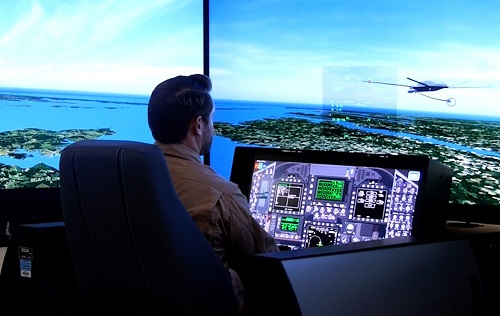
The new software is a maturation of tests Boeing has previously done. In addition to the upgraded software, test teams pulled in hardware and datalinks already installed on both platforms to run the finalized software further proving Boeing’s readiness to deliver this capability to the Navy.
“MQ-25 is designed to typically receive commands from air vehicle pilots on an aircraft carrier. This software will add a second option, enabling pilots to initiate commands right from their cockpit,” said Alex Ewing, F/A-18 New Product Development lead.
The Boeing-created software will significantly reduce the time it takes for an F/A-18 to communicate with an MQ-25, giving pilots greater flexibility in refueling from longer distances.
“The goal of the demonstrations was to make MUM-T refueling as real as possible,” said Juan Cajigas, director, Advanced MQ-25 program. “Aerial refueling is like a ballet as two airplanes come together. To be able to direct the activities via a single pilot, safely and efficiently, is a major step forward in aerial refueling technology.”
# # #
As a leading global aerospace company, Boeing develops, manufactures and services commercial airplanes, defense products and space systems for customers in more than 150 countries. As a top U.S. exporter, the company leverages the talents of a global supplier base to advance economic opportunity, sustainability, and community impact. Boeing’s diverse team is committed to innovating for the future, leading with sustainability, and cultivating a culture based on the company’s core values of safety, quality and integrity. Join our team and find your purpose at boeing.com/careers.