SPACEX: Dragon Resupply Mission CRS-18 Launch
SpaceX has launched its eighteenth Commercial Resupply Services mission from Space Launch Complex 40 (SLC-40) at Cape Canaveral Air Force Station, Florida. Dragon will separate from Falcon 9’s second stage about nine minutes after liftoff and attach to the space station on Friday, July 26.
The Dragon spacecraft that will support the CRS-18 mission previously supported the CRS-6 mission in April 2015 and the CRS-13 mission in December 2017. Following stage separation, SpaceX will attempt to recover Falcon 9’s first stage on Landing Zone 1 (LZ-1) at Cape Canaveral Air Force Station, Florida.
Dragon will be filled with approximately 5,000 pounds of supplies and payloads, including critical materials to directly support more than 250 science and research investigations that will occur onboard the orbiting laboratory. CRS-18 is the eighteenth of up to 20 missions to the International Space Station that SpaceX will fly for NASA under the first CRS contract. In January
2016, NASA announced that SpaceX’s Falcon 9 launch vehicle and Dragon spacecraft were selected to resupply the space station through 2024 as part of a second Commercial Resupply Services contract award. Under the CRS contracts, SpaceX has restored the United States’ capability to deliver and return significant amounts of cargo, including live plants and animals, to and from the orbiting laboratory. Crew Dragon, a variant of the Dragon spacecraft designed to transport U.S-based crew to and from the space station, completed its first demonstration mission in March 2019.
International Space Station crew members will use the station’s 57.7-foot (17.6- meter) robotic arm to capture Dragon and attach it to the orbiting laboratory on Friday, July 26. Dragon will return to Earth with more than 3,300 pounds of cargo after an approximately four-week stay at the International Space Station. About five hours after Dragon leaves the space station, it will conduct its deorbit burn, which lasts up to 10 minutes. It takes about 30 minutes for Dragon to reenter the Earth’s atmosphere and splash down in the Pacific Ocean off the coast of Baja California.
Using artificial intelligence to better predict severe weather
When forecasting weather, meteorologists use a number of models and data sources to track shapes and movements of clouds that could indicate severe storms. However, with increasingly expanding weather data sets and looming deadlines, it is nearly impossible for them to monitor all storm formations — especially smaller-scale ones — in real time.
Now, there is a computer model that can help recognize severe storms more quickly and accurately, thanks to a team of researchers partially funded by the National Science Foundation.
The researchers from Penn State, AccuWeather, Inc. and the University of Almería in Spain developed a framework based on machine learning linear classifiers — a kind of artificial intelligence — that detects from satellite images rotational movements in clouds that might have otherwise gone unnoticed.
“The very best forecasting incorporates as much data as possible,” said Steve Wistar, senior forensic meteorologist at AccuWeather. “There’s so much to take in, as the atmosphere is infinitely complex.”
The results of the project, reported in a Penn State press release and published in IEEE Transactions on Geoscience and Remote Sensing, enhance earlier work between AccuWeather and a Penn State College of Information Sciences and Technology research group led by professor James Wang.
“We recognized when our collaboration began [with AccuWeather in 2010] that a significant challenge facing meteorologists and climatologists was in making sense of the vast and continually increasing amount of data generated by Earth observation satellites, radars and sensor networks,” said Wang. “It is essential to have computerized systems analyze and learn from the data.”
NSF funds Wang’s research through a Computer and Information Science and Engineering CAREER award, whose goal is to develop an interdisciplinary research and education program for investigating the theoretical and computational principles of machine-learning-based image annotation and retrieval.
— NSF Public Affairs, (703) 292-8070 media@nsf.gov
UN Call to Fully Deliver on Paris Agreement Mandates
The 2019 UN Bonn Climate Change Conference (SB50) wrapped up today after having considered a large number of decisions for adoption at the UN Climate Change Conference in Santiago, Chile at the end of the year (COP25, 2-13 December).
In addition, countries and other stakeholders showcased and shared numerous best practices of effective climate policies and technologies.
“Governments have made progress in several important areas,” said UNFCCC Executive Secretary Patricia Espinosa. “But whilst the mood was constructive, we need to resolve all outstanding issues by COP25 in order to live up to our collective responsibility and ensure that ambition is raised to the extent that the worst impacts of climate change can be avoided.”
While the meeting took place, multiple heat records were broken for June in Europe, including in the conference host country Germany. The heatwave in Europe follows extreme heat episodes in Australia, India, Pakistan and parts of the Middle East this year.
“We can no longer afford incremental progress when tackling climate change – we need deep, transformational and systemic change throughout society which is crucial for a low-emissions, highly-resilient and more sustainable future,” she added.
In order achieve the central Paris Agreement goal of holding the global average temperature rise to as close as possible to 1.5 degrees Celsius, greenhouse gas emissions must be reduced 45 per cent by 2030, and climate neutrality achieved by 2050.
Governments in Bonn discussed Article 6 of the Paris Agreement, which would support countries to meet a part of their domestic goals to cut greenhouse gas emissions through the use of so-called “market mechanisms”. Article 6 is one of the few issues left unresolved following that adoption last year of the bulk of the guidelines to make the Paris Agreement operational.
“I urge governments to use the rest of this year to find solutions, allowing solid rules for carbon markets to finally take shape. Businesses want this and they are looking for positive signals from governments that they will do this. They know it’s a good way to reduce emissions globally,” Ms. Espinosa said.
Highlighting the importance of markets for effective climate action, the Executive Secretary noted that this week, investors managing more than USD 34 trillion in assets made a strong call to governments to design and implement policies in line with the Paris Agreement goals.
The UN Climate Change Conference in Bonn is part of a series of meetings this year to drive forward climate action at all levels and work towards reaching the goals of the 2030 Agenda on Sustainable Development.
These meetings include the review of the Sustainable Development Goal SDG13 in July, regional climate weeks in Latin America and the Caribbean and in Asia and the Pacific in August and September, a Climate Action Summit to be convened by the UN Secretary-General on 23 of September, and the UN Climate Change Conference COP25 in Chile in December.
Executive Secretary Espinosa urged Party leaders to take advantage of all opportunities in 2019 to continue making progress.
“People are demanding results—whether that’s online or in the streets—and we must show we are taking responsibility. The Paris Agreement is clear: this is our job. We have the mandate to do this. We must deliver.”
Specific highlights and outcomes of SB50
9 developing countries showcased action to curb and reduce greenhouse gas emissions before 2020. This took place at an event known as the Facilitative Sharing of Views (FSV).
19 developed countries presented their climate actions in a key session on transparency known as Multilateral Assessment. The session showed how climate actions are improving as countries integrate lessons learned from previous policy cycles.
A new work programme on adaptation was agreed, to be adopted at COP25. The work programme integrates indigenous knowledge both for mitigation and adaptation and addresses the specific vulnerability of indigenous peoples.
Governments considered how to improve capacity-building arrangements for developing countries.
A Technical Expert Meeting on Adaptation focused on adaptation finance, and convened leading authorities on adaptation and finance to exchange ideas and innovative case studies.
Governments agreed on the next biannual budget for the UNFCCC process.
The “Katowice Committee of Experts on the Impacts of the Implementation of Response Measures (KCI)” held its first meeting.
Under the “Koronivia Joint Work on Agriculture”, governments considered agriculture as the foundation of human existence and also of agriculture being very vulnerable to climate change impacts.
Experts highlighted ways in which off-grid and decentralized energy solutions can be deployed for smart energy and water use in the “agri-food chain.”
Several gender-related events boosted gender-responsive climate policy and took forward the landmark 2017 Gender Action Plan.
Governments agreed a draft decision to be adopted at COP25 to strengthen education, awareness and public engagement under the UNFCCC
About the UNFCCC
With 197 Parties, the United Nations Framework Convention on Climate Change (UNFCCC) has near universal membership and is the parent treaty of the 2015 Paris Climate Change Agreement. The main aim of the Paris Agreement is to keep a global average temperature rise this century well below 2 degrees Celsius and to drive efforts to limit the temperature increase even further to 1.5 degrees Celsius above pre-industrial levels. The UNFCCC is also the parent treaty of the 1997 Kyoto Protocol. The ultimate objective of all agreements under the UNFCCC is to stabilize greenhouse gas concentrations in the atmosphere at a level that will prevent dangerous human interference with the climate system, in a time frame which allows ecosystems to adapt naturally and enables sustainable development.
NASA Opens International Space Station to New Commercial Opportunities, Private Astronauts
NASA is opening the International Space Station for commercial business so U.S. industry innovation and ingenuity can accelerate a thriving commercial economy in low-Earth orbit.
This move comes as NASA focuses full speed ahead on its goal of landing the first woman and next man on the Moon by 2024, where American companies also will play an essential role in establishing a sustainable presence.
NASA officials, including the agency’s Chief Financial Officer Jeff DeWit, will discuss details of the five-part near-term plan in a news conference at 10 a.m. EDT today. The news conference will air live on NASA Television and the agency’s website.
NASA will continue research and testing in low-Earth orbit to inform its lunar exploration plans, while also working with the private sector to test technologies, train astronauts and strengthen the burgeoning space economy. Providing expanded opportunities at the International Space Station to manufacture, market and promote commercial products and services will help catalyze and expand space exploration markets for many businesses.
The agency’s ultimate goal in low-Earth orbit is to partner with industry to achieve a strong ecosystem in which NASA is one of many customers purchasing services and capabilities at lower cost.
NASA’s plan addresses both the supply-side and demand-side for a new economy, enabling use of government resources for commercial activities, creating the opportunity for private astronaut missions to the space station, enabling commercial destinations in low-Earth orbit, identifying and pursuing activities that foster new and emerging markets, and quantifying NASA’s long-term demand for activities in low-Earth orbit.
Commercial Activities Aboard the Space Station
More than 50 companies already are conducting commercial research and development on the space station via the International Space Station U.S. National Laboratory, and their results are yielding great promise. In addition, NASA has worked with 11 different companies to install 14 commercial facilities on the station that support research and development projects for NASA and the ISS National Lab.
This effort is intended to broaden the scope of commercial activity on the space station beyond the ISS National Lab mandate, which is limited to research and development. A new NASA directive will enable commercial manufacturing and production and allow both NASA and private astronauts to conduct new commercial activities aboard the orbiting laboratory. The directive also sets prices for industry use of U.S. government resources on the space station for commercial and marketing activities.
Pricing released Friday is specific to commercial and marketing activities enabled by the new directive, reflects a representative cost to NASA, and is designed to encourage the emergence of new markets. As NASA learns how these new markets respond, the agency will reassess the pricing and amount of available resources approximately every six months and make adjustments as necessary.
To qualify, commercial and marketing activities must either:
require the unique microgravity environment to enable manufacturing, production or development of a commercial application;
have a connection to NASA’s mission; or
support the development of a sustainable low-Earth orbit economy.
NASA’s directive enabling commercial and marketing activities aboard the space station addresses manufacturing, production, transportation, and marketing of commercial resources and goods, including products intended for commercial sale on Earth. NASA astronauts will be able to conduct coordinated, scheduled and reimbursable commercial and marketing activities consistent with government ethics requirements aboard the station.
To ensure a competitive market, NASA initially is making available five percent of the agency’s annual allocation of crew resources and cargo capability, including 90 hours of crew time and 175 kg of cargo launch capability, but will limit the amount provided to any one company.
Private Astronaut Missions
NASA also is enabling private astronaut missions of up to 30 days on the International Space Station to perform duties that fall into the approved commercial and marketing activities outlined in the directive released Friday, with the first mission as early as 2020. A new NASA Research Announcement focus area issued today outlines the path for those future private astronaut missions.
If supported by the market, the agency can accommodate up to two short-duration private astronaut missions per year to the International Space Station. These missions will be privately funded, dedicated commercial spaceflights. Private astronaut missions will use a U.S. spacecraft developed under NASA’s Commercial Crew Program.
The commercial entity developing the mission will determine crew composition for each mission and ensure private astronauts meet NASA’s medical standards and the training and certification procedures for International Space Station crew members. Market studies identified private astronaut missions to low-Earth orbit as a key element to demonstrate demand and reduce risk for future commercial destinations in low-Earth orbit.
Commercial Destinations in Low-Earth Orbit
In the long-term, NASA’s goal is to become one of many customers purchasing services from independent, commercial and free-flying habitable destinations in low-Earth orbit. A robust low-Earth orbit economy will need multiple commercial destinations, and NASA is partnering with industry to pursue dual paths to that objective that either go through the space station or directly to a free-flying destination.
As a first step, NASA is making one space station port and utilities available for industry to attach a commercial module to support commercial activities, and today is releasing a synopsis as Appendix I in NASA’s Next Space Technologies for Exploration Partnerships (NextSTEP) 2 Broad Agency Announcement (BAA). NASA expects to release the solicitation June 14, with awards made by the end of the fiscal year. The forward port of the station’s Harmony module will be available to industry for a finite period of time.
NASA will follow up with a synopsis for NextSTEP 2 Appendix K in July to partner with industry in the development of future free-flying commercial stations in low-Earth orbit.
Stimulate Sustainable Demand
NASA continues to seek and pursue opportunities to stimulate sustainable commercial demand in low-Earth orbit and, to that end, has added two new focus areas to the NASA Research Announcement soliciting proposals for commercial concepts. these focus areas include in-space manufacturing, regenerative medicine, bioengineering, and other fields that may lead to a scalable, financially self-sustaining demand for low-Earth orbit capabilities.
In addition, NASA is seeking targeted studies to better understand real and perceived barriers of potential new market entrants and to address broad ideas which could help stimulate demand. Successful proposals will define the path to broadly foster market growth, provide data-driven rationale to support the defined path, and lead to recommendations on which NASA, industry or other organizations could act. More details are available in the synopsis for NextSTEP 2 BAA Appendix J. NASA expects to release the solicitation for Appendix J on June 14 with awards made by the end of the fiscal year.
NASA also is working to increase the research and development community’s understanding of the potential value of microgravity research and the path to conducting research in low-Earth orbit by coordinating across the microgravity community to lower barriers to entry and refinement of research via drop towers, parabolic, and suborbital flights.
Quantify NASA’s Long-term Demand
NASA is providing a forecast of its minimum long-term, low-Earth orbit requirements, representing the type and amount of services that NASA intends to purchase when those services become commercially available. The goal is to reduce uncertainty for commercial destination providers about NASA as a customer, and to help them make decisions about which NASA requirements they are interested in fulfilling.
NASA also is providing details and estimated quantities for NASA crew accommodation, human research, biological and physical science research, technology demonstrations, and hosted science instruments. In addition, NASA intends to continue purchasing services for a national laboratory capability in low-Earth orbit. For example, NASA’s strategy research in the areas of space biology, physical sciences, and fundamental physics is driven by recommendations from the National Academy of Sciences (NAS). Fundamental research and applied exploration research are not mutually exclusive, and advances in one area often enable advancements in the other. NASA’s Space Life and Physical Sciences Research Applications division has identified the highest research priorities for long-term use of low-Earth orbit: in life sciences, the priorities are studies of plants, model organisms, and of the microbiome of the built environment; and in physical sciences, the priorities are studies into combustion and phase change-associated energy transfer.
To improve the agency’s five-part plan and its effectiveness, NASA is seeking feedback from industry and others through a request for information, with responses due by July 3.
For more than 18 years, humans have lived and worked aboard the International Space Station, conducting thousands of experiments in areas such as human research, biology, and physical science, as well as advanced technology development. Many of these experiments, conducted via the ISS National Lab, have been research and development with commercial objectives. New opportunities are needed to move beyond research and development, and the station will play an essential role in enabling those opportunities for new commercial markets needed to build a sustainable ecosystem in low-Earth orbit.
Learn more about opportunities for commercial activities aboard the International Space Station:
https://www.nasa.gov/leo-economy/low-earth-orbit-economy
Republic Services Advances on Barron’s 100 Most Sustainable U.S. Companies List
PHOENIX — Republic Services, Inc. (NYSE: RSG) is pleased to announce that the Company was recognized on Barron’s 100 Most Sustainable U.S. Companies list for the second consecutive year, advancing to #80 on the 2019 list. Republic remains the sole recycling and solid waste services provider on the list.
“We are honored to once again be recognized as one of Barron’s 100 Most Sustainable Companies,” said Don Slager, president and CEO. “Every day, our employees demonstrate their commitment to doing the right thing for our customers, our team and our Blue Planet®, and this recognition validates their efforts.”
Barron’s partnered with Calvert Research and Management, who analyzed the 1,000 largest publicly held U.S. companies by market capitalization to develop the top 100 list. The firm studied more than 300 key performance indicators, including water usage, greenhouse gas emissions, business ethics, and environmental impact – that, in turn, fall into the stakeholder categories of shareholders, employees, customers, community and planet.
Click here to view the full list of the Barron’s 100 Most Sustainable Companies and Calvert’s detailed methodology.
About Republic Services
Republic Services, Inc. is an industry leader in U.S. recycling and non-hazardous solid waste disposal. Through its subsidiaries, Republic’s collection companies, recycling centers, transfer stations and landfills focus on providing effective solutions to make responsible waste disposal effortless for its 14 million customers. We’ll handle it from here.®, the brand’s promise, lets customers know they can count on Republic to provide a superior experience while fostering a sustainable Blue Planet® for future generations to enjoy a cleaner, safer and healthier world.
For more information, visit the Republic Services website at RepublicServices.com. “Like” Republic on Facebook at Facebook.com/RepublicServices and follow on Twitter @RepublicService and Instagram @republic_services.
Biologists turn eavesdropping viruses into bacterial assassins
Princeton molecular biologist Bonnie Bassler and graduate student Justin Silpe have identified a virus, VP882, that can listen in on bacterial conversations — and then, in a twist like something out of a spy novel, they found a way to use that to make it attack bacterial diseases like E. coli and cholera.
“The idea that a virus is detecting a molecule that bacteria use for communication — that is brand-new,” said Bassler, the Squibb Professor of Molecular Biology. “Justin found this first naturally occurring case, and then he re-engineered that virus so that he can provide any sensory input he chooses, rather than the communication molecule, and then the virus kills on demand.” Their paper will appear in the Jan. 10 issue of the journal Cell.
A virus can only ever make one decision, Bassler said: Stay in the host or kill the host. That is, either remain under the radar inside its host or activate the kill sequence that creates hundreds or thousands of offspring that burst out, killing the current host and launching themselves toward new hosts.
There’s an inherent risk in choosing the kill option: “If there are no other hosts nearby, then the virus and all its kin just died,” she said. VP882 has found a way to take the risk out of the decision. It listens for the bacteria to announce that they are in a crowd, upping the chances that when the virus kills, the released viruses immediately encounter new hosts. “It’s brilliant and insidious!” said Bassler.
E. coli bacteria infected with eavesdropping virus
These E. coli bacteria harbor proteins from the eavesdropping virus. One of the viral proteins has been tagged with a red marker. When the virus is in the “stay” mode (left), the bacteria grow and the red protein is spread throughout each cell. When the virus overhears that its hosts have achieved a quorum (right), the kill-stay decision protein is flipped to “kill” mode. A second viral protein binds the red protein and sends it to the cell poles (yellow dots). All the cells in the right panel will soon die.
Images courtesy of Bonnie Bassler and Justin Silpe, Department of Molecular Biology, Princeton University
“This paper provides an entirely new perspective on the dynamic relationship between viruses and their hosts,” said Graham Hatfull, the Eberly Family Professor of Biotechnology at the University of Pittsburgh, who was not involved in this research. “This study tells us for the first time … that when a phage is in the lysogenic [stay] state, it is not ‘fast asleep’, but rather catnapping, with one eye open and ears alert, ready to respond when it ‘hears’ signals that cells are getting ready to respond to changes in their environment.”
Bassler, who is also the chair of molecular biology and a Howard Hughes Medical Institute Investigator, had discovered years before that bacteria can communicate and sense one another’s presence and that they wait to establish a quorum before they act in concert. But she had never imagined that a virus could eavesdrop on this quorum-sensing communication.
“The bugs are getting bugged,” she said with a laugh. “Plus, Justin’s work shows that these quorum-sensing molecules are conveying information across kingdom boundaries.” Viruses are not in the same kingdom as bacteria — in fact, they are not in any kingdom, because they are not technically alive. But for such radically different organisms to be able to detect and interpret each other’s signals is simply mind-boggling, she said. It’s not like enemy nations spying on each other, or even like a human communicating with a dog — those at least are members of the same kingdom (animal) and phylum (vertebrate).
After finding the first evidence of this cross-kingdom eavesdropping, Silpe started looking for more — and found it.
“He just started a brand-new field,” Bassler said. “The idea that there’s only one example of this cross-domain communication made no sense to us. Justin discovered the first case, and then, with his discovery in hand, he went looking more deeply and he found a whole set of viruses that harbor similar capabilities. They may not all be listening in to this quorum-sensing information, but it is clear that these viruses can listen in to their hosts’ information and then use that information to kill them.”
Silpe said he was drawn to work in Bassler’s lab because of her research on bacterial communication. “Communication seems like such an evolved trait,” he said. “To hear that bacteria can do it — her discovery — it was just mind-blowing that organisms you think of as so primitive could actually be capable of communication. And viruses are even simpler than bacteria. The one I studied, for example, only has about 70 genes. It’s really remarkable that it devotes one of those genes to quorum sensing. Communication is clearly not something higher organisms created.”
Once Silpe demonstrated that VP882 was eavesdropping, he began experimenting with feeding it misinformation to trick the virus into killing on command — to turn the predator into an assassin.
VP882 is not the first virus used as an antimicrobial treatment. Viruses that prey on bacteria are called “phages,” and “phage therapy” — targeting a bacterial disease with a phage — is a known medical strategy. But VP882 is the first phage that uses eavesdropping to know when it is optimal to kill its targets, making Silpe’s experiments with salmonella and other disease-causing bacteria the first time that phage therapy has used trans-kingdom communication.
In addition, this virus holds enormous promise as a therapeutic tool because it does not act like a typical virus, Bassler said. Most viruses can only infect a very specific type of cell. Flu viruses, for example, only infect lung cells; HIV only targets specific immune-system cells. But the virus VP882 has an “exceptionally broad host range,” Bassler said. So far, Silpe has only performed “proof of principle” tests with three unrelated bacteria: Vibrio cholerae (cholera), salmonella and E. coli. Those diseases have evolved separately for hundreds of millions of years, so the fact that they are all susceptible to this bacterial assassin suggests that many, many more are as well.
Hatfull is also optimistic about the utility of this re-engineered virus for antibiotic-resistant bacteria. “Antibiotic resistance is clearly a major global health threat, and there is a clear and evident demand for new strategies and approaches to this problem,” he said. “Although we have admittedly found it tricky even to reach ‘first base’ with basic therapeutic use of naturally occurring phages, we can envisage the possibility of a ‘home run’ if we can engineer phages for therapeutic use that have very specific targeting.” These viral assassins might even slow down the emergence of antibiotic resistant strains, he said.
Bassler gives all credit for the discovery to Silpe. After identifying a new quorum-sensing gene in V. cholerae, he made the choice to search genome databases for that gene. It showed up in some cholera-related strains and exactly one virus. Bassler wondered if that could be a meaningless data artifact, but Silpe wanted to get a specimen of the virus and run experiments.
“He was gung-ho, and I thought, ‘What the heck, give this kid a little rope. If this isn’t working soon, we can always move on,’” she said. “His was a crazy idea, because there’s never, ever been evidence of a virus listening in on bacterial host information to decide whether to stay put or kill. But this lab was built on crazy ideas, like bacteria talking to each other, and we’ve kind of made a living out of it. … Of course, that’s the beauty of science, and science at Princeton, that you have enough resources to play those hunches out, and see if there’s a ‘there’ there. And this time, there was a big ‘there’ there.”
“A Host-Produced Quorum-Sensing Autoinducer Controls a Phage Lysis-Lysogeny Decision,” by Justin Silpe and Bonnie Bassler, will be published in the Jan. 10 issue of Cell and was released online Dec. 13 (DOI: 10.1016/j.cell.2018.10.059). It was supported by the Howard Hughes Medical Institute, NIH Grant 2R37GM065859, National Science Foundation Grant MCB-1713731, the Max Planck Society-Alexander von Humboldt, and the Department of Defense through the National Defense Science & Engineering Graduate Fellowship.
Sir David Attenborough Launches UN Campaign to Promote Climate Action by the People
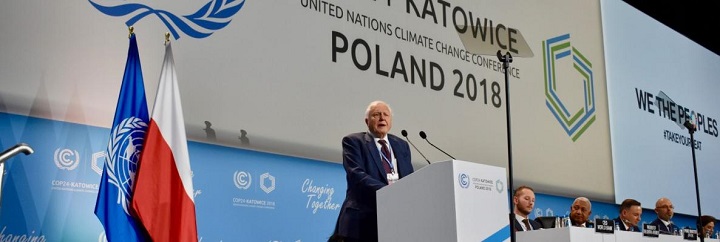
UN Climate Change News, 3 December 2018 – The renowned broadcaster Sir David Attenborough has announced the United Nations’ launch of a new campaign enabling individuals the world over to unite in actions to battle climate change.
In an address to the opening session of United Nations Climate Change Conference (COP24) in Katowice, Poland, Sir David Attenborough urged everyone to use the UN’s new ActNow.bot, designed to give people the power and knowledge to take personal action against climate change directly on the Facebook Messenger Platform.
Speaking for “The People’s Seat” initiative, Sir David Attenborough called it the result of new activism shaped by people from around the world and collected through social media.
“In the last two weeks,” he said, “the world’s people have taken part in creating this address, answering polls, creating videos and voicing their opinions.”
“They want you – the decision makers – to act now,” the British broadcaster said, addressing the politicians and officials assembled for two weeks in this Polish mining town to negotiate next steps in monitoring and mitigating climate change.
“The people are behind you, supporting you in making tough decisions, but they are also willing to make sacrifices in their daily lives,” Attenborough said. “To make this even easier, the UN is launching the Act Now bot. Helping people to discover simple everyday actions that they can take, because they recognise that they too must play their part.”
The speech was preceded by a video produced with social media content that people had posted in advance of COP24 using the hashtag #TakeYourSeat
The innovative UN campaign was created with the support of Facebook and advertising company Grey and harnesses advances in artificial intelligence (AI) to engage people in the growing movement to take climate action.
The ActNow.bot is a fully interactive and responsive chat bot, located on the UN’s Facebook page that suggests everyday actions – determined by the user’s interaction with the bot – that can be taken to preserve the environment and logged on the platform to be shared with social media followers to persuade them to take action too. The collective actions will be presented during the Secretary-General’s Climate Summit in New York in September 2019.
UN Under-Secretary-General of Global Communications Alison Smale welcomed the launch.
“Rising global temperature, record levels of greenhouse emissions, and increasing impacts of climate change require urgent and measurable action on the part of everyone,’’ she said. “This new social media tool, a Facebook Messenger bot, will help people learn about activities to reduce their carbon footprint, and show—and share with friends - how they are making an impact. We all need to do things differently.”
The initiative comes as global decision makers are being asked to intensify efforts in the battle against climate change and to agree the implementation guidelines of the landmark 2015 Paris Agreement.
All this is evolving against a backdrop of conclusive new evidence by UN Environment which found countries need to significantly step up the necessary actions to fulfil the commitments made in Paris.
The Climate Action Bot aims to highlight popular global commitment to reducing climate change, and to stand behind decision makers worldwide in taking actions to preserve our environment. (more…)
Visa Presents Crowdfunding Installation at COP24 to Help Fight Deforestation
UN Climate Change News, 3 December 2018 – At the UN Climate Change Conference COP24 in Katowice, the payments network Visa Inc. is presenting an innovative way to make donations for climate action using a new digital platform, with benefits of the activity going toward the climate resilience projects of the Adaptation Fund, many of which involve ecosystem-based measures that improve peoples’ lives and livelihoods while restoring natural protections such as forests to protect soils and sustainably manage land and water resources.
A digital screen installation at the conference venue shows a virtual forest ecosystem in a lush state. Viewers see images of the ecosystem slowly degrading and can help halt the process by tapping an electronic reader with a Visa contactless card to simulate the act of making a donation. The health of the virtual ecosystem will improve after an accumulation of taps, demonstrating the importance of collective action to reverse the effects of climate change. For each tap that is made throughout COP24, Visa will donate €3 to the Adaptation Fund.
“A key aspect of many Adaptation Fund projects is their linkages to the protection of ecosystems, and how that often goes hand in hand with enhancing livelihoods and lives of the vulnerable communities we serve and improving their resilience to climate change,” said Victor Viñas, Chair of the Adaptation Fund Board. “Afforestation as well as restoring degraded forests strengthens soils, water supplies, sustainable land management and biodiversity, and reduces erosion in critical watersheds.”
The installation is intended to demonstrate how a powerful narrative can spur individuals to take action on climate change, and how the impact of that collective action has the potential to make a substantial difference. Visa hopes to replicate the system elsewhere after having demonstrated its value at COP24.
As a global payments technology company, Visa’s primary opportunities for reducing its direct environmental impacts lie in efforts to operate data centers and office buildings efficiently and responsibly, as the energy usage associated with these types of facilities comprise approximately 75% of their greenhouse gas emissions. Visa is advancing efforts to reduce these emissions through its commitment to using 100% renewable electricity across its global operations by the end of 2019.
This initiative is part of a broader, ongoing effort by Visa to minimize the environmental footprint of the payments ecosystem. Visa pursues certifications for its facilities through the U.S. Green Building Council’s (USGBC) Leadership in Energy and Environmental Design (LEED) program and has achieved significant improvements in energy and water efficiency across its sites. Visa also seeks to curtail paper usage, source supplies and electronics responsibly, divert waste from landfills and promote a culture of sustainability among employees at work and at home.
How the Digital Installation Supports the Adaptation Fund
The narrative of the installation mirrors the positive outcomes of projects implemented by the Adaptation Fund, which are designed to restore nearly 185,000 hectares of natural habitat and protect more than 121,000 meters of coastline worldwide while building vulnerable communities’ resilience to climate change.
The work of the Adaptation Fund is already having tangible positive effects in vulnerable communities, helping them to adapt and build resilience to climate change through concrete projects in 81 developing countries to date, including Cambodia, Honduras and India, as well as Cuba and Small Island Developing States. Leveraging funds from private donors is meanwhile one source of revenue for the Fund.
As the impacts of climate change have become more evident over the last few years, the Adaptation Fund has seen record-breaking demand and has a growing project pipeline of more than a quarter-billion U.S. dollars. The fund set a US$90 million resource mobilization goal this year to help meet this increased demand. Although it receives a share of proceeds from Carbon Emission Reduction credits, since the carbon market dropped several years ago, it largely relies on voluntary public and private donations.
The Adaptation Fund’s concrete projects directly contribute to the goals of the Paris Agreement, which calls for a balance of adaptation to the impacts of climate change, reduced carbon emissions and accelerating climate action to the most vulnerable countries. Up to 33% of the efforts to reduce carbon emissions depend on preserving forests, which is why this topic was chosen for the installation.
VISA installation at COP 24
VISA
Adaptation Fund Project Examples:
Cambodia: An Adaptation Fund project is helping vulnerable communities adapt to floods and droughts in Cambodia in recent years that have affected food and water security and led to unsustainable use of forest resources. The project is restoring degraded forests through a tree nursery where the community has planted nearly one million indigenous trees across several sites that are crucial for sustainability, while another 342,000 fruit trees were distributed to communities for household and garden use.
Honduras: Two projects in Honduras are currently contributing to reforestation. The first safeguarded vulnerable communities to extreme climate events, such as floods, mudslides and drought by improving water drainage and storage, and climate-proofing homes. It also enhanced forest protection in watersheds that are critical to urban water supplies by protecting 60,000 HA of forest corridors. A follow-up project is increasing climate resilience of the most vulnerable communities in the Central Forest Corridor of Tegucigalpa.
India: A forestry project is building adaptive capacities of communities, livelihoods and ecological security in Madhya Pradesh. Training in villages on conservation, adopting climate-resilient agricultural practices and natural resource management are among its activities.
Cuba: An Adaptation Fund project is helping communities in Cuba that have been vulnerable to coastal flooding and sea level rise recover protective marine ecosystems and forests. By planting mangroves and fostering their natural regeneration, placing stake lines to reduce sea surges, cleaning canals and promoting coastal forest growth, the project is making a positive difference in reducing vulnerabilities to climate change in communities of Cuba’s southwestern Gulf of Batabanó. It is establishing and restoring 3,000 HA of mangroves on vulnerable coastal lands, and another 4,300 HA of landward edge woodlands.
Mauritius: An AF-funded project is involving local communities, fishermen and female leaders in restoring natural coastal systems in Mauritius through activities such as mangrove planting.
About partnerships between UN Climate Change and non-Party stakeholders
The partnership with the Adaptation Fund and Visa is part of a series of partnerships between UN Climate Change and relevant stakeholders to support climate action. The partnerships for COP24 promote increased involvement of non-Party stakeholders as foreseen in the Marrakesh Partnership for Global Climate Action (MPGCA).
The MPGCA was launched at COP22 by the Conference of the Parties, explicitly welcoming climate action of all non-Party stakeholders, including the private sector, to help implement the Paris Climate Change Agreement. All entities of society and business are strongly encouraged to scale up their efforts and support actions to reduce emissions, as well as to build resilience and decrease vulnerability to the adverse effects of climate change.
About the Adaptation Fund
Since 2010, the Adaptation Fund has committed about US$ 532 million for climate change adaptation and resilience projects and programmes, including 80 concrete localized adaptation projects in the most vulnerable communities of developing countries around the world with approximately 5.8 million direct beneficiaries. It also pioneered Direct Access, empowering countries to access funding and develop projects directly through accredited national implementing entities. For further information, visit adaptation-fund.org.
About Visa
Visa Inc. is a global leader in digital payments. Its mission is to connect the world through an innovative, reliable and secure payment network – for individuals, businesses and economies. Its advanced global processing network, VisaNet, provides secure and reliable payments around the world and is capable of handling more than 65,000 transaction messages a second. For more information, visit About Visa, visa.com/blog and @VisaNews.
“At Visa, we are striving to embed sustainability across the company – in our operations, our workforce and our broader ecosystem,” said Douglas Sabo, vice president and head of Corporate Responsibility and Sustainability at Visa. “We are committed to collaborating with a variety of stakeholders, including UN Climate Change and the Adaptation Fund, to achieve a more inclusive and sustainable world.”
Construction begins on research ship funded by NSF, operated by Oregon State University
Construction began today in Houma, Louisiana, on the R/V Taani, a new research ship that will advance the scientific understanding of coastal environments by supporting studies of ocean acidification, hypoxia, sea level rise and other topics.
Operated by Oregon State University (OSU), Taani (pronounced “tahnee”), a word that means “offshore” in the language of the Siletz people of the Pacific Northwest, will be the first in a series of Regional Class Research Vessels funded by the National Science Foundation (NSF).
Officials from NSF, OSU and Gulf Island Shipyards, LLC gathered for the keel-laying ceremony, marking the start of fabrication of this state-of-the-art ship.
“NSF is proud that Taani will be the flagship for a new class of research vessels, and we eagerly anticipate decades of productive oceanography from Taani to support the nation’s science, engineering and education needs,” says Terrence Quinn, director of NSF’s Division of Ocean Sciences.
During the ceremony, former OSU president John Byrne and his wife Shirley, the ship’s ceremonial sponsors, inscribed their initials into the ship’s keel.
Research missions aboard Taani will focus on the U.S. West Coast. NSF has funded OSU to build a second, similar research vessel, which will be operated by a consortium led by the University of Rhode Island.
“This new class of modern vessels will support future research on the physical, chemical, biological and geologic processes in coastal waters,” says Roberta Marinelli, dean of OSU’s College of Earth, Ocean and Atmospheric Sciences. “The research is critical to informing strategies for coastal resilience, food security and hazard mitigation not only in the Pacific Northwest but around the world.”
For example, the ship will be equipped to conduct detailed seafloor mapping to reveal geologic structures important in subduction zone earthquakes that may trigger tsunamis.
The 199-foot Taani will have a range of more than 5,000 nautical miles, with berths for 16 scientists and 13 crew members; a cruising speed of 11.5 knots; and a maximum speed of 13 knots. The ship will be able to stay at sea for about 21 days before returning to port and will routinely send streams of data to shore via satellite.
NSF selected OSU to lead the design, shipyard selection, construction and transition to operations for as many as three new Regional Class Research Vessels for the U.S. Academic Research Fleet. The National Science Board — NSF’s oversight body — authorized as much as $365 million for the project as part of NSF’s Major Research Equipment and Facilities Construction portfolio.
NSF awarded OSU $121.88 million to launch the construction of the first ship. This past summer, the funding was supplemented with an additional $88 million, allowing Gulf Island Shipyards, LLC to proceed with the second vessel.
Taani is scheduled for delivery to OSU in the spring of 2021. After a year of outfitting and testing, the ship will be fully operational.
-NSF-
The National Science Foundation (NSF) is an independent federal agency that supports fundamental research and education across all fields of science and engineering. In fiscal year (FY) 2018, its budget is $7.8 billion. NSF funds reach all 50 states through grants to nearly 2,000 colleges, universities and other institutions. Each year, NSF receives more than 50,000 competitive proposals for funding and makes about 12,000 new funding awards.
Federal S&E obligations to academic institutions increased by 3.5 percent
In Fiscal Year (FY) 2016, federal agencies obligated $31.6 billion to institutions of higher education in support of science and engineering (S&E), an increase of $1.1 billion from FY2015.
The most up-to-date federal S&E obligation levels come from the FY2016 Survey of Federal Science and Engineering Support to Universities, Colleges, and Nonprofit Institutions (Federal S&E Support Survey), conducted by the National Center for Science and Engineering Statistics (NCSES) within the National Science Foundation (NSF). Federal obligations are funding commitments to support six categories:
Research and development (R&D).
R&D plant, or facilities and fixed equipment used in R&D.
Facilities and equipment for instruction in S&E.
Fellowships, traineeships and training grants.
General support for S&E.
The 100 higher education institutions receiving the largest amounts of federal S&E support accounted for about 82 percent of the total federal obligations. Johns Hopkins University continued to be the leading academic recipient of federal S&E obligations, with nearly $1.9 billion for S&E support, followed by the University of Michigan with $668 million and the University of Washington with $642 million. The top 10 recipients among the academic institutions received a total of $7.1 billion in S&E obligations.
Five agencies accounted for 94 percent of federal S&E support to higher education institutions. These include the Department of Health and Human Services (HHS) at 57 percent; NSF at 17 percent; the Department of Defense (DOD) at 12 percent; the Department of Agriculture (USDA) at 4 percent; and the National Aeronautics and Space Administration (NASA) at 4 percent.
Sixty-six of the 105 Historically Black Colleges and Universities (HBCUs) received $373 million in federal obligations for S&E support. Although this is the second year of decreasing total federal S&E support obligations to HBCUs (down 6 percent from FY2015 and down 9 percent from FY2014), support to HBCUs for R&D has remained stable. NSF’s obligations to HBCUs rose about 12 percent between 2015 and 2016.
North Carolina Agricultural and Technical State University was the leading recipient of federal obligations for S&E support to HBCUs in FY2016, with $26 million. Morehouse School of Medicine was the second-leading recipient, with $25 million.
High Hispanic Enrollment (HHE) institutions received $1.7 billion in federal obligations for S&E. The majority (55 percent) of the support for HHE institutions came from HHS, with nearly $941 million in obligations. NSF was the second-leading federal agency source of funding, with $390 million, or 23 percent of all federal S&E obligations to HHE academic institutions. The top ten HHE recipients of federal S&E support received a total of $1.2 billion, or 68 percent of the total support to all 134 HHE recipient institutions. The University of Arizona was the leading recipient among HHEs of federal obligations for support of S&E.
Federal S&E support to 33 tribal colleges and universities in FY2016 totaled $55 million. The Department of Education was the leading source of S&E support, with $33 million in obligations, followed by the USDA with $13 million and NSF with $8 million.
The nine High American Indian Enrollment (HAIE) institutions were obligated $75 million in federal funds for S&E support. NSF provided $28 million, followed by NASA with $16 million, HHS with $12 million, and USDA with $6 million. The University of Alaska, Fairbanks is the largest HAIE recipient of federal obligations, with $69 million in support for S&E. All other HAIEs combined were obligated $5.9 million in S&E support.
For more information, including data tables, please see the report.
-NSF-
The National Science Foundation (NSF) is an independent federal agency that supports fundamental research and education across all fields of science and engineering. In fiscal year (FY) 2018, its budget is $7.8 billion. NSF funds reach all 50 states through grants to nearly 2,000 colleges, universities and other institutions. Each year, NSF receives more than 50,000 competitive proposals for funding and makes about 12,000 new funding awards.
Scientists study connection between Great Plains precipitation and agricultural irrigation
Can crop irrigation affect the clouds that form high above farm fields? Indeed it can, say atmospheric scientists.
Agricultural irrigation to meet a growing demand for food is adding significant amounts of water to the land surface and altering regional land use and land cover. These changes affect lower atmosphere circulation, potentially influencing cloud development and precipitation.
To further understand how irrigation may be affecting precipitation, scientists from several institutions have teamed up for a National Science Foundation (NSF)-funded project known as the Great Plains Irrigation Experiment, or GRAINEX.
“Prior studies have found that the Great Plains is a hotspot where soil moisture plays an important role in cloud formation and precipitation,” said Nick Anderson, a program director in NSF’s Division of Atmospheric and Geospace Sciences, which funded the research. “Changes in land use and irrigation for agricultural activities could be important in land-atmosphere interactions in this region. The results from this study will be valuable to our understanding of the link between irrigation and precipitation.”
Scientists from six partner institutions — the University of Nebraska-Lincoln (UNL), Western Kentucky University (WKU), University of Alabama at Huntsville (UAH), University of Colorado at Boulder (CU), National Center for Atmospheric Research (NCAR) and the Center for Severe Weather Research — began collecting data in late May across a 3,600-square-mile area in southeastern Nebraska. The data collection will continue through the end of July.
The results of the study will eventually help agricultural planning and weather forecasting in the United States and other parts of the world, the researchers said.
Rezaul Mahmood, director of the High Plains Regional Climate Center at UNL, is leading the project. Other co-leaders are Udaysankar Nair of UAH, Eric Rappin of WKU, and Roger Pielke Sr. of CU.
“We designed this research project to take place over a two-month period to allow us to understand the impacts of irrigation right when it begins, and during its maximum application in mid- to late July,” Mahmood said.
“The study includes the transition region between extensively irrigated areas and dry land or non-irrigated areas. The experiment’s setting offers a unique opportunity to investigate the influence of these different land surface and land cover regions side by side.”
The project includes deployment of 80 meteorological stations and several different methods to collect data:
Measurements of fluxes of water and energy from six irrigated and six non-irrigated locations.
Radar observations of the lower atmosphere from three locations.
Weather balloon-based observations of the atmosphere from five locations.
Two surface locations with a series of instruments that collect data on the lower atmosphere.
These data will be analyzed and used, along with model applications, to determine the impacts of irrigation on precipitation in the Great Plains. The team will use NCAR’s supercomputing facility, in addition to computational facilities at WKU, UAH and UNL, for the modeling.
The National Science Foundation (NSF) is an independent federal agency that supports fundamental research and education across all fields of science and engineering. In fiscal year (FY) 2018, its budget is $7.8 billion. NSF funds reach all 50 states through grants to nearly 2,000 colleges, universities and other institutions. Each year, NSF receives more than 50,000 competitive proposals for funding and makes about 12,000 new funding awards.
Nuclear Energy Experts Convene for Annual Fuel Symposium
WILMINGTON, North Carolina—June 6, 2018—Nuclear power experts from around the world are gathered in Wilmington for an annual symposium hosted by Global Nuclear Fuel (GNF).
“The symposium provides our customers who operate nuclear power plants around the world the opportunity to exchange technical information, share best practices and collaborate on common issues,” said Amir Vexler, CEO of GNF. “This is an important event that affords us the opportunity to connect with fuel engineers and nuclear plant operators to help deepen our knowledge and understanding of their needs and advance our partnerships in delivering technology and performance.”
Participants in the two-day symposium include fuel design, fuel reliability and reactor engineers. More than 20 technical presentations are on the agenda regarding topics such as fuel reliability, core monitoring, digital solutions and regulatory issues. There will also be presentations about the recent deployment of GNF’s ARMOR and IronClad accident tolerant fuel solutions, as well as the upcoming delivery of GNF3 to two U.S. utility customers of GNF.
The event is being held at the Coastline Conference and Event Center in downtown Wilmington.
About GNF
Global Nuclear Fuel (GNF) is a world-leading supplier of boiling water reactor fuel and fuel-related engineering services. GNF is a GE-led joint venture with Hitachi, Ltd. and operates primarily through Global Nuclear Fuel-Americas, LLC in Wilmington, N.C., and Global Nuclear Fuel-Japan Co., Ltd. in Kurihama, Japan.
USAF and NSF announce partnership in science and engineering research
Air Force Secretary Heather Wilson and National Science Foundation (NSF) Director France Córdova signed a Letter of Intent May 9, 2018, creating a new partnership for collaboration on scientific and engineering research to bolster national security.
The Letter of Intent initiates a strategic partnership focused on research in four areas of common interest: space operations and geosciences, advanced material sciences, information and data sciences, and workforce and processes.
“We are looking forward to deepening our ties with the National Science Foundation,” Wilson said. “We will simultaneously benefit from the research done together with a focus on the areas most vital to the future of the U.S. Air Force and the security of our Nation.”
The partnership is designed to create a pathway between the basic research supported by NSF and the technologies needed to support the Air Force of tomorrow. Common areas of interest will drive cooperation at every level of research, including basic research, applied research and advanced technology development.
“Ensuring national security through innovation in science and engineering was part of the National Science Foundation’s founding mission nearly seven decades ago, and it remains one of our highest priorities today,” Córdova said. “We look forward to partnering with the Air Force on this collaborative venture and using our combined resources to innovate for the benefit of the nation.”
This partnership reflects White House priorities including strong national security and efficient government operations.
“Rebuilding America’s defense capabilities has been a top priority of the Trump Administration since inauguration. A big part of that is translating fundamental discoveries into breakthroughs that make the country safer and drive the U.S. economy,” said Michael Kratsios, deputy assistant to the President for technology policy at the White House Office of Science and Technology Policy. “This partnership between two of America’s R&D powerhouses — the Air Force and the National Science Foundation — will ensure that taxpayer funding of basic research is made more efficient, accelerates the development of advanced technologies for both civilian and military use, and fosters job creation and economic growth into the future.”
The letter states that “The Air Force will benefit from greater access to NSF’s considerably larger basic research program and community of researchers. The NSF will benefit with a direct pathway for the technical maturation of many of its research efforts and products, with increased relevance afforded by its direct support of the Nation’s defense posture.”
In anticipation of the signing, the two organizations have already had initial discussions on topics ranging from the convergence of artificial intelligence, data and materials, to placements for fellows from NSF’s Graduate Research Intern Program.
The letter is available online.
-NSF-
Vicks® ZzzQuil™ Expands Offering with New Vicks ZzzQuil PURE Zzzs™ Melatonin Gummies
CINCINNATI–For many, a good night of sleep does not come easy, especially when the daily stresses of life are keeping people up. In fact, nearly nine in 10 Americans (87%) say they experience trouble falling asleep1.
Vicks ZzzQuil, America’s #1 selling sleep-aid2, is a product that occasional sleeplessness sufferers have come to know and trust for the last six years, and today the brand is pleased to introduce new Vicks ZzzQuil PURE Zzzs Melatonin Gummies. This latest addition to the Vicks ZzzQuil product line-up now gives consumers access to another non-habit forming sleep-aid with an optimal level of melatonin so you can fall asleep naturally and wake with no next day grogginess*. Vicks ZzzQuil PURE Zzzs Melatonin Gummies contain a unique botanical blend of lavender, chamomile, valerian root and lemon balm.
Vicks ZzzQuil PURE Zzzs Melatonin Gummies are also drug-free, vegan, vegetarian and free of artificial flavors, gluten, lactose and gelatin.
“There is no ‘one-size-fits-all’ approach to overcome sleeplessness, and since consumers have different needs at different times, we are constantly looking for ways to offer real sleep innovations to meet a variety of those needs,” said Phil McWaters, Brand Franchise Director, North America Vicks. “Vicks ZzzQuil PURE Zzzs Melatonin Gummies are meant to answer the need for a drug-free option that helps people fall asleep naturally and wake refreshed*.”
In addition to Vicks ZzzQuil PURE Zzzs Melatonin Gummies, Vicks has also launched new Vicks PURE Zzzs Soothing Aromatherapy Balm, a soothing formula with a blend of essential oils with calming and relaxing lavender and chamomile scents to help consumers wind down at bedtime. Vicks PURE Zzzs Soothing Aromatherapy Balm is medicine-free, paraben-free, and should be applied topically at bedtime.
Vicks ZzzQuil PURE Zzzs Melatonin Gummies in wildberry vanilla flavor and Vicks PURE Zzzs Soothing Aromatherapy Balm are sold at retailers nationwide and online. For more information on both products, in addition to the full Vicks ZzzQuil product line, please visit https://vicks.com.
ABOUT VICKS
Vicks is one of the most recognized brands around the world. Available in more than 71 countries and on 5 continents, Vicks has helped relieve cough, cold, and flu symptoms for generations. In the U.S., the Vicks family includes, NyQuil™, the #1 Pharmacist recommended brand for Cough, Cold and Flu Combinations for Nighttime Category3; NyQuil™ Severe; Children’s NyQuil™; DayQuil™ Cold/Flu; DayQuil™ Severe; DayQuil™ Cough; VapoRub™ Ointment the #1 Pharmacist recommended brand for Topical Cough Suppressing Ointment4; BabyRub™; Sinex™ 12 Hour Spray; Sinex™ Ultra Fine Mist; Sinex™ 12 Hour Ultra Fine Mist Moisturizing; and Vicks® VapoDrops™. Headquartered in Cincinnati, OH, Vicks is owned and distributed by Procter & Gamble.
ABOUT PROCTER & GAMBLE
P&G serves consumers around the world with one of the strongest portfolios of trusted, quality, leadership brands, including Always®, Ambi Pur®, Ariel®, Bounty®, Charmin®, Crest®, Dawn®, Downy®, Fairy®, Febreze®, Gain®, Gillette®, Head & Shoulders®, Lenor®, Olay®, Oral-B®, Pampers®, Pantene®, SK-II®, Tide®, Vicks®, and Whisper®. The P&G community includes operations in approximately 70 countries worldwide. Please visit http://www.pg.com for the latest news and information about P&G and its brands.
Department of Defense Participates in the USA Science & Engineering Festival Expo
The Department of Defense is participating in the 5th USA Science & Engineering Festival Expo, on Apr 5-8 at the Walter E. Washington Convention Center in DC. The expo is designed to inspire the next generation of inventors, creators and innovators. It is a free, family-friendly expo that allows kids and adults to participate in thousands of exhibits, experiments, and stage shows.
The DoD will again be a premier supporter at the 2018 USA Science and Engineering Festival. The Department of Defense (DoD) has been participating in the USA Science and Engineering Festival since 2012. “We’re excited to participate in our fourth USA Science & Engineering Festival and to showcase the many talented STEM professionals within the DoD and their accomplishments,” says Dr. Jagadeesh Pamulapati, director, Laboratories Office within the Office of the Under Secretary of Defense for Research and Engineering.
The hours of operations are Apr 7 from 10a.m. to 6 p.m. and Apr 8 from 10 a.m. to 4 p.m. The grand finale of the Festival’s year-long science celebration is Apr 8. The Festival Expo features over 3,000 hands-on activities showcasing how STEM Can Take You into the deep blue, into cyberspace, inside the human body, into nature, into outer space and beyond! In all, the Festival Expo expects to draw more than 350,000 people.
Within the Defense Pavilion, the audience will have the opportunity to interact with STEM professionals and mentors within the DoD through a variety of activities including a “Ray Optics Laser System” demonstration, navigating a drone, taking a Virtual Reality Tour, and hearing Lightning Talks to learn about the experiences of DoD Scientist and Engineers.
The Festival features science celebrities, explorers, astronauts, physicists, inventors, and experts in fields like oceanography, climatology, robotics, medical research, neuroscience, space exploration, artificial intelligence, and more. Participating celebrities include:
o TV host and Ocean Explorer Danni Washington
o Explosive Science’s Dr. Kate Biberdorf
o World Champion of Magic Jason Latimer
o America’s Science Teacher Steve Spangler
o Fox TV Xploration Outer Space host, Emily Callandrelli
Featured Lightning talks include:
o “The Engineering Path Less Traveled”
o “Why Do We Have Scientist and Engineers”
o “Do DoD Technologies Behave the Way They are Portrayed in Popular Games?”
The USA Science & Engineering Festival is the nation’s largest science festival and was developed to ignite the next generation’s interest in pursuing careers in science and engineering.
To learn more, visit http://dodstem.us/stem-programs/events-map
2
Science Tech Special
MISSION
The mission of the Department of Defense is to provide a lethal Joint Force to defend the security of our country and sustain American influence abroad.
Procter & Gamble Resolves Crest® Whitestrips Patent Infringement Dispute with Ranir
CINCINNATI–The Procter & Gamble Company announced that it has resolved its patent infringement dispute with Ranir, LLC regarding Ranir’s tooth whitening strip products in the United States and Canada. This dispute was based on P&G’s significant patent portfolio relating to tooth whitening, including patents that had been previously litigated and an extensive portfolio of newer patents also relating to tooth whitening technology and strips. As part of the settlement, Ranir acquired rights to P&G patents under commercial terms that are confidential.
This resolution is yet another instance of P&G’s successful enforcement of the intellectual property that protects its trusted Crest® Whitestrips brand. The innovations behind Crest® Whitestrips have propelled the brand as the leader in the whitening strips category, and P&G will continue to protect and enforce its intellectual property.
About Procter & Gamble
P&G serves consumers around the world with one of the strongest portfolios of trusted, quality, leadership brands, including Always®, Ambi Pur®, Ariel®, Bounty®, Charmin®, Crest®, Dawn®, Downy®, Fairy®, Febreze®, Gain®, Gillette®, Head & Shoulders®, Lenor®, Olay®, Oral-B®, Pampers®, Pantene®, SK-II®, Tide®, Vicks®, and Whisper®. The P&G community includes operations in approximately 70 countries worldwide. Please visit http://www.pg.com for the latest news and information about P&G and its brands.
NSF invests $30 million to pursue transformative advances at frontiers of computing and information science
The National Science Foundation (NSF) announces three new Expeditions in Computing awards, each providing $10 million in funding over five years to multi-investigator research teams pursuing large-scale, far-reaching and potentially transformative research in computer and information science and engineering. This year’s awards aim to enable game-changing advances in real-time decision making, quantum computing and non-invasive biomedical imaging.
“The Expeditions projects being awarded today are not only taking on challenging research problems in computer and information science and engineering, but they are also offering the potential to yield tremendous benefits to multiple sectors of our society,” said Jim Kurose, NSF assistant director for Computer and Information Science and Engineering. “We are delighted to be able to fund these projects, which represent the largest single investments in our portfolio.”
Since the inception of the program a decade ago, NSF has funded 22 Expeditions in Computing awards, including these three. Over the years, NSF-funded Expeditions awards have pursued foundational research in a range of areas spanning computing hardware and software, wireless networks, robotics, Big Data, artificial intelligence (AI), and synthetic biology and molecular programming, to name a few.
This year’s projects aim to revolutionize the design and development of secure, autonomous systems. They also aim to more rapidly bring to market practical applications of quantum computing and enable non-invasive and easy-to-use diagnostic imaging of the human body that could increase the quality of healthcare in remote areas. Below are descriptions of the three projects funded this year, along with their principal investigators and associated institutions.
Secure, Real-Time Decisions on Live Data, Ion Stoica, University of California, Berkeley.
A new era is rising in which AI systems will play an increasingly central role in people’s lives by revolutionizing healthcare, transportation and the way business is conducted. This Expeditions project seeks to build AI decision systems to address these challenges by developing open source platforms, tools and algorithms for Real-time, Intelligent, Secure and Explainable (RISE) decisions. The project will also empower a large community of pioneers to build innovative applications and solutions, as well as broaden participation in research activities by allowing students and researchers across many disciplines to contribute.
Enabling Practical-scale Quantum Computing, Frederic Chong, The University of Chicago.
Quantum computing sits at the precipice of a potentially game-changing revolution in the field of computer and information science. Quantum machines may soon be capable of performing computations that advance AI, computer security, chemistry and other fields in ways that are extremely difficult or even impossible for today’s computers. The multi-institutional Enabling Practical-scale Quantum Computing (EPiQC) Expeditions project will help accelerate the potential of this new paradigm by reducing the gap that exists today between theoretical algorithms and practical quantum computing architectures. By developing new algorithms, software and hardware designs tailored to key properties of quantum technologies capable of 100 to 1,000 quantum bits — where a quantum bit is the single unit of quantum information — this project will increase the efficiency of practical quantum computation and aid in transitioning quantum computing out of the laboratory and into practical use. Partnering institutions include the Georgia Institute of Technology, Massachusetts Institute of Technology, Princeton University and University of California, Santa Barbara.
Light scatters as it travels through the human body. As this happens, the spatial information from different points within the body becomes entangled. The principal goal of this Expeditions project is to develop a computational imaging system, called Computational Photo-Scatterography (CPS), that effectively unravels scattered light and facilitates non-invasive bio-imaging deep beneath the skin at cellular-level resolutions. The project has the potential to fundamentally transform medicine and healthcare delivery by enabling live views of cross sections of human anatomy simply by pointing a camera at any part of the body. Such an advancement would put individual users at the center of their healthcare experience and make them true partners in diagnosis, treatment and wellness. Beyond healthcare, the project could lead to cross-cutting applications in consumer imaging, automotive navigation, robotics, surveillance, atmospheric science, materials science and more. Partnering institutions include Carnegie Mellon University, Cornell University, Harvard University and the Massachusetts Institute of Technology.
-NSF-
The National Science Foundation (NSF) is an independent federal agency that supports fundamental research and education across all fields of science and engineering. In fiscal year (FY) 2017, its budget is $7.5 billion. NSF funds reach all 50 states through grants to nearly 2,000 colleges, universities and other institutions. Each year, NSF receives more than 48,000 competitive proposals for funding and makes about 12,000 new funding awards.
National Science Foundation presents FY 2019 budget request
Today, President Donald J. Trump’s Fiscal Year (FY) 2019 budget request for the National Science Foundation (NSF) was presented to Congress. More information on the FY 2019 budget request is available beginning today from the White House Office of Management and Budget.* NSF Director France Córdova issued the following statement:
Under the President’s Fiscal Year (FY) 2019 budget request, NSF will continue its support for groundbreaking research in areas including computer science, biology, engineering, geoscience, mathematics, the physical sciences, and the social sciences.
As the only federal agency that invests in fundamental, basic research across all fields of science and engineering, NSF has spent nearly seven decades laying the foundation upon which the future is built. Basic research supported by NSF allowed for the emergence of fields of research such as data science, encryption, gene editing, nanotechnology, artificial intelligence and autonomous systems. Our support will foster new growth in these fields vital to the economy and security. NSF-supported research has added hundreds of billions of dollars to the economy and led to advances that benefit all Americans, from Doppler radar to MRI scans and the computer architecture that led to the internet. The President’s budget request will enable us to continue that work.
We will support an expanded, enhanced U.S. scientific workforce through investments in education and development programs to ensure that every resident of this country has access to training for a career in science and engineering. By sustaining the strong U.S. science, technology, engineering and mathematics (STEM) educational ecosystem, NSF helps the country maintain its ability to draw high-achieving students from other nations, adding their ingenuity to our own.
This budget allows us to continue setting priorities that responsibly allocate federal funding, through our 10 Big Ideas for Future NSF Investments and other strategies that connect the talents of the science and engineering community with the needs of the American public.
*More details on NSF’s FY2019 budget request will be provided at a later date.
-NSF-
The National Science Foundation (NSF) is an independent federal agency that supports fundamental research and education across all fields of science and engineering. In fiscal year (FY) 2017, its budget is $7.5 billion. NSF funds reach all 50 states through grants to nearly 2,000 colleges, universities and other institutions. Each year, NSF receives more than 48,000 competitive proposals for funding and makes about 12,000 new funding awards.
Blame it on the rain: Study ties phosphorus loading in lakes to extreme precipitation events
While April showers might bring May flowers, they also contribute to toxic algae blooms, dead zones and declining water quality in U.S. lakes, reservoirs and coastal waters, a new study shows.
In the Midwest, the problem is largely due to phosphorus, a key element in fertilizers that is carried off the land and into the water, where it grows algae as easily as it grows corn and soybeans.
Previous research had found that waterways receive most of their annual phosphorus load in only a dozen or two events each year, reports Steve Carpenter, director emeritus of the University of Wisconsin-Madison’s Center for Limnology and lead author of a new paper published online in the journal Limnology and Oceanography.
The paper ties those phosphorus pulses to extreme rain events. In fact, Carpenter says, the bigger the rainstorm, the more phosphorus is flushed downstream.
Carpenter and his colleagues used daily records of stream discharge to measure the amount of phosphorus running into Lake Mendota in Madison, Wisconsin, from two of its main tributaries.
The dataset spanned a period from the early 1990s to 2015. The scientists then looked at long-term weather data and found that big rainstorms were followed immediately by big pulses of phosphorus.
The researchers reviewed stream data from the same period, when seven of the 11 largest rain storms since 1901 occurred.
“This is an important example of how changes in one aspect of the environment, in this case precipitation, can lead to changes in other aspects, such as phosphorus load,” said Tom Torgersen, director of the National Science Foundation’s (NSF) Water, Sustainability and Climate program, which, along with NSF’s Long-Term Ecological Research (LTER) program, funded the research.
Added David Garrison, chair of NSF’s LTER Working Group, “This study’s findings, which depend on long-term data, are important to maintaining water quality not only today, but into the future.”
Carpenter agreed. “Without long-term data, this research would never have happened.” The next steps, he said, need to include new strategies for managing nutrient runoff.
Farmers and conservation groups now use several strategies to try to slow water down and capture some of the sediment and fertilizer it carries as it runs off a field. “But we’re not going to solve the problem with buffer strips or contour plowing or winter cover crops,” said Carpenter. Although those practices all help, he said, “eventually a really big storm will overwhelm them.”
The best available option for protecting water quality is to keep excess phosphorus off the landscape, Carpenter said. “A rainstorm can’t wash fertilizer or manure downstream if it isn’t there.”
Carpenter noted that while there are countless acres in the Midwest that are oversaturated with phosphorus, there are also places that aren’t. And that, he said, “is an encouraging sign. Some farmers are having success in decreasing their soil phosphorus, and we could learn from them.”
Added John Schade, an NSF LTER program director, “This analysis clearly shows that extreme rainfall is responsible for a large amount of the phosphorus that flows into inland waters. Now, we need to develop nutrient management strategies to meet the challenge. Without long-term data like those presented here, the impact of these events would be difficult to assess.”
NSF supports declaration of International Brain Initiative
The National Science Foundation (NSF) joins with other U.S. federal agencies and international partners in its support for a declaration to create an International Brain Initiative.
Representatives from the United States, Australia, Europe, Japan and Korea made the declaration at the Australian Academy of Science in Canberra, Australia last week. The declaration coincides with the launch of a new Australian Brain Initiative.
NSF is a founding partner and leader in the U.S. BRAIN Initiative, a coordinated research effort that seeks to accelerate the development of new neurotechnologies. NSF participates in the BRAIN Initiative as part of its investments in support of Understanding the Brain.
In 2016, NSF supported a conference of scientists and government representatives from countries with significant investments in neuroscience research to enhance collaboration and better coordinate global efforts in fundamental neuroscience research. This new declaration is a continuation of the progress made at that event toward stronger global collaboration on brain research.
NSF recently made its first round of Next Generation Networks for Neuroscience (NeuroNex) awards to support the development of innovative, accessible and shared capabilities and resources, and theoretical frameworks and computational modeling to advance neuroscience research. The agency has long supported research at the frontiers in cognitive science and neuroscience achieved by cross-disciplinary teams across the U.S., often in close cooperation with international partners.
-NSF-
The National Science Foundation (NSF) is an independent federal agency that supports fundamental research and education across all fields of science and engineering. In fiscal year (FY) 2017, its budget is $7.5 billion. NSF funds reach all 50 states through grants to nearly 2,000 colleges, universities and other institutions. Each year, NSF receives more than 48,000 competitive proposals for funding and makes about 12,000 new funding awards.