


Federal Railroad Administration Launches Investigation into Recent Metra Incidents
WASHINGTON – The U.S. Department of Transportation’s Federal Railroad Administration (FRA) today announced the launch of a 45-day focused deep dive safety assessment of Chicago’s Metra in response to three incidents that have taken place in the last two weeks. The assessment will focus on Metra’s program of operational tests and inspections for all its operating crews, with special emphasis on training, qualification and testing of locomotive engineers. This assessment is similar to Operation Deep Dive, the recent safety assessment conducted after a series of accidents on Metro-North Rail Road that serves Connecticut, New York and New Jersey. As a result, Metro-North was directed to address twenty-five specific recommendations covering eight safety critical concerns in an effort to mitigate risk and to begin a turnaround of the railroad’s safety culture.
“Safety is our top priority, and by acting now, we can help prevent a serious accident where commuters could be hurt,” said U.S. Transportation Secretary Anthony Foxx. “We’re taking immediate action to help Metra identify and remedy safety risks and to ensure the safety of all passengers.”
FRA investigators will focus on three recent incidents involving speeding and signal violations, which resulted in three Metra engineers losing their certifications. During the course of the investigation, FRA inspectors will:
Interview all affected employees
Review event recorder tapes and video recordings
Review operations testing records
Review radio tapes
Review Metra’s locomotive engineer qualifications certification program
Investigators will also perform a comprehensive audit of Metra’s program of tests and inspections for its operating employees that will:
Analyze testing records for 2013 and 2014
Review training, qualification, and competency of testing officers
Conduct testing sessions with Metra officers
Conduct independent background reviews on Metra employees
Perform speed checks
“Rider safety must always be the top concern for our transit systems, and the FRA has proven itself a ready and willing partner in reinforcing that priority for Metra,” said U.S. Senator Richard Durbin. “I trust this assessment will help identify and eliminate the problems that caused recent speeding and signal violations and help Metra continue performing to the highest standards of safety. In addition, I encourage Metra to remain committed to implementing Positive Train Control as soon as possible throughout the system, which can help prevent the most recent operator errors. We must always work to ensure every passenger can enjoy the fullest peace of mind during their time on Metra.”
In addition, FRA personnel will meet with labor leaders and Metra employees to listen to their concerns regarding these recent events.
“Our focused deep dive safety assessment will help us better understand the facts that led to these recent events and provide us an opportunity to assess Metra’s testing, training, performance, and compliance programs and ensure the public’s confidence in Metra,” said Federal Railroad Administrator Joseph C. Szabo. “Railroad safety has significantly improved over the last decade, but we owe it to the public to always do better. Our ultimate goal is to drive continuous safety improvement.”
FRA’s strategy for continuous safety improvement is founded on three pillars: a rigorous oversight and inspection program based on strategic use of data; advancing proactive approaches for early identification and mitigation of risk; and capital investments and a robust research and development program.
Availability of $100 Million for New Ladders of Opportunity Initiative to Connect More Americans with Jobs
WASHINGTON – U.S. Transportation Secretary Anthony Foxx today announced the availability of approximately $100 million in competitive grant funds through the Federal Transit Administration’s (FTA) new Ladders of Opportunity Initiative. The funds may be used to modernize and expand transit bus service specifically for the purpose of connecting disadvantaged and low-income individuals, veterans, seniors, youths, and others with local workforce training, employment centers, health care, and other vital services.
“Throughout our history, Americans have always been able to leave their children a brighter future, thanks in part to the opportunities transportation has provided,” said Secretary Foxx. “Innovative initiatives like this one can offer people the ladders to success they need to join the middle class, provide for their families, and achieve a better quality of life.”
Program funds may be used to purchase, replace, or rehabilitate transit buses and vans as well as to modernize or construct bus facilities (such as maintenance depots and intermodal facilities) in urban, suburban, and rural communities. Competitive proposals must also directly address ladders of opportunity for riders, including:
Enhancing access to work for individuals lacking ready access to transportation, especially in low-income communities;
Supporting economic opportunities by offering transit access to employment centers, educational and training opportunities, and other basic needs;
Supporting partnerships and coordinated planning among state and local governments and social, human service, and transportation providers to improve coordinated planning and delivery of workforce development, training, education, and basic services to veterans, seniors, youths, and other disadvantaged populations.
“Over half of the roughly 10 billion transit trips taken each year in the United States are by bus—and nearly half the buses people depend on are in marginal or poor condition,” said FTA Deputy Administrator Therese McMillan. “This new initiative will help ensure that millions of riders can count on safe, efficient, reliable bus service that connects them with opportunities and services so essential to daily life.”
Funding for FTA’s Ladders of Opportunity Initiative is drawn from leftover/remaining discretionary grant funds originally available prior to the enactment of MAP-21, as part of FTA’s Bus and Bus Facilities Program. FTA will cover up to 80 percent of the total project cost; a 20 percent local match is required.
FedEx Strengthens Sustainable Access for Company and Community
MEMPHIS, Tenn., — FedEx Corp. (NYSE: FDX) released its sixth annual Global Citizenship Report today, outlining steps the company has taken to build a more sustainable business by improving its operational efficiency and engaging in local communities.
“FedEx continues to make the investments that will provide more sustainable access and future opportunities for our business, our customers and the communities we serve,” said Mitch Jackson, vice \president of Environmental Affairs and Sustainability for FedEx. “By focusing on strategic initiatives in both our company and the community at large, we are helping to meet the long-term economic and social needs of FedEx and the community.”
The report demonstrates that one key indicator of these efforts has been the reduction of the company’s environmental footprint while experiencing year-over-year growth. In fact, FedEx revenues were up in fiscal year 2013 while emissions from the company’s owned and operated fleet and facilities dropped by 1.3 percent. However, as the report outlines, FedEx leadership and improvements in its operational sustainability—and its environmental and industry impact— are just one of the many ways that FedEx is providing long-term value to the business and the communities in which it operates. In addition to environmental efficiency, the report outlines key progress in areas such as economics and market access, community and disaster relief, and people and workplace.
FedEx Fosters Connections to Open Markets and Small Business Growth
By focusing on creating open and accessible markets, FedEx provides long-term value for shareholders, communities, customers, and local and global economies. FedEx is a strong proponent of policies and agreements that remove barriers to trade and simplify international business. In FY13, the company actively promoted the expansion of free trade through proposed agreements like the International Services Agreement, the Trans-Pacific Partnership and the Trans-Atlantic Trade and Investment Partnership. FedEx was also a strong advocate for the groundbreaking World Trade Organization Facilitation agreement that was concluded in December 2013.
Trade isn’t just about large multi-national corporations—with the growth of e-commerce, small and medium size enterprises (SMEs) are playing an increasingly large role in the global economy. FedEx draws on its 40 years’ worth of expertise in trade regulations, supply chain management and logistics to help SMEs succeed in the global marketplace. The company’s work in this area expanded in FY13, highlighted by the launch in spring 2013 of the FedEx Small Business Center—a new hub for small business resources and information on topics including international shipping, regulatory and paperwork requirements for different nations and value-added services by country. FedEx also launched the second edition of its Small Business Grant Contest in January of 2014, which awarded $50,000 in grants to small businesses looking to improve their operations.
FedEx Closes the Gap on Emissions through Fleet Efficiencies
FedEx continues to have a primary focus on minimizing its environmental impact of its operations while growing the business. Through innovations and improvements across the business, FedEx continues to shrink its environmental footprint, increase operational efficiencies and make progress against the company’s 2020 sustainability goals.
In 2013, FedEx reduced its aircraft CO2 emissions intensity by 4.2 percent even while increasing the total number of flights as well as business revenue. This decrease brought total reduction in aircraft CO2 emissions intensity to 22.3 percent from a 2005 baseline, keeping the company on track to meet its goal of a 30 percent reduction by 2020.
Similar progress was made with the FedEx Express vehicle fleet, which saw a five percent fuel efficiency improvement in 2013. This also keeps the company on track to meet its target of a 30 percent improvement from a 2005 baseline by 2020, with a cumulative improvement now at 27 percent to date.
Much of these improvements can be credited towards the ongoing fleet modernization FedEx has committed to. Past efforts like aircraft replacement have resulted in cost savings of up to 30% while also cutting greenhouse gas emissions. Additional benefits were realized by adding more than 3,700 advanced technology surface vehicles, which includes high-efficiency clean diesel, electric, hydrogen fuel cell, and compressed and liquefied natural gas systems.
FedEx Connects Communities with Resources Needed to Survive and Thrive
FedEx understands the power of access in creating social and economic opportunity, and believes such connectivity should extend beyond customers to people in need. This is why for more than forty years FedEx has deployed resources when and where they are needed most. In FY13, total charitable contributions across all FedEx giving areas—consisting of direct cash contributions, donated shipping and team member contributions—totaled more than $46 million. Additionally, thousands of FedEx team members participated in a wide variety of community service projects throughout the year, helping make their local communities better places to live, work and play.
When disasters hit, the reach and reliability of the FedEx global network enables rapid access to affected regions, allowing the company to quickly deploy its people, transportation network and logistics expertise to aid those in need. To prepare for emergencies, the company sets aside at least four million pounds of disaster-related charitable shipping capacity each year. In FY13, this totaled $7.15 million in cash and in-kind shipping to charitable organizations coordinating relief efforts.
This capability was on full display after Typhoon Haiyan struck in November 2013, which left millions of people in Southeast Asia, particularly the Philippines, in desperate need of food, water and access to medical and pharmaceutical supplies. FedEx took quick action, teaming up with Direct Relief and Heart to Heart International to deliver more than $10 million worth of relief aid and medical supplies to communities across the region.
The company’s dedication to improving communities is not limited to times of disaster. With more than 90,000 FedEx owned and contracted vehicles on the road each day, pedestrian and road safety is also a core value and top priority for bettering the communities in which its team members live and work. Since 2000, FedEx has worked with Safe Kids Worldwide, a global network of organizations aiming to prevent accidental injury. In FY13, Safe Kids Walk This Way—a joint awareness raising program that provides year-round community outreach initiatives, creates safer walking environments and conducts risk assessments to improve sidewalks and crosswalks for children—expanded to 241 cities worldwide and drew more than 720,000 participants.
Making sure the local communities in which FedEx team members live and work are sustainable is another top priority for FedEx. In April 2013, coinciding with the company’s 40th anniversary celebration, FedEx volunteers took part in EarthSmart Outreach and National Fish and Wildlife Foundation projects in 14 U.S. cities, supported by FedEx grants totaling more than $500,000, as well as national, state and local government matching grants totaling more than $3 million. More than 677 team members volunteered, a 14.5 percent increase from 2012.
More information about the accomplishments highlighted here and additional stories about the FedEx commitment to responsible corporate citizenship may be found in the online version of the FedEx 2013 Global Citizenship Update at csr.fedex.com.
About FedEx Corp.
FedEx Corp. (NYSE: FDX) provides customers and businesses worldwide with a broad portfolio of transportation, e-commerce and business services. With annual revenues of $45 billion, the company offers integrated business applications through operating companies competing collectively and managed collaboratively, under the respected FedEx brand. Consistently ranked among the world’s most admired and trusted employers, FedEx inspires its more than 300,000 team members to remain “absolutely, positively” focused on safety, the highest ethical and professional standards and the needs of their customers and communities. For more information, visit news.fedex.com.
Ryder Partners with Quantum to Offer New Technology for Compressed Natural Gas Truck Fleets
MIAMI –Ryder System, Inc. (NYSE: R), a leader in commercial transportation and supply chain management solutions, today announced it has entered into a long-term agreement with Quantum Fuel Systems Technologies Worldwide, Inc. (NASDAQ: QTWW) for the purchase and supply of complete compressed natural gas (CNG) fuel systems that will help reduce costs and increase vehicle uptime for businesses that lease CNG trucks from Ryder. With the agreement, Ryder will purchase state-of-the-art CNG tank systems directly from Quantum and install them onto CNG-powered vehicles with a team of Ryder technicians using state-of-the-art industry procedures related to these systems. Natural gas tank storage systems are one of the most expensive components of a natural gas vehicle. By purchasing the systems direct, Ryder can pass savings onto its lease customers, ultimately delivering a faster return on investment for this natural gas vehicle technology. Ryder will be the first transportation company to use Quantum’s OEM-quality CNG systems on a national scale. In addition to the purchasing agreement, Quantum and Ryder will work together to improve future fuel system designs, based on Ryder’s market leadership and experience operating CNG vehicles in commercial truck applications.
“Next to the limited commercial fuel infrastructure, the biggest barrier to the broad adoption of natural gas vehicles is the initial cost of the technology,” stated Ryder President of Global Fleet Management Solutions, Dennis Cooke. “This relationship will help make compressed natural gas vehicles more affordable and reliable, so more businesses can take advantage of their environmental and efficiency benefits.”
Quantum is a global leader in CNG storage systems, integration and vehicle system technologies. Quantum produces one of the most innovative, advanced, and lightweight compressed natural gas storage tanks in the world. Ryder will be using Quantum’s Q-liteTM CNG tank system, which is lighter than other tank systems on the market, making it highly effective in delivery applications where payloads have increased and on-board weight saving is essential. The high capacity systems are designed for superior reliability, helping to improve vehicle up-time. The adaptable model design is ideal for medium and heavy duty trucks, and provides exceptional cost, weight, and capacity (Diesel Gallon Equivalent – DGE). Ryder’s maintenance team has worked with Quantum to develop comprehensive procedures to ensure that tank system installations will meet the highest industry standards.
“With Ryder, we can bring our leading-edge natural gas tank storage and system technology to a larger base of businesses that are looking to improve efficiencies, save on fueling costs, and get better performance from their natural gas fleets,” said Brian Olson, President and CEO of Quantum. “Our Q-Lite™ natural gas storage module is gaining increasing market attention due to its storage efficiency and light weight characteristics that help to improve performance and increase fuel range in commercial trucking applications.”
Ryder is the market leader in natural gas vehicle and maintenance solutions for the commercial transportation industry. Businesses can tap into Ryder’s extensive knowledge of natural gas vehicle operations, expanding maintenance network, and its highly trained and experienced technicians, to ensure the safe operation, maintenance, and fueling of natural gas vehicles. Ryder’s leasing and rental business model enables businesses to “test” the new technology with less risk of downtime, as well as insulate themselves from the unknown residual risk.
Ryder’s natural gas fleet includes over 500 compressed and liquefied natural gas vehicles operating more than 20 million miles, and serving over 40 customers in California, New York, Texas, Arizona, Michigan, Utah, Georgia, and Louisiana. The company also operates two Liquefied to Compressed Natural Gas (LCNG) fuel stations at its maintenance facilities in Orange and Fontana, California.
About Ryder
Ryder is a FORTUNE 500® commercial transportation, logistics and supply chain management solutions company. Ryder’s stock (NYSE:R) is a component of the Dow Jones Transportation Average and the Standard & Poor’s 500 Index. Ryder has been ranked three years in a row as one of the top 250 U.S. companies in the Newsweek Green Rankings. Ryder is a charter member of the NGV Fleet Forum and a member of the Department of Energy’s National Clean Fleets partnership. Ryder is also a recipient of the 2011 NGV Achievement Award and has been recognized by the Carbon Disclosure Project (CDP) in the Carbon Disclosure Leadership Index. A member of the American Red Cross Disaster Responder Program, Ryder is proud to support national and local disaster preparedness and response efforts. For more information, visit www.ryder.com and follow us on Facebook, YouTube, and Twitter.
About Quantum:
Quantum Fuel Systems Technologies Worldwide, Inc. is a leader in the innovation, development and production of natural gas fuel storage systems and the integration of vehicle system technologies, including engine and vehicle control systems and drivetrains. Quantum produces one of the most innovative, advanced, and light-weight compressed natural gas storage tanks in the world, and supplies these tanks, in addition to fully-integrated natural gas storage systems, to truck and automotive OEMs and aftermarket and OEM truck integrators. Quantum provides low emission and fast-to-market solutions to support the integration and production of natural gas fuel and storage systems, hybrid, fuel cell, and specialty vehicles, as well as modular, transportable hydrogen refueling stations. Quantum is headquartered in Lake Forest, California, and has operations and affiliations in the United States, Canada, and India.
– See more at: http://newsroom.ryder.com/press-release/fleet-management-solutions-products/ryder-partners-quantum-offer-new-technology-compre#sthash.PhgBaDau.dpuf
FTC Approves Franchise Services of NA’s Deal to Sell Certain Advantage Rent a Car Locations to Hertz and Avis Budget Group
Following a public comment period, the Federal Trade Commission has approved an application submitted by Franchise Services of North America, Inc. (FSNA) regarding the sale of 22 former Advantage Rent A Car locations, to Hertz Global Holdings, Inc. (Hertz) and Avis Budget Group (Avis).
FSNA acquired the locations under a 2012 FTC settlement to resolve charges that Hertz’s proposed $2.3 billion acquisition of Dollar Thrifty Automotive Group, Inc. would have been anticompetitive. On November 5, 2013, FSNA, through a subsidiary, filed for Chapter 11 bankruptcy protection, and the Catalyst Group LLC was the winning bidder for the Advantage assets. The bankruptcy court approved Catalyst’s acquisition of Advantage, subject to FTC approval, which the FTC granted on January 30, 2014.
Catalyst bid on 40 of the Advantage locations and excluded the remaining 28 locations from its purchase. The bankruptcy court has now approved a request by FSNA to sell 22 of these locations — 10 to Hertz and 12 to Avis.
The Commission vote to approve the application was 3-0-2, with Commissioners Joshua D. Wright and Terrell McSweeny not participating. No comments were received during the public comment period. Copies of the application can be found on the FTC’s website and as a link to this press release. (FTC File No. 131-0163, Docket No. C-4376; the staff contact is Daniel P. Ducore, Bureau of Competition, 202-326-2526)
The FTC’s Bureau of Competition works with the Bureau of Economics to investigate alleged anticompetitive business practices and, when appropriate, recommends that the Commission take law enforcement action. To inform the Bureau about particular business practices, call 202-326-3300, send an e-mail to antitrust{at}ftc{dot}gov, or write to the Office of Policy and Coordination, Bureau of Competition, Federal Trade Commission, 601 New Jersey Ave., N.W., Room 7117, Washington, DC 20001. To learn more about the Bureau of Competition, read Competition Counts. Like the FTC on Facebook, follow us on Twitter, and subscribe to press releases for the latest FTC news and resources.
Internation Truck Highlights Technologies That Advance Industry
LOUISVILLE, Ky., — Navistar, Inc. today addressed advancements in technology that help maximize vehicle uptime while offering customers more options and control. Technologies such as OnCommand™ Connection, Diamond Logic® and fully automatic and automated manual transmissions (AMTs) make vehicles more fuel efficient, safer, capable and more productive.
“We are thinking harder about the role of new technologies to help customers every day while delivering industry-leading vehicle uptime,” said Bill Kozek, president of North America Truck and Parts for Navistar. “We want to provide more value by offering diagnostics, multiplexing and service tools that are unmatched in the industry.”
Named by Heavy Duty Trucking magazine to its 2014 Top 20 Products list, the OnCommand Connection remote diagnostics system is designed to increase vehicle uptime and provide increased fleet management efficiency for North American truck customers by supporting quicker repairs and controlling maintenance and repair costs. The company is also testing a mobile OnCommand Connection website and app to make diagnostics and service tools accessible to fleet managers anywhere and anytime. OnCommand Connection currently supports more than 30,000 vehicles and offers fleet managers access to real-time fault codes, vehicle locations, nearby dealer locations and fault code actions plans within an online portal.
“We believe we are scratching the surface of the capabilities we offer the industry with OnCommand Connection,” Kozek said. “By integrating support services into OnCommand Connection that achieve more efficient repairs and maintenance, better lifecycle value and overall lower total cost of ownership, we provide our customers with increased visibility and control over their businesses.”
Navistar has also been a pioneer in custom programmable chassis electronics and multiplexing since 2001. The company has continued to closely partner with end users and body builders to further increase productivity. Diamond Logic helps vocational customers work smarter, faster and safer, while preventing operators from inadvertently damaging valuable equipment.
“Our Diamond Logic operating system is best known for its ability to provide control and communication between work trucks and body equipment,” Kozek said. “Diamond Logic addresses convenience and safety on behalf of our customers while automatic and automated manual transmissions work to reduce the variance between expert drivers and first-timers.”
By electronically monitoring vehicle speed, grade, weight and more to select the best gear for the engine, Navistar’s portfolio of automatic and automated manual transmissions improve efficiency and extend the life of the driveline. Navistar currently offers the Cummins Eaton Smart Advantage™ 10-speed automated manual transmission, the Eaton UltraShift® Plus LSE 16-speed direct drive automated mechanical transmission on the ProStar® and the Allison TC10, a 10-speed fully automatic transmission, on the ProStar and the TranStar®.
“Ultimately, we want our customers to have choices and also experience the highest level of uptime in the industry,” Kozek added. “The future is about converting unplanned downtime into scheduled maintenance and getting trucks back on the road where they are earning revenue.”
About Navistar
Navistar International Corporation (NYSE: NAV) is a holding company whose subsidiaries and affiliates produce International® brand commercial and military trucks, MaxxForce® brand diesel engines, and IC Bus™ brand school and commercial buses. An affiliate also provides truck and diesel engine service parts. Another affiliate offers financing services. Additional information is available at www.Navistar.com.
Web site: www.navistar.com
Listen, Innovate And Improve For The Next Industrial Revolution
“21st century freight railroads are listening to our customers and communities, innovating to meet their needs, and steadily improving our ability to serve as the backbone of the next industrial revolution,” Norfolk Southern Corporation’s chairman and CEO told attendees at the Forbes’ “Reinventing America – Leading the Next Industrial Revolution” Summit here.
“Today’s freight railroads are safe, dependable, efficient, and green,” Wick Moorman said. “We move the raw materials, intermediate products, and finished goods that move the economy. The good news is that we have the capability and desire to do much more.”
Addressing a discussion theme that posited, “Once left for dead as a relic of the 19th century, railroads are emerging as the most important logistics system of the 21st century,” Moorman described several Norfolk Southern initiatives contributing to what often is called the “rail renaissance.”
On the technology side these include Movement Planner and the Unified Train Control dispatching systems developed in collaboration with GE, and the LEADER system for locomotive fuel efficiency. In the marketing arena, Moorman highlighted NS’ expanding services to the crude oil industry, and the export automotive trade, where the railroad handles a large percentage of vehicles destined for global markets. “When you see a Norfolk Southern train, that’s our economy in motion,” he said.
“The earliest predecessors of Norfolk Southern were born at the end of the first Industrial Revolution, and railroads came into their own during the second Industrial Revolution,” Moorman said. “We build our infrastructure and systems for the long-term – investing $10 billion since 2010 alone. We plan to be around another 180 years, and you can count on us to do our part to usher in a new age of growth.”
Norfolk Southern Corporation (NYSE: NSC) is one of the nation’s premier transportation companies. Its Norfolk Southern Railway Company subsidiary operates approximately 20,000 route miles in 22 states and the District of Columbia, serves every major container port in the eastern United States, and provides efficient connections to other rail carriers. Norfolk Southern operates the most extensive intermodal network in the East and is a major transporter of coal, automotive, and industrial products.
This news is courtesy of www.nscorp.com
Avis Budget Group to Offer SiriusXM Via Factory-Installed Radios
PARSIPPANY, N.J., – Avis Budget Group, Inc. (Nasdaq:CAR) announced today that SiriusXM is now available to a majority of Avis Car Rental and Budget Car Rental customers via factory-installed satellite radios. The new offering gives customers even easier access to commercial-free music, premier sports talk and live events, comedy, news, exclusive talk and entertainment, and the most comprehensive Latin music, sports, and talk programming in radio. The in-dash access to SiriusXM replaces the portable plug and play satellite radio previously offered to Avis and Budget renters.
Customers can listen to SiriusXM via factory-installed satellite radios in more than 60 percent of the Company’s fleet available at Avis Car Rental and Budget Car Rental locations across the United States.
Avis and Budget renters have access to SiriusXM’s full premium satellite radio lineup, including Howard Stern; Oprah Radio; every NFL, MLB® and NHL® game; every NASCAR® race; 24/7 sports talk on SiriusXM NFL Radio; SiriusXM NASCAR Radio; MLB Network Radio™; SiriusXM NHL® Network Radio; SiriusXM PGA TOUR® Radio; Bob Edwards; Opie & Anthony; IZOD IndyCar® Series races; NBA games; and more.
“SiriusXM continues to be a popular ancillary service with Avis and Budget customers,” said Tom Gartland, president, North America, Avis Budget Group. “Giving our customers access to factory-installed satellite radio not only adds convenience, it is also operationally more efficient. We no longer have to keep track of free-standing units because now we can simply activate the service in the vehicle for customers who add it to their rental.”
SiriusXM is available at major airports and select off-airport locations, including Atlanta, Baltimore, Boston, Chicago, Dallas/Fort Worth, Denver, Detroit, Houston, Las Vegas, Los Angeles, Miami, New York, Orlando, Philadelphia, Phoenix, Portland, Ore., Salt Lake City, San Francisco, Seattle, St. Louis and Washington, D.C. The service is available for $6.99 for the first rental day, and $3.99 for each additional rental day; $19.99 per week (rentals of five to seven days); and a maximum of $29.95 per rental.
About Avis Budget Group
Avis Budget Group, Inc. is a leading global provider of vehicle rental services, both through its Avis and Budget brands, which have more than 10,000 rental locations in approximately 175 countries around the world, and through its Zipcar brand, which is the world’s leading car sharing network, with more than 860,000 members. Avis Budget Group operates most of its car rental offices in North America, Europe and Australia directly, and operates primarily through licensees in other parts of the world. Avis Budget Group has approximately 29,000 employees and is headquartered in Parsippany, N.J.
This news is courtesy of www.avisbudgetgroup.com.
CSX Urges STB to Reject Flawed Switching Scheme
JACKSONVILLE, Fla. – CSX Transportation opposes a proposal before the Surface Transportation Board (STB) that would create unpredictable traffic flows, reduce high levels of customer service achieved over the past few years, and diminish the company’s incentive to keep investing at record levels in critically needed transportation infrastructure.
“Our work is focused on achieving high levels of service reliability and predictability, which are critical elements in meeting our customers’ needs,” said Cressie Brown, CSX’s vice president-service design, in prepared testimony before the STB. A proposal from the National Industrial Transportation League (NIT League) “would undermine much of what we have accomplished in the areas of reliability, efficiency and customer service.”
Brown pointed to information and data gleaned from CSX’s Customer Advisory Councils and periodic surveys in which customers acknowledged improvements, but said they needed even more reliability to grow their own businesses. New or expanded businesses create job growth and economic development, and rail transportation’s fuel efficiency offers significant environmental benefits.
“It is a virtuous cycle of pleasing customers, earning more business, and generating investments in additional resources and new infrastructure,” Brown said. “The NIT League proposal turns back the clock on these gains achieved over the past decade.”
The NIT League proposal would force railroads, in certain circumstances, to open up their privately built, owned and maintained networks to competitors, creating artificial competition and transferring revenues from the railroads to the handful of customers who recommended the proposal. Brown said the proposal would create uncertainty among railroads over where to deploy resources such as locomotives and train crews, congest interchanges between railroads, and force freight back to the already stressed highways.
“I am very concerned that the NIT League proposal will force cars to locations where we do not have the resources or infrastructure to handle them,” Brown said. “Predictable traffic flows and effective planning are essential to our ability to provide a reliable service product. And shipment visibility is critical to resource and capacity planning.”
Brown offered examples of how traffic flows could change under the NIT League proposal with one adding 300 miles and three days to an overall movement and another routing more freight trains through an already congested city and potentially affecting passenger and commuter train service.
“It is not in the broader public interest to experiment with a forced switching scheme, which would ultimately create less reliable and less cost effective service for our customers,” Brown concluded, noting that the U.S. freight railroad industry already provides the most cost-effective service in the world, giving U.S. companies a competitive advantage. “We urge the Board to reject this sweeping regulatory restructuring and to maintain the balanced environment that is a pillar of our world-class freight rail system.”
About CSX
CSX, based in Jacksonville, Florida, is a premier transportation company. It provides rail, intermodal and rail-to-truck transload services and solutions to customers across a broad array of markets, including energy, industrial, construction, agricultural, and consumer products. For more than 185 years, CSX has played a critical role in the nation’s economic expansion and industrial development. Its network connects every major metropolitan area in the eastern United States, where nearly two-thirds of the nation’s population resides. It also links more than 240 short-line railroads and more than 70 ocean, river and lake ports with major population centers and small farming towns alike.
This news is courtesy of www.csx.com
Walmart Advanced Vehicle Experience Showcases Cutting Edge Innovations
LOUISVILLE, Ky. – Walmart showcased its futuristic truck today at the Mid-America Trucking Show (MATS) in Louisville, Ky. The Walmart Advanced Vehicle Experience is a tractor-trailer combination that features leading edge aerodynamics, an advanced turbine-powered range extending series hybrid powertrain, electrified auxiliary components, and sophisticated control systems all in one package, developed in support of the company’s industry-leading sustainability program.
In 2005, Walmart, one of the nation’s largest private fleet operators, announced its goal to double fleet efficiency by 2015. Walmart trucks log millions of miles every year, so when it comes to sustainability and fleet efficiency, the goal is simple: deliver more merchandise while driving fewer miles on the most efficient equipment. As of last year, the company had achieved an 84 percent improvement in fleet efficiency over its 2005 baseline.
“Walmart is continually looking for innovative ways to increase our efficiencies and reduce our fleet’s emissions,” said Tracy Rosser, senior vice president of transportation at Walmart. “The Walmart Advanced Vehicle Experience is a bold step in transportation technologies that, although not on the road in its current form, will serve as a learning platform for the future that will accelerate our progress toward our goals.”
Innovation is key to improvement, and the project aims to demonstrate a wide range of cutting edge technologies and designs Walmart is considering in an effort to improve the overall fuel efficiency of its fleet and lower the company’s carbon footprint. Although the prototype currently runs on diesel, its turbine is fuel neutral and can run on compressed or liquid natural gas, biofuels or other fuels.
The prototype is the result of collaboration between Walmart and many vendors, including Peterbilt, Roush Engineering, Great Dane Trailers and Capstone Turbine. Almost every component on this vehicle is cutting edge and showcases innovations of the future that will drive increased efficiencies.
About the Walmart Advanced Vehicle Experience
Tractor: Walmart and Peterbilt have collaborated on aerodynamic, hybrid, electrification and alternative fuel projects in the past, each with incremental gains in fuel efficiency and emission reductions. The Walmart Advanced Vehicle Experience tractor combines many of these projects in a single vehicle.
“Peterbilt’s goals of producing the most fuel-efficient, aerodynamic, and lightweight trucks in the industry mirror those of Walmart,” said Landon Sproull, chief engineer at Peterbilt. “Our combined efforts help build a business case for these technologies in the future, as well as support one of our best customers.”
Aerodynamics: Designers used extensive computational fluid dynamics (CFD) analysis to optimize the truck’s styling. The truck’s shape represents a 20 percent reduction in aerodynamic drag over Walmart’s current Peterbilt Model 386. By placing the cab over the engine, the truck’s wheelbase is greatly shortened, resulting in reduced weight and better maneuverability. Walmart relied on product development supplier Roush Engineering to carry out the vehicle’s construction with these detailed design specifications.
“We work every day with customers from the automotive and aerospace industries, all of whom have a laser focus on maximizing efficiencies through improved aerodynamics,” said Tom Topper, Roush’s executive director of prototype services. “This design is revolutionary and truly world class.”
Range Extending Series Hybrid: Range extending hybrids are a synergy between electric trucks and series hybrids, and their design reduces the energy storage size required for trucks to run on batteries alone. With Walmart Distribution Centers now located closer to metropolitan areas, transport vehicles have shorter transit times to their delivery destinations. These shorter trips reduce the vehicles’ average trip speed and create more opportunities to recover energy through regenerative braking. The generator and energy storage on the truck are scalable based on the range desired.
Turbine Power: The truck features a microturbine Range Extender generator developed by Capstone Turbine Corporation. The company also engineered the truck’s integrated hybrid drivetrain solution. The use of a hybrid powertrain allows the turbine to remain at optimum operating revolutions per minute (RPM), while the electric motor/energy storage handles acceleration and deceleration. A longer-range version of this powertrain would feature a larger turbine and smaller energy storage system.
“We developed this microturbine hybrid electric drive system by assembling the best team of technology leaders in the industry,” said Steve Gillette, director of business development for Capstone. “We look forward to the day when these energy-saving features are standard offers for the market.”
Fuel Neutral Capability: Turbines by their nature are fuel neutral and produce very low emissions without the need for aftertreatment. Turbines are also appealing because of their few moving parts, low maintenance requirements and lighter weight.
Component Electrification: With automobiles moving to electrified accessories such as power steering and air conditioning, this truck scales those systems up for use on a larger vehicle. These electrified components are used only when needed and at peak efficiency.
Charge Mode: When keyed on, the truck automatically detects the state of charge of the batteries and starts charging them, if needed, using the turbine engine. Charge mode can be manually selected if an operator wishes to “top off” the batteries prior to shutting down.
Electric Vehicle Mode: For use in urban areas, the truck will run on electric power alone until the battery state of charge hits 50 percent. At that time the turbine will automatically start and begin charging the batteries.
Hybrid Electric Mode: For maximum range, this mode runs the turbine continuously, only shutting down if the batteries run out.
Trailer: The vehicle’s trailer, manufactured by Great Dane Trailers, offers a host of fuel-saving features. The trailer body is built almost exclusively with carbon fiber, including one-piece carbon fiber panels for the roof and sidewalls, saving nearly 4,000 pounds when compared to traditional designs. The trailer’s convex nose also enhances aerodynamics while maintaining storage space inside the trailer. Other special features of the trailer include special low-amperage LED lighting strips, composite trailer skirts, aerodynamic disc wheel coverings, a Posi-lift suspension, and a one-piece, fiberglass-reinforced floor panel with a 16,000 pound forklift rating.
“This road-ready prototype trailer is a bold step in transportation technologies,” said Adam Hill, vice president of product and sales engineering at Great Dane. “We look forward to further collaboration with Walmart to create more fuel-efficient vehicles of this type in the future.”
A number of vendor partners were involved in the design and creation of the Walmart Advanced Vehicle Experience. Key partners – in addition to Peterbilt Motors Company, Roush Engineering, Capstone Turbine Corporation and Great Dane Trailers – include Qualnetics Corporation, Allison Transmission, Transpower, New Eagle, Fiber-Tech Industries, Grote Industries, Inc., Laydon Composites Ltd., Isringhauser Seats, Graykon, LLC, Dometic Corp, RealWheels Corp, Corvus Energy, Parker Hannifin, Accuride, Milliken Chemical, SAF-HOLLAND USA, Inc. and Whiting.
“The creation of this showcase vehicle was only made possible through strong collaboration with our partners, and we thank each of them for their valuable contribution,” said Rosser. “It’s important that we continue to work collectively on future innovations and challenge ourselves to look boldly at fleet efficiency in new and different ways.”
For more information and to access related photos and videos, please visit http://corporate.walmart.com/truck.
About Walmart
Wal-Mart Stores, Inc. (NYSE: WMT) helps people around the world save money and live better – anytime and anywhere – in retail stores, online, and through their mobile devices. Each week, more than 245 million customers and members visit our 11,302 stores under 71 banners in 27 countries and ecommerce websites in 10 countries. With fiscal year 2014 sales of over $473 billion, Walmart employs more than 2 million associates worldwide. Walmart continues to be a leader in sustainability, corporate philanthropy and employment opportunity.
This news is courtesy of www.walmart.com
FedEx Chairman Speaks on Trade Patterns and the Future of International Air Cargo at IATA Symposium
“One big reason trade is no longer growing rapidly is the rise of protectionism,” said FedEx Chairman and CEO Frederick W. Smith today in his address at the International Air Transport Association (IATA) World Cargo Symposium. “History shows protectionism – whatever the justification – stifles competitiveness, innovation and consumer choice.”
In his analysis of the global air express industry, Mr. Smith detailed how fuel efficiency in modern aircraft, along with the Internet marketplace, has changed the airport-to-airport air cargo market.
While shipments of smaller packages and light freight continues to grow, he noted, ‘most national customs systems are far behind the needs of this market and will impede its growth if systems are not modernized.”
Given that the overall picture for world trade is a concern in the short-term, there is much potential for streamlining regulations, and improving economic growth and job creation with upcoming trade initiatives, like the Trans-Pacific Partnership (TPP) with Pacific Rim countries, and the Transatlantic Trade and Investment Partnership (TTIP) with Europe.
He called on the industry to actively support new U.S. trade treaties in order to deliver the kind of innovative services required by today’s global markets.
The following are excerpts from his speech
Transformation through Innovation is a great theme for this symposium because today the air cargo industry is in the midst of a profound transformation that requires new ways of thinking about our future. However, that future is unlikely to be analogous to the industry’s ―Golden
Age of the 1990s and early 21st century.
To understand where we’re going, it’s important to review the macroeconomic and technological factors that led to air cargo’s spectacular growth.
The growth of trade and air cargo
Surveying the devastation of World War II, American leaders like Secretary of State Cordell Hull believed the integration of world markets would be essential to rebuild countries ravaged by the war.
The General Agreement on Tariffs and Trade, or GATT, was the result, and America’s opening its markets was a key element in the recovery of Germany and Japan, (slide 2 – Asian Tigers) in the emergence of a strong European economy, and in the rise of the
―Four Tigers‖ of Asia—Hong Kong, Taiwan, Singapore, and Korea, where significant investments in manufacturing in the 60s, 70s and 80s lifted tens of millions out of poverty.
Trans-Pacific and Asia-to-Europe air shipments of electronics and auto parts were integral to the development of sprawling supply chains throughout the world.
The backbone of these networks was the Boeing 747F, introduced in 1971, with economics that were a quantum jump over previous generations of air freighters.
It’s important to note that America’s post-World War II embrace of free trade was based on geopolitical considerations as much as commercial calculations.
Accordingly, the United States’ relatively open markets were often sacrificed to more mercantile practices of some trading partners.
As normalized relations were restored with China, and the GATT morphed into the WTO, the stage was set for the most phenomenal economic transformation in the modern era—the export-driven rise of China and its accession in 2001 to the WTO.
Hundreds of millions of people were brought out of poverty in China and other nations such as India and Brazil that embraced more liberal global trade in the 1990s and early 21st century.
High value-added products—particularly electronics—saw air cargo grow on average at two and a half times the rate of world GDP for two decades.
Post–recession realities
Unfortunately, a number of factors that produced this success story have reversed since the Great Recession of 2008
China’s fantastic economic growth has spawned significant wage increases that dampen exports, and China has adopted an ―Indigenous Innovation‖ policy which favors local companies over foreign competitors despite WTO prohibitions to the contrary.
Partly as a result, China’s logistics costs are about 20% of GDP vs. 9 to 9.5% in the U.S. Such inefficiencies make it hard for the Chinese economy to evolve to a more consumer-driven economy vs. their current model based on exports and infrastructure investment.
One big reason trade is no longer growing rapidly is the rise of protectionism, not just in China but around the world. Over the last few years almost every trading nation has instituted policies that permit greater regulatory intervention in the trade processes—often justified by overzealous security considerations. Unfortunately, in many other cases, the protectionism is overt and politically driven. History shows that protectionism—whatever the justification—stifles competitiveness, innovation, and consumer choice.
This news is courtesy of www.fedex.com
Hertz Spins off Equipment Rental Business
NAPLES, Fla.,- The Hertz Corporation (NYSE: HTZ) (“Hertz” or “the Company”) today announced that its board of directors has approved plans to separate into two independent, publicly traded companies. The two companies will be “Hertz,” comprised of the Hertz, Dollar, Thrifty and Firefly rental car businesses as well as Donlen, a provider of fleet leasing and management services, and “HERC,” the Hertz Equipment Rental Corporation. The separation is planned to be in the form of a tax-free spin-off to Hertz shareholders, and the Company has received a Private Letter Ruling from the Internal Revenue Service that allows Hertz to separate the businesses in a tax-efficient manner. Hertz expects the separation of HERC to close by early 2015.
Hertz will receive net cash proceeds from a HERC spin-off of approximately $2.5 billion that will be used to pay down Hertz debt and support a newly approved $1 billion share repurchase program. Under the new share repurchase program, the majority of the shares are likely to be purchased following the HERC separation, dependent on market conditions. The share repurchases could reach 20% of Hertz’s outstanding shares of common stock, which includes the $1 billion already approved. This new program replaces the $300 million share repurchase program that the Company announced in 2013, under which the Company has utilized approximately $87.5 million to repurchase Hertz shares.
Post separation, Hertz expects to maintain a target net corporate leverage ratio of between 2.5x to 3.5x net debt / EBITDA. Given Hertz’s new target net corporate leverage ratio, the Company may opportunistically look to return additional capital to shareholders on an ongoing basis, subject to market conditions and other factors.
“The actions announced today will create separate companies which we expect to benefit from improved financial profiles that include increased earnings stability and higher returns on capital,” said Mark P. Frissora, Chairman and Chief Executive Officer of The Hertz Corporation. “Our rental car and equipment rental businesses are leaders in their respective markets with valuable assets and tremendous long-term potential. Through unbundling these undervalued assets, we unleash current and future shareholder value. In fact, we believe there is a potential for multiple expansion even if both businesses only trade in line with their peers. Additionally, the separation will help each business focus on its strategic and operational performance. With respect to capital allocation, our new leverage ratios may allow for incremental return of capital to our shareholders given the current credit environment.”
The Hertz board believes the planned separation of the equipment rental business from the car rental business would, among other things:
Create a stronger growth profile and more competitive position for each company with enhanced management focus, resources and processes that are more directly aligned with each business’s unique strategic priorities;
Optimize the companies’ capital structures based on the objectives of each independent company;
Allow each business to attract and retain personnel by offering equity-linked compensation; and
Create a more targeted investment opportunity with multiples and trading valuations that more accurately reflect the strengths and opportunities of each business.
Hertz Post Separation: A World Leading Rental Car Company
Following the separation, Hertz will remain a market leading rental car company with approximately 11,555 rental locations throughout North America, Europe, Latin America, Asia, Australia, Africa, the Middle East and New Zealand – the largest network in the world. The Company’s portfolio of brands includes Hertz, the number one airport and general use car rental brand in the world, as well as Dollar, Thrifty and Firefly, which reach other fast growing consumer segments within the leisure and value markets. Through Donlen, Hertz also offers fleet leasing and management services. The rental car and fleet leasing business had annual revenues of $9.23 billion in 2013.
Hertz will continue to focus on its key growth drivers following the separation. These include the integration of Dollar Thrifty, expanding its off-airport footprint and driving fleet efficiency, the introduction of new mobility services to meet consumer needs, building on its success with Donlen leasing, the roll-out of new rental technology, and its Lean / Six Sigma cost management programs.
The Company expects the separation of HERC to lead to an improved financial profile for Hertz, including less earnings volatility, higher returns on invested capital, and accelerated free cash flow growth. Hertz will target a corporate leverage ratio of 2.5x to 3.5x net debt / EBITDA. Post separation, the corporate leverage ratio is expected to be at the lower end of this range. This provides strength and flexibility across market cycles as well as a better ability to opportunistically return capital to shareholders. These financial strengths, together with the improved operating focus enabled by the separation and the continued operating and financial outperformance of the Hertz business, are expected to support a higher trading multiple for the new Hertz.
HERC Post Separation: A World Leading Equipment Rental Company
Following the separation, HERC will remain one of the largest and most diversified equipment rental businesses in the world with approximately 335 branches in the United States, Canada, France, Spain, China and Saudi Arabia, as well as through international franchisees. HERC, which has one of the youngest and most balanced fleets in the industry, rents a broad range of equipment, including aerial manlifts, air compressors and tools, earthmoving equipment and power generators, forklifts and material handling, pumps, and trucks and trailers. HERC also derives revenues from the sale of new and used equipment and consumables as well as through its Hertz Entertainment Services division, which rents lighting and related aerial products used primarily in the U.S. entertainment industry.
HERC had annual revenues of over $1.5 billion in 2013, with 38% of its 2013 revenues derived from the construction market, 26% from industrial, 36% from other markets including oil and gas, and from other specialty niche markets, such as pump and power, government services, and the entertainment industry.
Through investments in its fleet and 11 acquisitions and one joint venture since 2010, HERC has significantly expanded its product line, penetrated new end markets and broadened its geographic footprint, particularly within North America. As a separate company, with the resources devoted to its growth strategies, and management focus and compensation more closely aligned with the business, HERC will be better able to capitalize on these strengths and drive stronger operating and financial performance that is less impacted by market cyclicality.
As a standalone equipment rental company with a competitive operating profile, it is expected that HERC will be a leader among its peers. In addition to the expected strong growth in the business, a newly-public HERC will have an attractive currency to support its strategic initiatives in what remains a fragmented marketplace. At separation, it is expected that HERC will have a leverage ratio of 3.5x to 4.0x net debt / EBITDA. HERC will focus its capital allocation on fleet investment to drive growth, acquisitions and debt reduction.
Leadership
Following the HERC separation, Mark Frissora will continue to lead Hertz as Chairman and Chief Executive Officer. HERC will determine and announce its board of directors and management positions as the separation plans are finalized.
About Hertz
Hertz operates its car rental business through the Hertz, Dollar, Thrifty and Firefly brands from approximately 11,555 corporate and licensee locations in approximately 145 countries in North America, Europe, Latin America, Asia, Australia, Africa, the Middle East and New Zealand. Hertz is the largest worldwide airport general use car rental brand, operating from approximately 10,090 corporate and licensee locations in approximately 145 countries. Our Dollar and Thrifty brands have approximately 1,400 corporate and franchise locations in approximately 75 countries. Hertz is the number one airport car rental brand in the U.S. and at 130 major airports in Europe. Hertz is an inaugural member of Travel + Leisure’s World’s Best Awards Hall of Fame and was recently named, for the thirteenth time, by the magazine’s readers as the Best Car Rental Agency. Hertz was also voted the Best Overall Car Rental Company in Zagat’s 2013/14 U.S. Car Rental Survey, earning top honors in 14 additional categories, and the Company swept the global awards for Best Rewards Program and Best Overall Benefits from FlyerTalk.com. Product and service initiatives such as Hertz Gold Plus Rewards, NeverLost®, and unique vehicles offered through the Company’s Adrenaline, Prestige, Green Traveler, and Dream Car Collections, also set Hertz apart from the competition. Additionally, Hertz owns the vehicle leasing and fleet management leader Donlen Corporation and operates the Hertz 24/7TM hourly car rental business. The Company also owns a leading North American equipment rental business, Hertz Equipment Rental Corporation, which includes Hertz Entertainment Services.
UPS Invests in Propane for U.S. Delivery Fleet
UPS® (NYSE: UPS) today announced plans to purchase 1,000 propane package delivery trucks and install an initial 50 fueling stations at UPS locations. The investment in propane vehicles and infrastructure is approximately $70 million.
The propane fleet will replace gasoline- and diesel-fueled vehicles used largely in rural areas in Louisiana and Oklahoma with other states pending. The vehicles on these routes can travel up to 200 miles on a tank of propane. Operations will begin by mid-2014 and be completed early next year.
UPS, in collaboration with the Propane Education & Research Council (PERC), a non-profit propane technology incubator, worked with equipment manufacturers to secure certifications with the EPA and California Air Resources Board.
UPS tested 20 propane-powered brown delivery trucks successfully this past winter in Gainesville, Ga., and expanded its order with Freightliner Custom Chassis Corp. UPS uses a “rolling laboratory” approach to test different fuel sources and technologies according to their route characteristics. The new propane fleet is expected to travel more than 25 million miles and to displace approximately 3.5 million gallons of conventional gasoline and diesel per year.
“The opportunity to road test new propane vehicles and fueling equipment with one of the most sophisticated fleets in the country is a major milestone for the propane industry,” said Roy Willis, president and CEO of PERC. “This announcement is the culmination of many entities bringing together the best in propane technology to achieve the greatest economic and environmental results.”
The UPS deployment this year benefits from propane autogas’ wide availability as a result of increased natural gas production in the U.S., and there is more price stability with the accessible supply. UPS currently operates nearly 900 propane vehicles in Canada.
UPS has one of the largest private alternative fuel fleets in the nation with more than 3,150 alternative fuel and advanced technology vehicles. This includes all-electric, hybrid electric, hydraulic hybrid, CNG, LNG, propane, biomethane, and light-weight fuel-saving composite body vehicles.
About UPS
UPS (NYSE: UPS) is a global leader in logistics, offering a broad range of solutions for the transportation of packages and freight, including innovative delivery options for the global consumer market; the facilitation of international trade, and the deployment of advanced technology to more efficiently manage the world of business. The company also has a world-class sustainability program committed to positive social, community and environmental impact. Headquartered in Atlanta, UPS serves more than 220 countries and territories worldwide. The company can be found on the Web at ups.com® and its corporate blog can be found at blog.ups.com.
Tis news is courtesy of www.ups.com
Hertz Franchise Partner Ryan’s Investments Will Operate Hertz, Dollar And Thrifty In Ireland
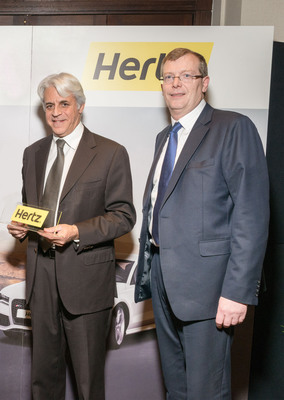
Michel Taride, Group President, Hertz International, commented: “Ryan’s Investment’s strength in the local transport sector presents a significant growth potential for our Dollar and Thrifty brands in Ireland. Hertz’s value brands offer local residents and visitors excellent service, top-quality vehicles and a budget-friendly way to explore the sights. The renewed and extended agreement with our highly valued partner Ryan’s Investments was the natural next step in our fruitful and longstanding alliance.”
Sean Boland, Managing Director, Hertz Ireland and Company Director, Ryan’s Investments, added: “As part of the Hertz family for the past 23 years we share the company’s vision for growth and the commitment to deliver quality service to our customers. We are delighted to operate Dollar and Thrifty brands across Ireland and to grow these brands to reach their true potential. We truly believe that the renewal of our partnership agreement with Hertz and the addition of Dollar and Thrifty to the alliance will be an exciting and rewarding journey for customers and employees.”
From the beginning of the partnership between Hertz and Ryan’s Investments, the Hertz Ireland business has grown to be the number one car rental brand on the island. Hertz Ireland has been recognized with a multitude of service excellence awards over the years, including being an unprecedented 19 year winner of the Irish Travel Trade publication’s “Best Car Rental Company” honour.
With the largest market share in all segments and presence in all major airports including prime downtown locations in Dublin and Cork, Hertz offers the largest and most diverse fleet in the country including the Fun and Prestige Collections and a wide range of vans. Fully integrated in Hertz’s global Gold Plus Rewards Scheme, Hertz Ireland was the first Hertz European franchise country to offer the programme’s full benefits pack, currently featured at all its Dublin and Belfast locations as well as at Shannon and Cork airports.
Dollar and Thrifty locations in Ireland are located in key tourist destinations – including Dublin, Cork, Knock, Kerry and Shannon airport – in line with Hertz’s long-term leisure growth strategy for the Dollar and Thrifty businesses. Hertz’s customers have now further access to a full range of rental options through the company’s strong premium and value brands, making their reservations online by visiting www.dollar.ie and www.thrifty.ie.
Following the European expansion of the Dollar and Thrifty brands, there are now 143 corporate locations operating across the continent, in addition to 195 franchisee and licensee locations.
Hertz’s well-established Dollar and Thrifty brands serve value-oriented leisure customers, including domestic and foreign tourists, small businesses and government travelers in over 1,400 corporate franchisee and licensee locations in approximately 75 countries. The addition of Dollar and Thrifty to Hertz’s family of brands in 2012 provides Hertz with multiple strategic options to address both corporate and leisure business in all three tiers of the car rental market.
About Hertz
The Hertz Corporation (www.hertz.com) operates its car rental business through the Hertz, Dollar, Thrifty and Firefly brands from approximately 10,400 corporate, licensee and franchisee locations in North America, Europe, Latin America, Asia, Australia, Africa, the Middle East and New Zealand. Hertz is the largest worldwide airport general use car rental brand, operating from approximately 8,800 corporate and licensee locations in 150 countries. Hertz is the number one airport car rental brand in the U.S. and at 111 major airports in Europe. Dollar and Thrifty have approximately 1,400 corporate and franchisee locations in 75 countries.
Hertz is in its 96th year of delivering quality car rental solutions to leisure and corporate customers. Product and service innovations such as Gold Plus Rewards, Worldwide Online Check-in, Carfirmations, Mobile Wi-Fi, NeverLost® satellite navigation systems, and unique cars offered through the company’s Dream, Green, Family, Fun/Adrenaline and Prestige Collections, set Hertz apart from the competition.
This Press Release is courtesy of www.hertz.com
Menlo Logistics Partners with Starbucks in Thailand
Menlo Logistics (Menlo), the US$1.6 billion global logistics subsidiary of Con-way Inc. (NYSE:CNW), today announced a new partnership with Starbucks Corp. to provide logistics management services for the global coffee company’s growing operations in Thailand.
Specifically, Menlo will provide warehousing, inventory and transportation management services for Starbucks’ chilled, frozen, air-conditioned and ambient products from a new 7,635-square-meter dedicated warehouse located at Bangna Km.23 in Bangkok. The scope of the relationship with Starbucks includes warehouse returns, transfer management, pick and pack, labeling and kitting, and repackaging as needed. Menlo will also manage nighttime product delivery to Starbucks stores and will design the daily and weekly delivery routing for chilled and ambient products to all Starbucks stores throughout Thailand.
“We needed a reliable partner in Thailand that could analyze our specific needs and execute a plan to reduce costs, further streamline our operations and improve service tracking,” said Ravee Purananda, Senior Manager of Supply Chain Operations at Starbucks. “Menlo is providing us with a comprehensive logistics solution designed to meet those needs, and we look forward to further developing our presence in Thailand with their support.”
Starbucks operates more than 6,000 locations worldwide. In Thailand, there are currently 182 stores throughout Bangkok and Upcountry, with another 30 locations planned by end of 2014.
“Being selected by Starbucks as their partner in Thailand is a testament to our industry expertise and our ability to design and implement logistics plans that maximize supply chain performance,” said Desmond Chan, managing director, South Asia, Menlo Logistics. “Menlo has successfully operated in Thailand for eight years and we are thankful for the opportunity to work with Starbucks to support their growth in the country.”
Menlo is a leading global provider of logistics, transportation management and supply chain services with operations on five continents, managing dedicated and multi-client warehouses in Southeast Asia, China, India, Australia, North America and Europe. All of the company’s facilities worldwide operate under the Lean principles of continuous improvement and reduction of waste.
About Menlo Logistics
Menlo Logistics, LLC, is a US$1.6 billion global provider of logistics, transportation management and supply chain services with operations in five continents, including North America. As a third-party logistics provider, San Francisco, Calif.-based Menlo Logistics’ services range from dedicated contract logistics to warehouse and distribution management, transportation management, supply chain reengineering and other value-added services including packaging, kitting, order fulfillment and light assembly through a strategic network of multi-client and dedicated facilities. With more than 17 million square feet of dedicated warehouse space in North America, the Asia Pacific, Europe and Latin America, and industry-leading technologies, Menlo Logistics creates effective, integrated solutions for the transportation and distribution needs of leading businesses around the world.
This Ress Release is courtesy of www.con-way.com
Avis Budget Group Signs Exclusive Partnership With Silver Airways
PARSIPPANY, N.J., Avis Budget Group, Inc. (Nasdaq:CAR) today announced that it has signed a new partnership agreement with Silver Airways, a U.S.-owned and operated airline with nearly 200 daily scheduled flights.
Under the exclusive agreement, Avis Car Rental and Budget Car Rental will be designated as Silver Airways’ preferred car rental providers and Silver Airways travelers will receive car rental savings when they rent Avis or Budget vehicles. In addition, Silver Airways travelers will have the opportunity to make Avis and Budget car rental reservations directly on the Silver Airways website, or via phone as part of the call transfer program between the two companies.
“Providing travelers with convenient ways to make car rental reservations is one way we ‘put the customer first,'” said Beth Kinerk, senior vice president of sales, Avis Budget Group. “We’re excited to team up with Silver Airways and provide their passengers with two convenient ways to rent with Avis or Budget. We look forward to serving their rental car needs and generating incremental rental volume.”
The new partnership agreement also includes brand exposure and cross-marketing opportunities between the two companies. For example, Avis and Budget will be featured on Silver Airways’ reservation confirmation pages, confirmation emails and in email campaigns for customers.
“Silver Airways is proud to partner with Avis Budget Group,” said Travis Christ, chief commercial officer, Silver Airways. “We know that our customers in Florida, the Bahamas, Alabama, Georgia and Mississippi will be assured of the best rates and service when they rent with Avis or Budget.”
About Avis Budget Group
Avis Budget Group, Inc. is a leading global provider of vehicle rental services, both through its Avis and Budget brands, which have more than 10,000 rental locations in approximately 175 countries around the world, and through its Zipcar brand, which is the world’s leading car sharing network, with more than 850,000 members. Avis Budget Group operates most of its car rental offices in North America, Europe and Australia directly, and operates primarily through licensees in other parts of the world. Avis Budget Group has approximately 30,000 employees and is headquartered in Parsippany, N.J. More information is available at www.avisbudgetgroup.com.
About Silver Airways
Silver Airways Corp. (IATA: 3M) is a U.S. owned and operated airline operating almost 200 daily scheduled flights to/from 46 gateways in Florida, the Bahamas, Georgia, Alabama, Mississippi, Virginia, West Virginia, Pennsylvania, New York and Ohio. The airline, which offers more flights within Florida to The Bahamas than any other U.S. airline, has valued partnership and codeshare agreements with United Airlines and interline agreements with American Airlines, Delta Air Lines, JetBlue and US Airways.
Silver Airways is a two-time award winner in 2013, having been recognized by its industry and the traveling public. In February 2013, it was named the recipient of Air Transport World’s 2013 Regional Airline of the Year Award, the first U.S. airline to win regional aviation’s top honor since 2008. This award recognized Silver’s outstanding achievements as well as the company’s contributions toward elevating the entire regional aviation industry overall. In October 2013, Silver Airways was named one of the Top 10 “Best U.S. Airlines” in the prestigious Condé Nast Traveler’s 26th annual 2013 Readers’ Choice Awards.
The Silver Airways fleet is comprised of Saab 340B plus aircraft (with a capacity of 34 passengers in a spacious, noise reduction equipped cabin), each powered by highly reliable, fuel-efficient GE jet-turbine propeller engines. The airline also operates Beechcraft 1900D aircraft (maximum seating capacity: 19 passengers) in the airline’s Cleveland network.
The company is privately owned by Victory Park Capital, a Chicago-based investment firm that launched the airline in May 2011.
This Press Release is courtesy www.avisbudgetgroup.com
UPS Continues Global Healthcare Expansion with Purchase of UK Healthcare Logistics Innovator
UPS® (NYSE: UPS) today announced it has completed the purchase of U.K.-based Polar Speed, an innovative provider of temperature-sensitive pharmaceutical supply chain solutions in the U.K. The acquisition further strengthens UPS’s healthcare network across Europe, providing healthcare companies access to a single source for logistics solutions across the continent.
The purchase is part of UPS’s successful healthcare strategy and brings new value to customers in this growing market. Polar Speed is recognized for its commitment to pharmaceutical logistics customers. It specializes in active temperature-controlled deliveries to hospitals, pharmacies, wholesalers and surgery centers as well as end patients. Polar Speed also offers unique capabilities within the growing homecare direct-to-consumer delivery market. Its customers include some of the best known pharmaceutical brands in the world.
“The acquisition will help UPS meet the needs of healthcare customers who want to reach the important U.K. market offering increased value in managing more flexible and efficient healthcare supply chains,” said Cindy Miller, President UPS Europe. “Our combined services will ensure healthcare companies have access to the best temperature-sensitive transportation solutions and allow us to effectively handle the rising demand for temperature-sensitive pharmaceutical and biologic products.”
“Our organization is extremely excited to join forces with UPS,” said Richard Holmes, Managing Director of Polar Speed. “With our combined solutions, we will continue to provide high-quality service to our customers, and at the same time provide our employees opportunities to help build on the growth momentum UPS has realized in the healthcare market.”
Polar Speed utilizes a fleet of 118 actively monitored temperature-controlled vehicles for transporting both 2-8 degrees celsius refrigerated and 15-25 degrees celsius products in accordance with U.K.’s Medicines and Healthcare products Regulatory Agency (MHRA) guidelines. The fleet is outfitted with sophisticated technology, including on-board temperature recorders and alarms to alert drivers of potential temperature excursions as well as a PolarTrack, an online portal linked to a satellite navigation system allowing customers to access real-time delivery status and temperature conditions of their products.
This acquisition adds three facilities with advanced warehousing management systems, full quality assurance services, and an experienced workforce to UPS’s existing global healthcare network, now totaling 45 healthcare facilities. UPS’s healthcare reach and expertise in Europe now includes dedicated healthcare distribution centers in the Benelux area, Central and Eastern Europe, Southern Europe, the Iberian Peninsula and the United Kingdom. UPS alleviates logistics cost pressures for healthcare companies via regional consolidation and distribution while providing greater visibility across their healthcare product supply chain.
“Polar Speed is an excellent strategic and operational fit for UPS because of its focus on quality assurance, compliance, technology and monitoring solutions to protect high-value and sensitive pharmaceuticals during storage and transportation,” said Miller. Polar Speed’s services include pallet and small package delivery, warehousing and distribution, on-site pharmacy services for dispensing patient prescriptions, and a home delivery service for approved patients.
Merrill Lynch International (Bank of America Merrill Lynch), a subsidiary of Bank of America Corporation, acted exclusively for UPS in connection with this transaction. Terms of this acquisition are not being disclosed.
The announcement follows UPS’s acquisition of Hungary-based pharmaceutical logistics company, CEMELOG, the opening of a healthcare facility in Hangzhou, China, and the expansion of six UPS healthcare facilities across North America in 2013.
UPS delivers value to healthcare companies through a broad portfolio of specialized freight, small package transportation, and warehousing and distribution services. UPS’s healthcare network offers services such as temperature-sensitive handling, geographic-specific regulatory compliance, monitoring and security, kitting and labeling, as well as order management and accounts receivable. Services across all locations are accessible via one global IT order management platform. UPS helps healthcare manufacturers meet stringent and often complex regulatory requirements, provides flexibility for a changing business environment and reliably serves an increasingly global customer base.
This Press Release is courtesy of www.ups.com
FMCSA Proposes National Drug and Alcohol Testing Clearinghouse for Commercial Truck and Bus Drivers
WASHINGTON – The U.S. Department of Transportation’s Federal Motor Carrier Safety Administration (FMCSA) today announced a proposed rule to establish a drug and alcohol clearinghouse for all national commercial driver’s license (CDL) holders. The clearinghouse would help improve roadway safety by making it easier to determine whether a truck or bus driver is prohibited from operating a commercial motor vehicle for failing to comply with federal drug and alcohol regulations, including mandatory testing.
“Safety is our highest priority, and we will continue to embrace new tools and opportunities that protect the travelers on our nation’s roads,” said U.S. Transportation Secretary Anthony Foxx. “Today’s proposal will help ensure dangerous drivers stay off the road, while encouraging the employment of the many safe drivers who follow our drug and alcohol requirements.”
Current federal regulations require employers to conduct mandatory pre-employment screening of a CDL driver’s qualifications based upon his or her driving record. However, there has not been a single federal repository recording positive drug and alcohol tests by CDL holders that employers would be able to search to ensure that the driver is able to perform safety-sensitive duties.
The proposed rule announced today would create such a repository and require employers to conduct pre-employment searches for all new CDL drivers and annual searches on current drivers.
“We are leveraging technology to create a one-stop verification point to help companies hire drug and alcohol-free drivers,” said FMCSA Administrator Anne S. Ferro. “This proposal moves us further down the road toward improving safety for truck and bus companies, commercial drivers and the motoring public everywhere.”
Under the proposed rule announced today, FMCSA-regulated truck and bus companies, Medical Review Officers, Substance Abuse Professionals, and private, third party USDOT drug and alcohol testing laboratories would be required to record information about a driver who:
Fails a drug and/or alcohol test;
Refuses to submit to a drug and/or alcohol test; and
Successfully completes a substance abuse program and is legally qualified to return to duty.
Private, third-party USDOT drug and alcohol testing laboratories also would be required to report summary information annually. This information would be used to help identify companies that do not have a testing program.
To ensure the privacy of drivers involved, each CDL holder would need to provide his or her consent, before an employer could access the clearinghouse.
Drivers who refuse to provide this information could still be employed by the truck or bus company; however, they could not occupy safety-sensitive positions, such as operating a commercial motor vehicle.
It is a violation of federal regulations to drive a truck or bus under the influence of controlled substances or alcohol. Federal safety regulations require that truck and bus companies that employ CDL drivers conduct random drug and alcohol testing programs. Carriers must randomly test 10 percent of their CDL drivers for alcohol and 50 percent of their CDL drivers for drugs each year.
For each of the past three years, federal and state safety inspectors have conducted approximately 3.5 million random roadside inspections of commercial vehicles and of their drivers.
In 2013, on 2,095 occasions, or in 0.23 percent of the unannounced inspections, a CDL holder was immediately placed out-of-service and cited for violating federal regulations governing alcohol consumption. In 2012, FMCSA records show that there were 2,494 violations of this regulation.
In 2013, on 1,240 occasions, or in 0.13 percent of the unannounced inspections, a CDL holder was placed immediately out-of-service and cited for violating federal regulations governing controlled substances. In 2012, FMCSA records show that there were 1,139 violations of this regulation,
In addition to random testing, truck and bus companies are further required to perform drug and alcohol testing on new hires, drivers involved in significant crashes, and whenever a supervisor suspects a driver of using drugs or alcohol while at work.
The proposed rule announced today was directed by Congress in the most recent transportation bill, the Moving Ahead for Progress in the 21st Century Act.
This Press Release is courtesy of www.dot.gov
PHMSA’s Ongoing Bakken Investigation Shows Crude Oil Lacking Proper Testing, Classification
WASHINGTON – The Department of Transportation’s Pipeline and Hazardous Materials Safety Administration (PHMSA) today announced the first results from its 2013 investigation into the transportation of Bakken oil, known as Operation Classification, which show that crude oil taken from cargo tanks en route to rail loading facilities was not properly classified. PHMSA has issued three Notices of Probable Violations to the companies involved as a result.
Shippers are required to use nine hazard classes as a guide to properly classify their hazardous materials. Proper classification will ensure that the material is placed in the proper package and that the risk is accurately communicated to emergency responders. Shipping crude oil – or any hazardous material – without proper testing and classification could result in material being shipped in containers that are not designed to safely store it, or could lead first responders to follow the wrong protocol when responding to a spill.
“Transportation has an important role to play in helping meet our country’s energy needs, thanks to the increased production of crude oil, but our top priority is ensuring that it is transported safely,” said Transportation Secretary Anthony Foxx. “The fines we are proposing today should send a message to everyone involved in the shipment of crude oil: You must test and classify this material properly if you want to use our transportation system to ship it.”
PHMSA first launched Operation Classification in the summer of 2013, in response to increased activity in the Bakken region. Beginning in August to November 1, 2013, PHMSA inspectors tested samples from various points along the crude oil transportation chain: from cargo tanks that deliver crude oil to rail loading facilities, from storage tanks at the facilities, and from the pipeline connecting the storage tank to the rail car that would move the crude across the country. Based on the test results, eleven of the 18 samples taken from cargo tanks delivering crude oil to the rail loading facilities were not assigned to the correct packing group.
“These initial findings remind us how important it is to follow the hazardous materials regulations and to do it in the proper sequence,” said PHMSA Administrator Cynthia Quarterman. “The process begins by testing, characterizing and then properly classifying the hazard and putting it in the kind of container that will offer the highest level of safety.”
As a result of today’s findings, PHMSA has expanded the scope of Operation Classification to include testing for other factors that affect proper characterization and classification such as Reid Vapor Pressure, corrosivity, hydrogen sulfide content and composition/concentration of the entrained gases in the material. PHMSA will also move forward with the Notices of Proposed Violations totaling $93,000 that were issued to Hess Corporation, Whiting Oil and Gas Corporation, and Marathon Oil Company, and will continue working with the rail and oil industry based on Secretary Foxx’s Call to Action, including sharing of additional data, and recommendations for future safety initiatives.
In 2012, PHMSA and the Federal Railroad Administration began focusing on the safe transport of crude oil produced in the Bakken Shale region of the United States. After the formation of PHMSA’s Bakken Field Working Group and FRA’s Bakken Rail Mitigation Project, PHMSA and FRA launched Operation Classification in August 2013 to verify that crude oil was being properly classified in accordance with federal regulations. Activities included unannounced spot inspections, data collection and sampling at strategic terminal and transloading locations that service crude oil. PHMSA and FRA have also issued several safety announcements about the safe transport of crude oil by rail, including the recent January 2 Safety Alert.
This Press Release is courtesy of www.dot.gov
U.S. Department of Transportation Awards $886 Million to New York MTA for Ongoing Hurricane Sandy Recovery Efforts
WASHINGTON – U.S. Transportation Secretary Anthony Foxx and Federal Transit Administrator Peter Rogoff today awarded approximately $886 million to help the New York Metropolitan Transportation Authority (MTA) continue rebuilding and replacing transportation equipment and facilities damaged or destroyed by Hurricane Sandy, which triggered the worst transit disaster in U.S. history. The announcement was made during a conference call with New York officials.
“The U.S. Department of Transportation has worked alongside the New York MTA since Hurricane Sandy made landfall to help the nation’s busiest transit network recover as quickly as possible,” said Secretary Foxx. “The funds we are providing today will go a long way to help the MTA continue clearing debris from tunnels, rebuilding stations, and replacing electrical systems damaged by flooding, giving transit riders a transit system that is stronger than ever before.”
The funds reimburse the MTA for work that is already under way and also enable future projects to be completed. Today’s announcement allows MTA to begin drawing down an additional $886 million from the $3.8 billion FTA had allocated to the MTA for Sandy-related work.
“One of our highest priorities in the wake of this record-breaking storm is to ensure that the MTA is able to restore and protect a public transportation network that operates as the central nervous system for New York City and beyond,” said Administrator Rogoff. “We will make sure that taxpayer dollars are well spent, and that no one is asked to pay to restore the same transit infrastructure when the next big storm hits.”
MTA will use the funds to complete hundreds of projects in the following categories:
Rail Support and Equipment Facilities Repair: $535 million for critical repairs primarily to three damaged under-river tunnels—Greenpoint, Montague, and Steinway.
Electrical and Power Distribution Repair: $138.9 million to restore damaged substations and power infrastructure for the Long Island Rail Road (LIRR) and Metro-North Railroad.
Signal and Communication Repair: $88.1 million to repair essential communications and signal equipment for Metro-North (system-wide) and LIRR’s Long Beach Branch and Westside storage yard.
Transitway Line Restoration: $91.5 million to restore damaged rights of way on the Metro-North Harlem, Hudson, and New Haven Lines; and for design services to make long-term repairs to damaged assets.
Rail Stations, Stops, and Terminals: $32 million to repair to stations, employee facilities, and fare collection equipment for both rail and bus facilities.
For all transit agencies eligible to receive Hurricane Sandy aid, FTA has allocated approximately 55 percent of the $10.35 billion available through the Disaster Relief Appropriations Act of 2013 after a nearly $545 million cut due to sequestration. Approximately $4 billion worth of work is already under way.
Separately, on December 23, 2013, FTA announced the availability of $3 billion in competitive funding for resiliency projects that will, first and foremost, reinforce the existing critical infrastructure necessary to support public transportation systems damaged by Hurricane Sandy. These funds will be awarded to advance the best regionally coordinated projects so that taxpayers are not asked to repair the same infrastructure a second and third time.
This Press Release is courtesy www.dot.gov

